



 Chat with AI
Exam 27: Reactions of Organic Compounds

Exam 1: Matter: Its Properties and Measurement136 Questions
Exam 2: Atoms and the Atomic Theory119 Questions
Exam 3: Chemical Compounds152 Questions
Exam 4: Chemical Reactions170 Questions
Exam 5: Introduction to Reactions in Aqueous Solutions124 Questions
Exam 6: Gases113 Questions
Exam 7: Thermochemistry125 Questions
Exam 8: Electrons in Atoms123 Questions
Exam 9: The Periodic Table and Some Atomic Properties93 Questions
Exam 10: Chemical Bonding I: Basic Concepts107 Questions
Exam 11: Chemical Bonding Ii: Valence Bond and Molecular Orbital Theories104 Questions
Exam 12: Intermolecular Forces: Liquids and Solids121 Questions
Exam 13: Spontaneous Change: Entropy and Gibbs Energy123 Questions
Exam 14: Solutions and Their Physical Properties132 Questions
Exam 15: Principles of Chemical Equilibrium118 Questions
Exam 16: Acids and Bases137 Questions
Exam 17: Additional Aspects of Acidbase Equilibria130 Questions
Exam 18: Solubility and Complex-Ion Equilibria104 Questions
Exam 19: Electrochemistry127 Questions
Exam 20: Chemical Kinetics124 Questions
Exam 21: Chemistry of the Main-Group Elements I: Groups 1,2,13,and 14116 Questions
Exam 22: Chemistry of the Main-Group Elements Ii: Groups 18,17,16,15,and Hydrogen100 Questions
Exam 23: The Transition Elements108 Questions
Exam 24: Complex Ions and Coordination Compounds104 Questions
Exam 25: Nuclear Chemistry116 Questions
Exam 26: Structures of Organic Compounds99 Questions
Exam 27: Reactions of Organic Compounds94 Questions
Exam 28: Chemistry of the Living State104 Questions
Select questions type


The formation of isopropanol (rubbing alcohol)through the following hydrolysis is known as what type of general reaction? 
(Multiple Choice)
4.8/5  (83)
(83) Organic reactions in which atoms or groups that are bonded to adjacent carbon atoms are eliminated are called elimination reactions.
(True/False)
4.9/5 (67)
(67) Suggest possible compounds for A and B in the following scheme:
CH3CH2I + A → CH3CH2SH + B
(Multiple Choice)
4.9/5 (79)
(79) Write down the rate law for E1 reactions (S is a substrate and B is a base).
(Multiple Choice)
4.9/5 (88)
(88) Identify substituents that are meta directors in electrophilic aromatic substitution.
I.-OR
II.-NO2
III.-OCOCH3
IV.-CHO
V.-COOH
(Multiple Choice)
4.8/5 (76)
(76) Electrophilic substitution reactions are typical reactions of aromatic compounds.
(True/False)
4.7/5 (71)
(71) During the nitration of a benzene ring in a mixture of HNO3 and H2SO4 the following species reacts as an electrophile:
(Multiple Choice)
4.9/5 (88)
(88) What type of polymerization reaction occurred to produce the following polymer? 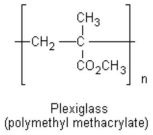
(Multiple Choice)
4.7/5 (92)
(92) Which of the four positions 1-4 marked on the structure of aromatic compound shown below would be preferentially substituted in an electrophilic aromatic substitution reaction? 
(Multiple Choice)
4.9/5 (75)
(75) The following can be said about the reaction profile of an SN1 reaction:
I.The rate determining step is the formation of a carbocation.
II.The reaction profile has one transition state.
III.The slow step is the first transition state.
IV.The second step is attack of nuleophile on carbocation.
V.The reaction proceeds in a polar aprotic solvent.
(Multiple Choice)
4.8/5 (81)
(81) What type of polymerization reaction occurred to produce the following polymer? 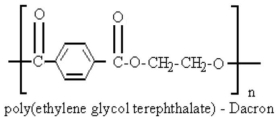
(Multiple Choice)
4.7/5 (74)
(74) Which of the following trends in nucleophilicity are correct?
I.Everything else being equal,a negatively charged nucleophile will react faster than a neutral one.
II.Generally,species containing elements of high electronegativity are good nucleophiles.
III.Anionic nucleophiles are more reactive in polar and aprotic solvents than in polar and protic solvents.
IV.Generally,nucleophilicity is increasing with the increase in size of an atom.
V.Bulky groups adjacent to the nucleophilic atom enhance the nucleophilicity and reactivity of the species.
(Multiple Choice)
4.9/5 (79)
(79) Which of the following roles can alcohols have in organic reactions?
I.electrophile
II.solvent
III.base
IV.substrate
V.acid
(Multiple Choice)
4.8/5 (86)
(86) What are the three characteristic steps in a chain-reaction polymerization?
(Multiple Choice)
4.8/5 (90)
(90) Which type of polymerization and which monomer(s)would you use to prepare poly(1,4-phenylenediformamide)with the following structure? 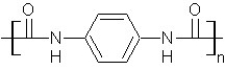
(Multiple Choice)
5.0/5 (68)
(68) Which of the following steps would you expect to occur in the addition reaction mechanism?
I.electrophilic attack on the unsaturated bond
II.formation of carboanion
III.formation of carbocation
IV.nucleophilic attack on the carbocation
V.elimination of a base
(Multiple Choice)
4.8/5 (85)
(85) Which of the following groups is a meta director during electrophilic aromatic substitution?
(Multiple Choice)
4.8/5 (94)
(94) 
Filters
- Essay(0)
- Multiple Choice(0)
- Short Answer(0)
- True False(0)
- Matching(0)