



 Chat with AI
Exam 2: Supply and Demand

Exam 1: Economics: the Study of Opportunity Cost124 Questions
Exam 2: Supply and Demand204 Questions
Exam 3: The Concept of Elasticity and Consumer and Producer Surplus173 Questions
Exam 4: Firm Production, Cost, and Revenue158 Questions
Exam 5: Perfect Competition, Monopoly, and Economic Versus Normal Profit119 Questions
Exam 6: Every Macroeconomic Word You Ever Heard: Gross Domestic Product, Inflation, Unemployment, Recession, Depression201 Questions
Exam 7: Interest Rates and Present Value118 Questions
Exam 8: Aggregate Demand and Aggregate Supply110 Questions
Exam 9: Fiscal Policy66 Questions
Exam 10: Monetary Policy104 Questions
Exam 11: Federal Spending76 Questions
Exam 12: Federal Deficits, Surpluses, and the National Debt76 Questions
Exam 13: The Housing Bubble71 Questions
Exam 14: The Recession of 2007-2009: Causes and Policy Responses57 Questions
Exam 15: Is Economic Stagnation the New Normal42 Questions
Exam 16: Is the Fiscalsky Falling: An Examination of Unfunded Social Security, Medicare, and State and Local Pension Liabilities51 Questions
Exam 17: International Trade: Does It Jeopardize American Jobs86 Questions
Exam 18: International Finance and Exchange Rates77 Questions
Exam 19: The European Debt Crisis60 Questions
Exam 20: Economic Growth and Development60 Questions
Exam 21: Nafta, Gatt, Wto: Are Trade Agreements Good for Us42 Questions
Exam 22: The Line Between Legal and Illegal Goods71 Questions
Exam 23: Natural Resources, the Environment, and Climate Change73 Questions
Exam 24: Health Care87 Questions
Exam 25: Government-Provided Health Insurance: Medicaid, Medicare, and the Child Health Insurance Program79 Questions
Exam 26: The Economics of Prescription Drugs62 Questions
Exam 27: So You Want to Be a Lawyer: Economics and the Law62 Questions
Exam 28: The Economics of Crime62 Questions
Exam 29: Antitrust39 Questions
Exam 30: The Economics of Race and Discrimination60 Questions
Exam 31: Income and Wealth Inequality70 Questions
Exam 32: Farm Policy63 Questions
Exam 33: Minimum Wage60 Questions
Exam 34: Ticket Brokers and Ticket Scalping60 Questions
Exam 35: Rent Control31 Questions
Exam 36: Economics of K-12 Education55 Questions
Exam 37: Economics of College and University Education82 Questions
Exam 38: Poverty and Welfare69 Questions
Exam 39: Head Start44 Questions
Exam 40: Social Security60 Questions
Exam 41: Personal Income Taxes55 Questions
Exam 42: Energy Prices67 Questions
Exam 43: If We Build It, Will They Come and Other Sports Questions61 Questions
Exam 44: The Stock Market Crashes57 Questions
Exam 45: Unions66 Questions
Exam 46: Walmart: Always Low Prices and Low Wages- Always41 Questions
Exam 47: The Economic Impact of Casino Gambling39 Questions
Exam 48: The Economics of Terrorism43 Questions
Select questions type


If supply increases and the price doesn't change, there will be a
(Multiple Choice)
4.7/5  (73)
(73) Market quantity demanded measures the amount of the product that people in the market want to buy
(Multiple Choice)
4.9/5 (78)
(78) If two goods are considered substitutes and the price of one increases, the other good's
(Multiple Choice)
4.8/5 (61)
(61) The supply curve slopes upward because producers' cost per unit eventually
(Multiple Choice)
4.9/5 (87)
(87) A per unit tax or percentage tax on a good or service that must be paid by consumers of that good is
(Multiple Choice)
4.7/5 (67)
(67) If supply decreases and the price doesn't change, there will be a
(Multiple Choice)
4.8/5 (81)
(81) Since teachers are an input in the production of education, when teacher salaries increase
(Multiple Choice)
4.7/5 (65)
(65) If goods A and B are considered substitutes, a decrease in the price of A would cause
(Multiple Choice)
4.8/5 (77)
(77) 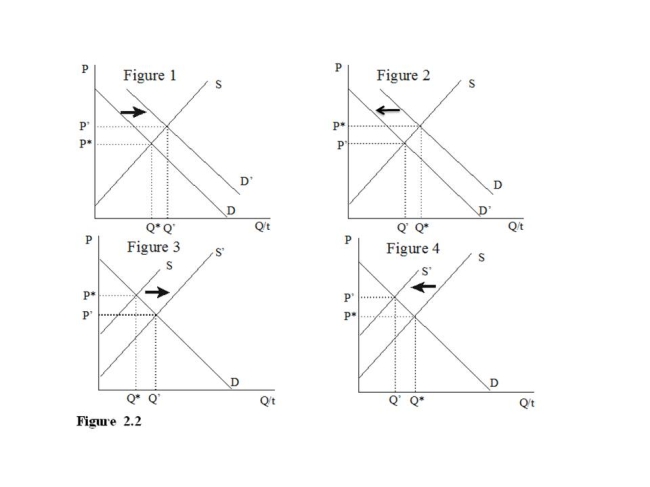 -Of the collection of supply and demand diagrams in Figure 2.2, which one(s)could show the result of a decrease in income?
 (Multiple Choice)
4.9/5 (82)
(82) If goods A and B are considered substitutes, an increase in the price of A would cause
(Multiple Choice)
4.9/5 (79)
(79) The condition where firms do not want to sell as many as consumers want to buy is called
(Multiple Choice)
4.9/5 (89)
(89) If a firm has two production alternatives and the price of one increases this will cause the other good's
(Multiple Choice)
4.8/5 (61)
(61) A decrease in household income for a good that is considered inferior would
(Multiple Choice)
4.9/5 (83)
(83) 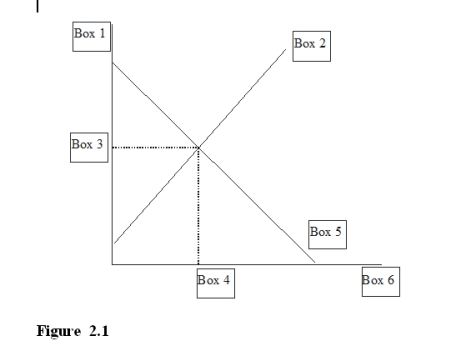 -In Figure 2.1, a "P*" for equilibrium price would go in
If the price of a typical good rises, the quantity supplied for that good will
(Multiple Choice)
4.7/5 (67)
(67) If a subsidy (going to producers)is created for a good this would
(Multiple Choice)
4.8/5 (74)
(74) 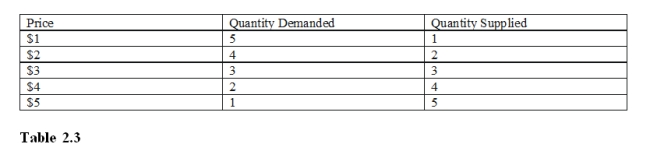 -From Table 2.3, at the price of $2 there is a

Filters
- Essay(0)
- Multiple Choice(0)
- Short Answer(0)
- True False(0)
- Matching(0)