



 Chat with AI
Exam 9: Management of Economic Exposure

Exam 1: Globalization and the Multinational Firm100 Questions
Exam 2: International Monetary System100 Questions
Exam 3: Balance of Payments100 Questions
Exam 4: Corporate Governance Around the World100 Questions
Exam 5: The Market for Foreign Exchange98 Questions
Exam 6: International Parity Relationships and Forecasting Foreign Exchange Rates100 Questions
Exam 7: Futures and Options on Foreign Exchange100 Questions
Exam 8: Management of Transaction Exposure98 Questions
Exam 9: Management of Economic Exposure100 Questions
Exam 10: Management of Translation Exposure81 Questions
Exam 11: International Banking and Money Market103 Questions
Exam 12: International Bond Market100 Questions
Exam 13: International Equity Markets100 Questions
Exam 14: Interest Rate and Currency Swaps100 Questions
Exam 15: International Portfolio Investment101 Questions
Exam 16: Foreign Direct Investment and Cross-Border Acquisitions100 Questions
Exam 17: International Capital Structure and the Cost of Capital100 Questions
Exam 18: International Capital Budgeting102 Questions
Exam 19: Multinational Cash Management100 Questions
Exam 20: International Trade Finance100 Questions
Exam 21: International Tax Environment and Transfer Pricing99 Questions
Select questions type


A U.S. firm holds an asset in Great Britain and faces the following scenario:  where,
P* = Pound sterling price of the asset held by the U.S. firm
P = Dollar price of the same asset
-The expected value of the investment in U.S. dollars is:
where,
P* = Pound sterling price of the asset held by the U.S. firm
P = Dollar price of the same asset
-The expected value of the investment in U.S. dollars is:
Free
(Multiple Choice)
4.9/5  (74)
(74) Correct Answer: Verified
A
A U.S. firm holds an asset in Great Britain and faces the following scenario:  where,
P* = Pound sterling price of the asset held by the U.S. firm
P = Dollar price of the same asset
-The variance of the exchange rate is:
where,
P* = Pound sterling price of the asset held by the U.S. firm
P = Dollar price of the same asset
-The variance of the exchange rate is:Free
(Multiple Choice)
4.8/5 (92)
(92) Correct Answer:Verified
VerifiedA
Which of the following conclusions are correct?
Free
(Multiple Choice)
4.8/5 (83)
(83) Correct Answer:Verified
VerifiedA
A U.S. firm holds an asset in Italy and faces the following scenario:  Where P* = Euro price of the asset held by the U.S. firm
The CFO decides to hedge his exposure by selling forward the expected value of the euro denominated cash flow at F1($/£) = $1.50/€. As a result
Where P* = Euro price of the asset held by the U.S. firm
The CFO decides to hedge his exposure by selling forward the expected value of the euro denominated cash flow at F1($/£) = $1.50/€. As a result (Multiple Choice)
4.7/5 (79)
(79) 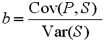 in the regression
 is:
The firm may not be able to pass through changes in the exchange rate
(Multiple Choice)
4.9/5 (81)
(81) A U.S. firm holds an asset in Great Britain and faces the following scenario:  where,
P* = Pound sterling price of the asset held by the U.S. firm
P = Dollar price of the same asset
-The variance of the exchange rate is:
where,
P* = Pound sterling price of the asset held by the U.S. firm
P = Dollar price of the same asset
-The variance of the exchange rate is: (Multiple Choice)
5.0/5 (69)
(69) Generally speaking, when both a firm's costs and its price is sensitive to exchange rate changes
(Multiple Choice)
4.8/5 (73)
(73) When the domestic currency is strong or expected to become strong,
(Multiple Choice)
4.8/5 (75)
(75) The price elasticity of demand for commodity products tends to be
(Multiple Choice)
4.9/5 (76)
(76) Compute the variance of the dollar value of your property that is attributable to exchange rate uncertainty.
(Essay)
4.7/5 (75)
(75) Generally speaking, a firm is subject to high degrees of operating exposure
(Multiple Choice)
4.8/5 (84)
(84) Consider a U.S. MNC who owns a foreign asset. If the foreign currency value of the asset is inversely related to changes in the dollar-foreign currency exchange rate,
(Multiple Choice)
4.9/5 (79)
(79) Suppose a U.S.-based MNC maintains a vacation home for employees in the British countryside and the local price of this property is always moving together with the pound price of the U.S. dollar. As a result,
(Multiple Choice)
4.9/5 (80)
(80) 
Filters
- Essay(0)
- Multiple Choice(0)
- Short Answer(0)
- True False(0)
- Matching(0)