



 Chat with AI
Exam 16: The Evolution of Plants and Fungi

Exam 1: Introduction: Biology Today50 Questions
Exam 2: Essential Chemistry for Biology46 Questions
Exam 3: The Molecules of Life49 Questions
Exam 4: A Tour of the Cell52 Questions
Exam 5: The Working Cell52 Questions
Exam 6: Cellular Respiration: Obtaining Energy From Food51 Questions
Exam 7: Photosynthesis: Using Light to Make Food53 Questions
Exam 8: Cellular Reproduction: Cells From Cells51 Questions
Exam 9: Patterns of Inheritance49 Questions
Exam 10: The Structure and Function of Dna53 Questions
Exam 11: How Genes Are Controlled49 Questions
Exam 12: DNA Technology50 Questions
Exam 13: How Populations Evolve50 Questions
Exam 14: How Biological Diversity Evolves46 Questions
Exam 15: The Evolution of Microbial Life58 Questions
Exam 16: The Evolution of Plants and Fungi53 Questions
Exam 17: The Evolution of Animals58 Questions
Exam 18: An Introduction to Ecology and the Biosphere53 Questions
Exam 19: Population Ecology47 Questions
Exam 20: Communities and Ecosystems52 Questions
Exam 21: Unifying Concepts of Animal Structure and Function49 Questions
Exam 22: Nutrition and Digestion57 Questions
Exam 23: Circulation and Respiration61 Questions
Exam 24: The Bodys Defenses57 Questions
Exam 25: Hormones52 Questions
Exam 26: Reproduction and Development53 Questions
Exam 27: Nervous,Sensory,and Locomotor Systems62 Questions
Exam 28: The Life of a Flowering Plant68 Questions
Exam 29: The Working Plant57 Questions
Select questions type


Corn smut is a fungus that grows in the ears of corn and changes corn kernels into black,powdery balls of fungus tissue.What would you hypothesize is the significance of the relationship between corn smut and corn?
(Multiple Choice)
4.9/5  (67)
(67) Why are bryophytes considered incompletely liberated from their ancestral aquatic habitat?
(Multiple Choice)
4.8/5 (84)
(84) Which of the following is the lineage of green algae believed to most resemble early plant ancestors?
(Multiple Choice)
4.8/5 (65)
(65) Would you expect desert plants to have a thin or thick cuticle?
(Multiple Choice)
4.8/5 (67)
(67) Mutualistic associations of plant roots and fungi are called ________.
(Multiple Choice)
4.9/5 (80)
(80) 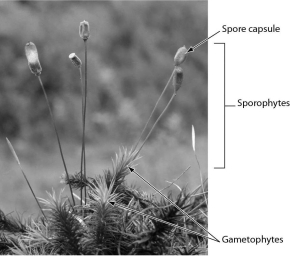
Biocontrol,short for biological control,is a means to control pest populations (e.g.,insects,plants)by intentionally introducing natural enemies of those pests.Biocontrol methods have benefits of typically being less expensive and less environmentally damaging than chemical pesticides.Which of the following should NOT be considered an example of biocontrol?
(Multiple Choice)
4.9/5 (83)
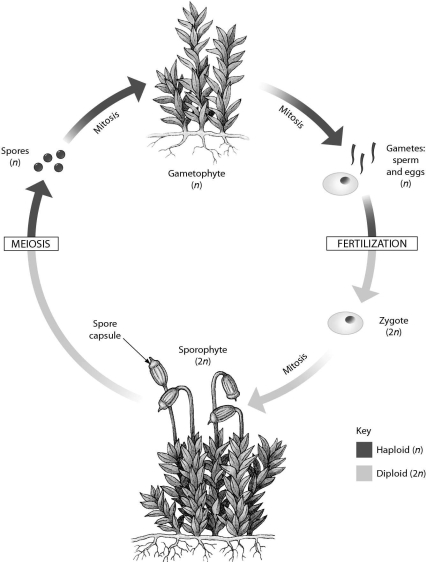
(83) Which of the following correctly illustrates the sequence of the origin of modern groups of plants?
(Multiple Choice)
4.9/5 (75)
(75) 
Suppose that,while on a forest hike,you notice a blue fungus and a pink plant growing along the hiking trail.As you continue walking,you observe that if a blue fungus and a pink plant are growing side by side,they are both much larger than if the fungus and the plant are farther apart.What can you hypothesize about the relationship between the fungus and the plant?
(Multiple Choice)
4.7/5 (83)
(83) Why is the symbiotic relationship of truffle mushrooms and tree roots considered to be crucial to the colonization of land?
(Multiple Choice)
4.9/5 (80)
(80) From the point of view of an angiosperm,what is the function of fruit?
(Multiple Choice)
4.9/5 (76)
(76) Which aspect of truffle mushrooms drives their commercial importance?
(Multiple Choice)
4.9/5 (90)
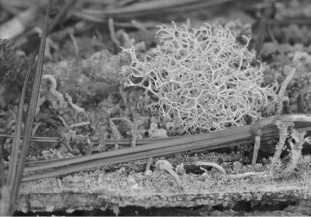
(90) 

Filters
- Essay(0)
- Multiple Choice(0)
- Short Answer(0)
- True False(0)
- Matching(0)