



 Chat with AI
Exam 21: Nutrition and Digestion

Exam 1: Biology: Exploring Life48 Questions
Exam 2: The Chemical Basis of Life72 Questions
Exam 3: The Molecules of Cells85 Questions
Exam 4: A Tour of the Cell90 Questions
Exam 5: The Working Cell80 Questions
Exam 6: How Cells Harvest Chemical Energy82 Questions
Exam 7: Photosynthesis: Using Light to Make Food81 Questions
Exam 8: The Cellular Basis of Reproduction and Inheritance78 Questions
Exam 9: Patterns of Inheritance77 Questions
Exam 10: Molecular Biology of the Gene82 Questions
Exam 11: How Genes Are Controlled81 Questions
Exam 12: DNA Technology and Genomics78 Questions
Exam 13: How Populations Evolve64 Questions
Exam 14: The Origin of Species58 Questions
Exam 15: Tracing Evolutionary History82 Questions
Exam 16: Microbial Life: Prokaryotes and Protists84 Questions
Exam 17: The Evolution of Plant and Fungal Diversity79 Questions
Exam 18: The Evolution of Invertebrate Diversity72 Questions
Exam 19: The Evolution of Vertebrate Diversity72 Questions
Exam 20: Unifying Concepts of Animal Structure and Function63 Questions
Exam 21: Nutrition and Digestion91 Questions
Exam 22: Gas Exchange66 Questions
Exam 23: Circulation77 Questions
Exam 24: the Immune System79 Questions
Exam 25: Control of Body Temperature and Water Balance63 Questions
Exam 26: Hormones and the Endocrine System60 Questions
Exam 27: Reproduction and Embryonic Development71 Questions
Exam 28: Nervous Systems70 Questions
Exam 29: the Senses60 Questions
Exam 30: How Animals Move69 Questions
Exam 31: Plant Structure, Growth, and Reproduction79 Questions
Exam 32: Plant Nutrition and Transport65 Questions
Exam 33: Control Systems in Plants58 Questions
Exam 34: the Biosphere: an Introduction to Earths Diverse Environments63 Questions
Exam 35: Behavioral Adaptations to the Environment52 Questions
Exam 36: Population Ecology53 Questions
Exam 37: Communities and Ecosystems60 Questions
Exam 38: Conservation Biology57 Questions
Select questions type


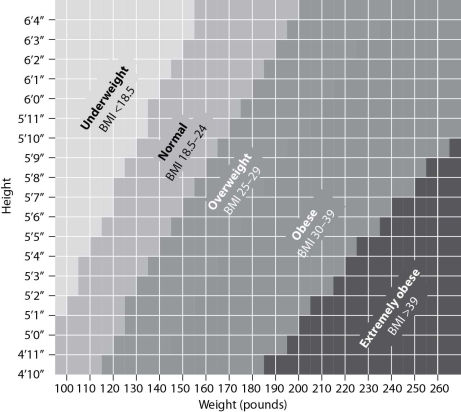 -A normal BMI (body mass index)for a person who is 6' 1" and weighs 150 pounds would be
 (Multiple Choice)
4.9/5  (93)
(93) After reading the paragraph below, answer the questions that follow.
Malnutrition can cause a variety of health problems, including being underweight, due to unbalanced or insufficient diet. It is estimated that in 2015, approximately 14% of preschool-age children globally will be underweight (WHO and UNICEF Joint Global Nutrition Database, 2011). While this is a high percentage, it is a drop from approximately 25% just 25 years earlier.
Consider the data table below and answer the questions that follow.
 -Which of the following sub-regions has shown the least variation in estimated prevalence (%)of underweight preschool children from the year 1990 to the year 2015?
 (Multiple Choice)
4.8/5 (74)
(74) Which arrow shows the release of digestive enzymes by the pancreas? 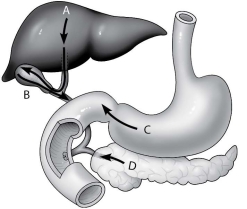
(Multiple Choice)
4.9/5 (78)
(78) Lions are not always successful hunters and may go days between meals. What evolutionary adaptation helps the lion survive periods of famine?
(Multiple Choice)
4.8/5 (92)
(92) To reduce the risk of cancer, it has been suggested that a diet high in ________ is beneficial.
(Multiple Choice)
5.0/5 (74)
(74) After reading the paragraph below, answer the questions that follow.
Offering nutritious lunches in public schools is a popular health topic. School lunches have had to meet new nutrition standards since the fall of 2012. In 2013, the USDA (United States Department of Agriculture) reviewed data from the 2005 School Nutrition and Dietary Assessment to investigate whether students in schools that were already following the new standards (school group A) and that therefore offered more fruits and vegetables than other schools (school group B) actually ate more of them.
-Finding #1: If schools offered greater amounts of fruits and vegetables, then more students ate them. However, many students in both schools did not did not eat any fruits and vegetables. This suggests that
(Multiple Choice)
4.7/5 (86)
(86) Metabolic activities that involve "burning" carbohydrates release energy. When our bodies "burn" carbohydrates, what are we doing?
(Multiple Choice)
4.7/5 (76)
(76) Epithelial cells lining the intestine have surface projections that increase the rate of nutrient absorption. These projections are called
(Multiple Choice)
4.9/5 (74)
(74) After reading the paragraph below, answer the questions that follow.
Fred is a 24-year-old college student whose father was just diagnosed with cardiovascular disease. Since he knows that these problems often run in families, Fred has asked his doctor to recommend a plan so that he can minimize his risk of developing similar problems. The following are a few of the doctor's recommendations: quit smoking, exercise for at least 30 minutes per day, reduce saturated fats and trans fats in his diet, and increase the number of fruits and vegetables in his diet.
-Fred explained to his family how the doctor's advice would help prevent cardiovascular disease, but he made a mistake in his explanation. Which of the following statements is false?
(Multiple Choice)
4.9/5 (89)
(89) During which of the following stages of food processing is undigested material removed from the digestive tract?
(Multiple Choice)
4.8/5 (66)
(66) According to the figure above, which amino acid is found in corn but not in beans?
(Multiple Choice)
4.9/5 (77)
(77) After reading the paragraph below, answer the questions that follow.
Offering nutritious lunches in public schools is a popular health topic. School lunches have had to meet new nutrition standards since the fall of 2012. In 2013, the USDA (United States Department of Agriculture) reviewed data from the 2005 School Nutrition and Dietary Assessment to investigate whether students in schools that were already following the new standards (school group A) and that therefore offered more fruits and vegetables than other schools (school group B) actually ate more of them.
-Finding #2: An unexpected finding was that if students came from economically poor homes or homes that did not have adequate food, they did not have greater fruit and vegetable consumption in school. What hypothesis were the researchers likely testing that produced this finding?
(Multiple Choice)
4.7/5 (68)
(68) Human saliva performs all of the following functions except
(Multiple Choice)
4.9/5 (82)
(82) Pica is a disorder that is characterized by a desire to consume dirt or clay, both of which contain iron. Pica can be associated with an iron deficiency that may cause
(Multiple Choice)
4.8/5 (76)
(76) 
Filters
- Essay(0)
- Multiple Choice(0)
- Short Answer(0)
- True False(0)
- Matching(0)