



 Chat with AI
Exam 10: Molecular Biology of the Gene

Exam 1: Biology: Exploring Life48 Questions
Exam 2: The Chemical Basis of Life72 Questions
Exam 3: The Molecules of Cells85 Questions
Exam 4: A Tour of the Cell90 Questions
Exam 5: The Working Cell80 Questions
Exam 6: How Cells Harvest Chemical Energy82 Questions
Exam 7: Photosynthesis: Using Light to Make Food81 Questions
Exam 8: The Cellular Basis of Reproduction and Inheritance78 Questions
Exam 9: Patterns of Inheritance77 Questions
Exam 10: Molecular Biology of the Gene82 Questions
Exam 11: How Genes Are Controlled81 Questions
Exam 12: DNA Technology and Genomics78 Questions
Exam 13: How Populations Evolve64 Questions
Exam 14: The Origin of Species58 Questions
Exam 15: Tracing Evolutionary History82 Questions
Exam 16: Microbial Life: Prokaryotes and Protists84 Questions
Exam 17: The Evolution of Plant and Fungal Diversity79 Questions
Exam 18: The Evolution of Invertebrate Diversity72 Questions
Exam 19: The Evolution of Vertebrate Diversity72 Questions
Exam 20: Unifying Concepts of Animal Structure and Function63 Questions
Exam 21: Nutrition and Digestion91 Questions
Exam 22: Gas Exchange66 Questions
Exam 23: Circulation77 Questions
Exam 24: the Immune System79 Questions
Exam 25: Control of Body Temperature and Water Balance63 Questions
Exam 26: Hormones and the Endocrine System60 Questions
Exam 27: Reproduction and Embryonic Development71 Questions
Exam 28: Nervous Systems70 Questions
Exam 29: the Senses60 Questions
Exam 30: How Animals Move69 Questions
Exam 31: Plant Structure, Growth, and Reproduction79 Questions
Exam 32: Plant Nutrition and Transport65 Questions
Exam 33: Control Systems in Plants58 Questions
Exam 34: the Biosphere: an Introduction to Earths Diverse Environments63 Questions
Exam 35: Behavioral Adaptations to the Environment52 Questions
Exam 36: Population Ecology53 Questions
Exam 37: Communities and Ecosystems60 Questions
Exam 38: Conservation Biology57 Questions
Select questions type


Which of the following statements about treatment or prevention of a prion infection is true?
(Multiple Choice)
4.9/5  (75)
(75) The way that genetic material of a bacteriophage enters a bacterium is most like the way that
(Multiple Choice)
4.8/5 (89)
(89) What nucleotide sequence would be found on the partner DNA strand of the strand shown? 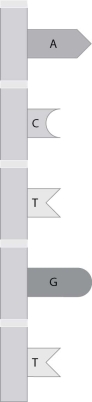
(Multiple Choice)
5.0/5 (76)
(76) Conjugation between a bacterium that lacks an F factor (F⁻)and a bacterium that has an F factor on its chromosome (F⁺)could produce which of the following results?
(Multiple Choice)
4.8/5 (81)
(81) Considering only the steps that take place during translation, which of the following is not needed in order for translation to occur?
(Multiple Choice)
4.8/5 (73)
(73) Which of the following occurs when RNA polymerase attaches to the promoter DNA?
(Multiple Choice)
5.0/5 (97)
(97) After reading the paragraphs below, answer the questions that follow.
Diabetes mellitus is a metabolic disease that is characterized by the buildup of glucose in the blood, or hyperglycemia. Diabetes results either from the pancreas not being able to produce the hormone insulin (type 1 diabetes) or if the body's cells become resistant to insulin (type 2 diabetes). Insulin is a protein that binds to receptors on cell surfaces to allow glucose to enter the cell.
In order to manage the disease, type 1 diabetics require frequent insulin injections. Until the 1970s, insulin was obtained from processing the pancreases of large mammals such as cows and pigs; it was then purified for medicinal use. This all changed in the 1970s with the advent of recombinant DNA technology, which allows scientists to insert genes from other species into bacterial plasmids and have bacteria produce proteins from these other species' genes. In 1978, the gene that codes for human insulin was added to a bacterial plasmid and bacteria were used to produce human insulin. These bacteria acted as mini-factories that produced human insulin for type 1 diabetes patients. Today, the production of human insulin from bacteria is commonplace and is a multibillion dollar market for pharmaceutical companies.
-Suppose that the human insulin protein that was produced by the bacteria was much shorter than it should be. Upon further investigation, it was found that the DNA of the human insulin gene had a mutation while in the bacterial cells. What type of mutation could not result in these observations?
(Multiple Choice)
4.9/5 (87)
(87) Which of the following enzymes does HIV use to synthesize DNA on an RNA template?
(Multiple Choice)
4.8/5 (89)
(89) A eukaryotic cell has a nuclear envelope that allows tRNA molecules, but not mRNA molecules, to leave the nucleus. Which of the following processes will not be able to take place in this cell?
(Multiple Choice)
5.0/5 (79)
(79) Which of the following statements about eukaryotic RNA is true?
(Multiple Choice)
4.9/5 (70)
(70) Where do transcription and translation occur in prokaryotic cells?
(Multiple Choice)
4.9/5 (79)
(79) Below are three statements. Which of the following choices properly matches the statements with the correct biological processes? I. This occurs in the nucleus of eukaryotic cells.
II) Transfer RNAs bind amino acids in the cytoplasm.
III) A polymerase enzyme is required.
(Multiple Choice)
4.8/5 (85)
(85) A physical or chemical agent that changes the nucleotide sequence of DNA is called a(n)
(Multiple Choice)
4.9/5 (83)
(83) We would expect that a 15-nucleotide sequence that includes a stop codon at the end (as part of the 15-nucleotide sequence)will direct the production of a polypeptide that consists of
(Multiple Choice)
4.8/5 (84)
(84) 
Filters
- Essay(0)
- Multiple Choice(0)
- Short Answer(0)
- True False(0)
- Matching(0)