



 Chat with AI
Exam 3: The Molecules of Cells

Exam 1: Biology: Exploring Life48 Questions
Exam 2: The Chemical Basis of Life72 Questions
Exam 3: The Molecules of Cells85 Questions
Exam 4: A Tour of the Cell90 Questions
Exam 5: The Working Cell80 Questions
Exam 6: How Cells Harvest Chemical Energy82 Questions
Exam 7: Photosynthesis: Using Light to Make Food81 Questions
Exam 8: The Cellular Basis of Reproduction and Inheritance78 Questions
Exam 9: Patterns of Inheritance77 Questions
Exam 10: Molecular Biology of the Gene82 Questions
Exam 11: How Genes Are Controlled81 Questions
Exam 12: DNA Technology and Genomics78 Questions
Exam 13: How Populations Evolve64 Questions
Exam 14: The Origin of Species58 Questions
Exam 15: Tracing Evolutionary History82 Questions
Exam 16: Microbial Life: Prokaryotes and Protists84 Questions
Exam 17: The Evolution of Plant and Fungal Diversity79 Questions
Exam 18: The Evolution of Invertebrate Diversity72 Questions
Exam 19: The Evolution of Vertebrate Diversity72 Questions
Exam 20: Unifying Concepts of Animal Structure and Function63 Questions
Exam 21: Nutrition and Digestion91 Questions
Exam 22: Gas Exchange66 Questions
Exam 23: Circulation77 Questions
Exam 24: the Immune System79 Questions
Exam 25: Control of Body Temperature and Water Balance63 Questions
Exam 26: Hormones and the Endocrine System60 Questions
Exam 27: Reproduction and Embryonic Development71 Questions
Exam 28: Nervous Systems70 Questions
Exam 29: the Senses60 Questions
Exam 30: How Animals Move69 Questions
Exam 31: Plant Structure, Growth, and Reproduction79 Questions
Exam 32: Plant Nutrition and Transport65 Questions
Exam 33: Control Systems in Plants58 Questions
Exam 34: the Biosphere: an Introduction to Earths Diverse Environments63 Questions
Exam 35: Behavioral Adaptations to the Environment52 Questions
Exam 36: Population Ecology53 Questions
Exam 37: Communities and Ecosystems60 Questions
Exam 38: Conservation Biology57 Questions
Select questions type


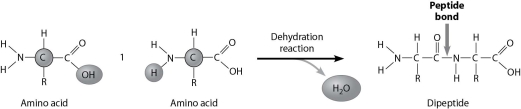
Which of the following statements about the monomers and polymers found in living organisms is false?
(Multiple Choice)
4.9/5  (75)
(75) 
Below is a nutrition facts label for one cup of whole cow's milk. Which of the following is most abundant by weight in one cup of whole milk? (1000 mg = 1 g) 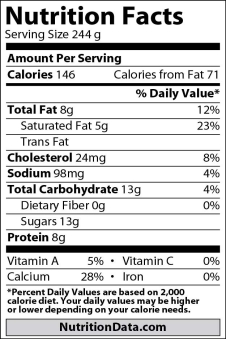
(Multiple Choice)
4.8/5 (78)
(78) After reading the paragraph below, answer the questions that follow.
Your first big biology exam is coming up in a few days, and in order to prepare for late-night study sessions, you buy a box of Yummies, a delicious type of snack cake. After checking out the nutrition facts label on the side of the box, you discover that a single Yummie cake contains 4.5 grams of total fat, 27 grams of carbohydrate, 0 grams of fiber, and 1 gram of protein.
-The pH of the stomach is extremely acidic (~ pH 2). If you ate a Yummie cake, what do you think would happen to the protein that you ingested as it passes through the stomach?
(Multiple Choice)
4.9/5 (85)
(85) Below is a molecule of caffeine. Which of the following features are not present in a molecule of caffeine? 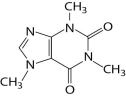
(Multiple Choice)
4.8/5 (77)
(77) Which of the following statements about anabolic steroids is false?
(Multiple Choice)
4.9/5 (84)
(84) Which of the following would be correctly classified as a protein?
(Multiple Choice)
5.0/5 (89)
(89) You have a cup of vegetable oil and a vial full of normal phospholipids. What would you predict would happen if you dropped the phospholipids into the cup of vegetable oil?
(Multiple Choice)
4.8/5 (80)
(80) Fatty acids with double bonds between some of their carbons are said to be
(Multiple Choice)
4.7/5 (78)
(78) Why did the lactose tolerance mutation in the East African herders spread so rapidly within the population?
(Multiple Choice)
4.7/5 (92)
(92) Which of the following functional groups is capable of regulating gene expression?
(Multiple Choice)
5.0/5 (77)
(77) Which of the following characteristics of protein will remain intact if the protein is denatured?
(Multiple Choice)
4.8/5 (88)
(88) 
Filters
- Essay(0)
- Multiple Choice(0)
- Short Answer(0)
- True False(0)
- Matching(0)