



 Chat with AI
Exam 32: Defenses Against Disease

Exam 1: The Nature of Science and the Characteristics of Life82 Questions
Exam 2: Biological Diversity, Bacteria, and Archaea101 Questions
Exam 3: Protista, Plantae, and Fungi83 Questions
Exam 4: Animalia81 Questions
Exam 5: The Chemistry of Life92 Questions
Exam 6: Cell Structure and Internal Compartments87 Questions
Exam 7: Cell Membranes, Transport, and Communication85 Questions
Exam 8: Energy, Metabolism, and Enzymes81 Questions
Exam 9: Photosynthesis and Cellular Respiration84 Questions
Exam 10: Cell Division89 Questions
Exam 11: Stem Cells, Cancer, and Human Health93 Questions
Exam 12: Patterns of Inheritance75 Questions
Exam 13: Chromosomes and Human Genetics75 Questions
Exam 14: Dna and Genes105 Questions
Exam 15: From Gene to Protein80 Questions
Exam 16: Dna Technology80 Questions
Exam 17: How Evolution Works80 Questions
Exam 18: Evolution of Populations80 Questions
Exam 19: Speciation and the Origins of Biological Diversity80 Questions
Exam 20: The Evolutionary History of Life100 Questions
Exam 21: The Biosphere89 Questions
Exam 22: Growth of Populations69 Questions
Exam 23: Ecological Communities133 Questions
Exam 24: Ecosystems75 Questions
Exam 25: Global Change70 Questions
Exam 26: Internal Organization and Homeostasis79 Questions
Exam 27: Nutrition and Digestion80 Questions
Exam 28: Circulation and Gas Exchange77 Questions
Exam 29: Animal Hormones78 Questions
Exam 30: Nervous and Sensory Systems78 Questions
Exam 31: Skeletons, Muscles, and Movement78 Questions
Exam 32: Defenses Against Disease78 Questions
Exam 33: Reproduction and Development76 Questions
Exam 34: Animal Behavior76 Questions
Exam 35: Plant Structure, Nutrition, and Transport80 Questions
Exam 36: Plant Growth and Reproduction80 Questions
Select questions type


When an item irritates the eyes, tears form in order to release lysozyme enzymes.
(True/False)
4.8/5  (91)
(91) The ____________________ immune system is a specific defense against parasites and internal diseases that exists only in vertebrate animals.
(Short Answer)
4.8/5 (68)
(68) Why is it important that white blood cells are able to travel outside the human circulatory system?
(Multiple Choice)
4.7/5 (76)
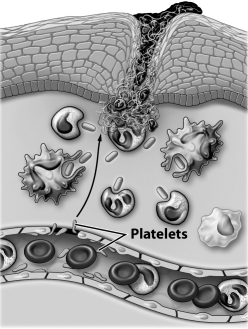
(76) 
White blood cells called macrophages destroy invading pathogens by phagocytosis.
(True/False)
4.9/5 (88)
(88) Macrophages are smaller than neutrophils but have a similar function.
(True/False)
4.7/5 (85)
(85) Any pathogens that macrophages find indigestible can be isolated from other cells by
(Multiple Choice)
4.9/5 (88)
(88) The human immune system contains trillions of specialized cells of several kinds, all of which help destroy invaders. What are these cells called?
(Multiple Choice)
5.0/5 (85)
(85) Which of the following statements about vaccinations given to humans is true?
(Multiple Choice)
4.9/5 (82)
(82) The graph below depicts the immune response following a vaccine and a booster shot.  The line labeled with the letter ____________________ represents the response after the initial vaccine.
 (Short Answer)
4.9/5 (97)
(97) A vaccine stimulates the formation of ____________________ cells by introducing the immune system to a killed or weakened form of a virus before they are exposed to the actual pathogen.
(Short Answer)
4.8/5 (75)
(75) At the site of a wound or cut, platelets combine with proteins in our blood to form
(Multiple Choice)
4.8/5 (79)
(79) Adaptive immune responses are faster at responding to the invasion of a pathogen than innate immune responses.
(True/False)
4.9/5 (70)
(70) ____________________ blood cells are a kind of defensive cell found in the interstitial fluid between the cells in the most vulnerable parts of the body and circulating in the blood.
(Short Answer)
4.9/5 (71)
(71) In the case of AIDS, death is more likely to result from other infections that the immune system cannot control than from HIV itself.
(True/False)
5.0/5 (85)
(85) Which of the following statements about infection by HIV, the virus that causes AIDS, is false?
(Multiple Choice)
5.0/5 (77)
(77) At various points along the lymphatic ducts lie ____________________, pockets of tissue containing huge numbers of white blood cells that trap bacteria, viruses, and foreign proteins.
(Short Answer)
4.9/5 (87)
(87) 
Filters
- Essay(0)
- Multiple Choice(0)
- Short Answer(0)
- True False(0)
- Matching(0)