



 Chat with AI
Exam 30: Nervous and Sensory Systems

Exam 1: The Nature of Science and the Characteristics of Life82 Questions
Exam 2: Biological Diversity, Bacteria, and Archaea101 Questions
Exam 3: Protista, Plantae, and Fungi83 Questions
Exam 4: Animalia81 Questions
Exam 5: The Chemistry of Life92 Questions
Exam 6: Cell Structure and Internal Compartments87 Questions
Exam 7: Cell Membranes, Transport, and Communication85 Questions
Exam 8: Energy, Metabolism, and Enzymes81 Questions
Exam 9: Photosynthesis and Cellular Respiration84 Questions
Exam 10: Cell Division89 Questions
Exam 11: Stem Cells, Cancer, and Human Health93 Questions
Exam 12: Patterns of Inheritance75 Questions
Exam 13: Chromosomes and Human Genetics75 Questions
Exam 14: Dna and Genes105 Questions
Exam 15: From Gene to Protein80 Questions
Exam 16: Dna Technology80 Questions
Exam 17: How Evolution Works80 Questions
Exam 18: Evolution of Populations80 Questions
Exam 19: Speciation and the Origins of Biological Diversity80 Questions
Exam 20: The Evolutionary History of Life100 Questions
Exam 21: The Biosphere89 Questions
Exam 22: Growth of Populations69 Questions
Exam 23: Ecological Communities133 Questions
Exam 24: Ecosystems75 Questions
Exam 25: Global Change70 Questions
Exam 26: Internal Organization and Homeostasis79 Questions
Exam 27: Nutrition and Digestion80 Questions
Exam 28: Circulation and Gas Exchange77 Questions
Exam 29: Animal Hormones78 Questions
Exam 30: Nervous and Sensory Systems78 Questions
Exam 31: Skeletons, Muscles, and Movement78 Questions
Exam 32: Defenses Against Disease78 Questions
Exam 33: Reproduction and Development76 Questions
Exam 34: Animal Behavior76 Questions
Exam 35: Plant Structure, Nutrition, and Transport80 Questions
Exam 36: Plant Growth and Reproduction80 Questions
Select questions type


The cerebrum has four major lobes, the parietal lobe, the frontal lobe, the temporal lobe, and the ____________________ lobe.
(Short Answer)
4.8/5  (71)
(71) The brain has important interactions with the endocrine system. Which part of the brain directly stimulates the release of hormones from the pituitary gland?
(Multiple Choice)
5.0/5 (79)
(79) Which of the following is the pathway an action potential would travel in a neuron?
(Multiple Choice)
4.9/5 (72)
(72) The position of our body is reported by mechanoreceptors called ____________________.
(Short Answer)
4.9/5 (85)
(85) In vertebrates, special cells produce an insulating sheath of ____________________ that wraps around the axon of a neuron.
(Short Answer)
4.7/5 (72)
(72) Which of the following would most likely have compound eyes?
(Multiple Choice)
4.8/5 (68)
(68) A signal-sending neuron releases a ____________________, a molecule that carries the signal across the synapse between nerve cells.
(Short Answer)
4.8/5 (79)
(79) As a whole, the nervous system converts stimuli into ____________________ input-action potentials that convey information about stimuli.
(Short Answer)
4.8/5 (81)
(81) Examine the figure below.
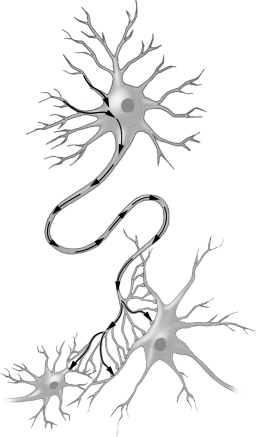 The path of the arrows in this figure indicates the movement of ____________________ through a neuron.
 (Short Answer)
4.9/5 (71)
(71) The axons of many individual neurons may be bundled together to form communication pathways known as ____________________.
(Short Answer)
4.8/5 (80)
(80) The figure below depicts a human eye. 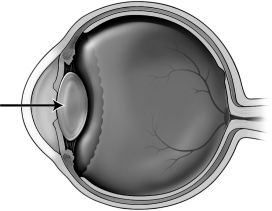 When focusing on an object that is far away, the structure indicated by the arrow in the figure above
 (Multiple Choice)
4.7/5 (82)
(82) Neurotransmitters carry a signal from a stimulated nerve cell to another nerve cell across a gap known as a
(Multiple Choice)
4.8/5 (76)
(76) Which of the following best describes the flow of signals in our nervous system?
(Multiple Choice)
4.9/5 (72)
(72) 
Filters
- Essay(0)
- Multiple Choice(0)
- Short Answer(0)
- True False(0)
- Matching(0)