



 Chat with AI
Exam 3: Protista, Plantae, and Fungi

Exam 1: The Nature of Science and the Characteristics of Life82 Questions
Exam 2: Biological Diversity, Bacteria, and Archaea101 Questions
Exam 3: Protista, Plantae, and Fungi83 Questions
Exam 4: Animalia81 Questions
Exam 5: The Chemistry of Life92 Questions
Exam 6: Cell Structure and Internal Compartments87 Questions
Exam 7: Cell Membranes, Transport, and Communication85 Questions
Exam 8: Energy, Metabolism, and Enzymes81 Questions
Exam 9: Photosynthesis and Cellular Respiration84 Questions
Exam 10: Cell Division89 Questions
Exam 11: Stem Cells, Cancer, and Human Health93 Questions
Exam 12: Patterns of Inheritance75 Questions
Exam 13: Chromosomes and Human Genetics75 Questions
Exam 14: Dna and Genes105 Questions
Exam 15: From Gene to Protein80 Questions
Exam 16: Dna Technology80 Questions
Exam 17: How Evolution Works80 Questions
Exam 18: Evolution of Populations80 Questions
Exam 19: Speciation and the Origins of Biological Diversity80 Questions
Exam 20: The Evolutionary History of Life100 Questions
Exam 21: The Biosphere89 Questions
Exam 22: Growth of Populations69 Questions
Exam 23: Ecological Communities133 Questions
Exam 24: Ecosystems75 Questions
Exam 25: Global Change70 Questions
Exam 26: Internal Organization and Homeostasis79 Questions
Exam 27: Nutrition and Digestion80 Questions
Exam 28: Circulation and Gas Exchange77 Questions
Exam 29: Animal Hormones78 Questions
Exam 30: Nervous and Sensory Systems78 Questions
Exam 31: Skeletons, Muscles, and Movement78 Questions
Exam 32: Defenses Against Disease78 Questions
Exam 33: Reproduction and Development76 Questions
Exam 34: Animal Behavior76 Questions
Exam 35: Plant Structure, Nutrition, and Transport80 Questions
Exam 36: Plant Growth and Reproduction80 Questions
Select questions type


What adaptive advantage do the numerous projections shown below in the microphotograph of the foraminiferans, a type of zooplankter, confer? 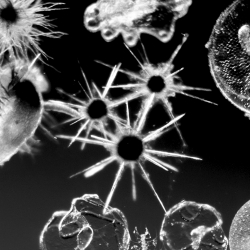
(Multiple Choice)
4.9/5  (86)
(86) Despite having cell walls like plant cells, this feature is not considered a shared derived trait between the fungi and plants because
(Multiple Choice)
4.8/5 (69)
(69) The kingdom Plantae consists of four major groups; the _____ are believed to have been the first to colonize the land.
(Multiple Choice)
4.9/5 (83)
(83) Cells carry out many chemical processes, some of which produce toxic by-products. If you were designing a cell, which of the following would provide the best method of protecting the cell from its own toxic by-products while allowing it to complete the chemical reactions necessary for life?
(Multiple Choice)
4.8/5 (89)
(89) Most protists are motile, using cilia, flagella, or ____________________ for propulsion.
(Short Answer)
4.7/5 (85)
(85) Many biologists have suggested revising the kingdom Protista. One current problem with the Protista, as shown in the figure below, is that 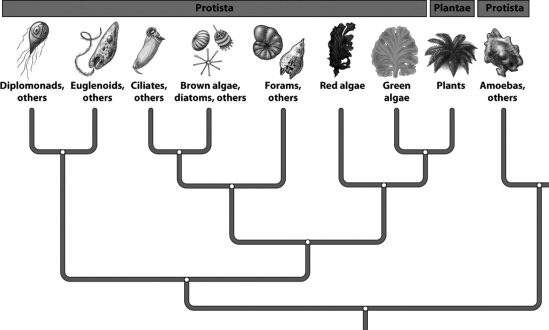
(Multiple Choice)
4.8/5 (63)
(63) The domain Eukarya is presently subdivided into four kingdoms as shown below, although new information concerning the protists could increase that number.
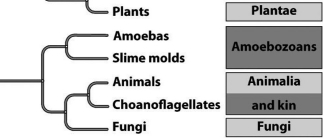
(True/False)
4.8/5 (71)
(71) The ____________________ were the first plant group to evolve a vascular system.
(Short Answer)
4.9/5 (75)
(75) In comparison to eukaryotes, prokaryotes are smaller but have a higher surface area to volume ratio; why might this be advantageous?
(Multiple Choice)
4.8/5 (67)
(67) The cuticle predisposed plants for a terrestrial existence by improving water retention.
(True/False)
4.8/5 (85)
(85) Until the evolution of gymnosperms, plants were restricted to moist habitats because the preceding plant groups
(Multiple Choice)
4.7/5 (64)
(64) Most plants produce flowers, which greatly improve the probability of ____________________.
(Short Answer)
4.9/5 (75)
(75) Gymnosperms and angiosperms are believed to be more closely related to one another than the other major plant groups because
(Multiple Choice)
4.9/5 (76)
(76) ____________________, first seen in the gymnosperms, were a major evolutionary development; they both protect the embryo and provide an initial source of nutrition.
(Short Answer)
4.9/5 (93)
(93) A variety of bacterial or protozoan heterotrophic microorganisms associate symbiotically with specific fungi to produce a lichen.
(True/False)
5.0/5 (80)
(80) Without the symbiotic association between plant roots and mycorrhizae the diversity and abundance of animals and fungi would probably be much less.
(True/False)
4.8/5 (82)
(82) On the basis of information presented in the evolutionary tree below, the Ciliates are more closely related to the ____________________ and the ____________________ than any other protist.
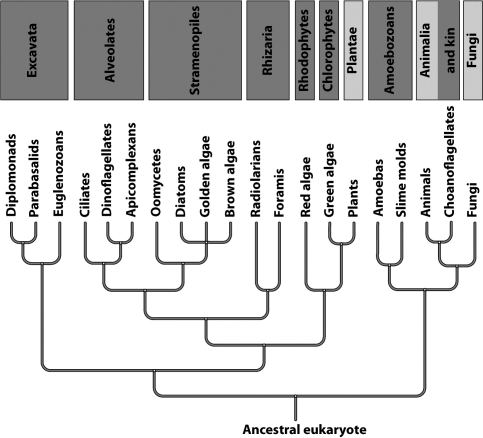
(Short Answer)
4.8/5 (90)
(90) Examine the evolutionary tree pictured below. 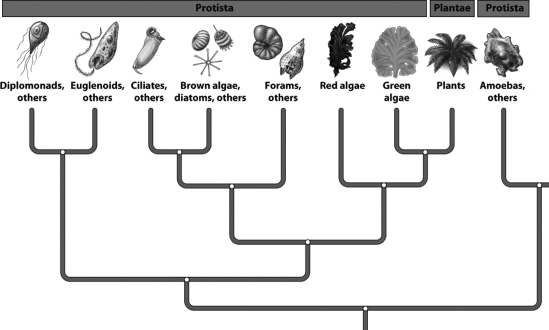 One prediction based on the arrangement of protists in the illustration is that the DNA of the
 (Multiple Choice)
4.9/5 (74)
(74) 
Filters
- Essay(0)
- Multiple Choice(0)
- Short Answer(0)
- True False(0)
- Matching(0)