



 Chat with AI
Exam 3: Protista, Plantae, and Fungi

Exam 1: The Nature of Science and the Characteristics of Life82 Questions
Exam 2: Biological Diversity, Bacteria, and Archaea101 Questions
Exam 3: Protista, Plantae, and Fungi83 Questions
Exam 4: Animalia81 Questions
Exam 5: The Chemistry of Life92 Questions
Exam 6: Cell Structure and Internal Compartments87 Questions
Exam 7: Cell Membranes, Transport, and Communication85 Questions
Exam 8: Energy, Metabolism, and Enzymes81 Questions
Exam 9: Photosynthesis and Cellular Respiration84 Questions
Exam 10: Cell Division89 Questions
Exam 11: Stem Cells, Cancer, and Human Health93 Questions
Exam 12: Patterns of Inheritance75 Questions
Exam 13: Chromosomes and Human Genetics75 Questions
Exam 14: Dna and Genes105 Questions
Exam 15: From Gene to Protein80 Questions
Exam 16: Dna Technology80 Questions
Exam 17: How Evolution Works80 Questions
Exam 18: Evolution of Populations80 Questions
Exam 19: Speciation and the Origins of Biological Diversity80 Questions
Exam 20: The Evolutionary History of Life100 Questions
Exam 21: The Biosphere89 Questions
Exam 22: Growth of Populations69 Questions
Exam 23: Ecological Communities133 Questions
Exam 24: Ecosystems75 Questions
Exam 25: Global Change70 Questions
Exam 26: Internal Organization and Homeostasis79 Questions
Exam 27: Nutrition and Digestion80 Questions
Exam 28: Circulation and Gas Exchange77 Questions
Exam 29: Animal Hormones78 Questions
Exam 30: Nervous and Sensory Systems78 Questions
Exam 31: Skeletons, Muscles, and Movement78 Questions
Exam 32: Defenses Against Disease78 Questions
Exam 33: Reproduction and Development76 Questions
Exam 34: Animal Behavior76 Questions
Exam 35: Plant Structure, Nutrition, and Transport80 Questions
Exam 36: Plant Growth and Reproduction80 Questions
Select questions type


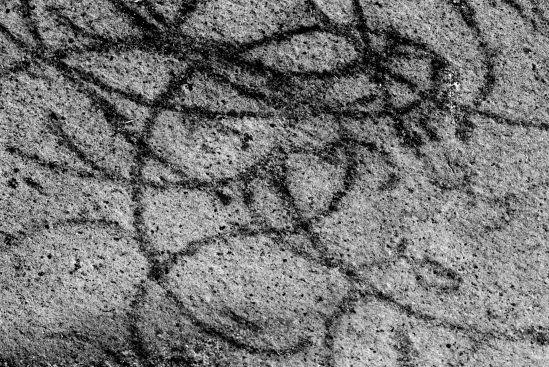
The organism recorded in this 2.1-billion-year-old fossil is almost certainly a eukaryote; no prokaryote has been observed to be multicellular with such relatively large cells.
(True/False)
4.8/5  (82)
(82) In comparison to other plant groups, the bryophytes are usually characterized by the features they lack; for example, bryophytes do not possess
(Multiple Choice)
4.8/5 (90)
(90) A waxy covering known as the ____________________ was an important adaptation for terrestrial life; it helps keep land plants from drying out when exposed to sun and wind.
(Short Answer)
4.9/5 (69)
(69) Resolving the relationship between the various kingdoms has been challenging because species often resemble one another; for example, the kingdom _____ contain some organisms that are animal-like and others that are plantlike.
(Multiple Choice)
4.8/5 (87)
(87) Despite their classification as protists the evolutionary tree suggests that choanoflagellates and the algae are more closely related to animals and plants, respectively, than one another.
(True/False)
5.0/5 (92)
(92) Stomata normally open and close throughout the day; however, if unable to close, plant tissues could be damaged as
(Multiple Choice)
4.8/5 (72)
(72) Lignin first appeared in the ferns and their relatives; its evolution allowed these plants to
(Multiple Choice)
4.8/5 (78)
(78) The hyphal mass, or body, of a fungus is constructed from interwoven filaments called mycelia.
(True/False)
4.7/5 (76)
(76) Some protists will reproduce ____________________ depending upon locating favorable living conditions by fragmentation, budding, fission, or ____________________.
(Short Answer)
4.9/5 (86)
(86) The dependence on sexual reproduction in the more complex eukaryotes suggests a greater number of benefits than asexual reproduction; one example is the
(Multiple Choice)
4.8/5 (73)
(73) The kingdom Protista is quite diverse and the relationship among its various members is unclear. The best method of clarifying those relationships will require that biologists
(Multiple Choice)
4.9/5 (88)
(88) What criteria best characterize membership in the kingdom Protista?
(Multiple Choice)
4.9/5 (75)
(75) Seeds contain the embryos of plants and nutrients to assist with germination and initial growth.
(True/False)
4.9/5 (75)
(75) In nature, fungi function primarily as ____________________, getting their nutrition from dead and dying organisms.
(Short Answer)
4.8/5 (76)
(76) The most fundamental difference between phytoplankton and zooplankton is that zooplankton is ____________________.
(Short Answer)
4.8/5 (86)
(86) Mixotrophs show some unusual nutritional strategies; for example, when resources like nitrogen become limited they often switch from
(Multiple Choice)
4.9/5 (62)
(62) No single characteristic is sufficient to describe a kingdom; for example, plants and some bacteria share in common
(Multiple Choice)
4.8/5 (78)
(78) The most ancient eukaryotic fossils are similar to red algae, a type of _____abundant today.
(Multiple Choice)
4.7/5 (93)
(93) Although exceptions exist, reproduction in most eukaryotes involves
(Multiple Choice)
4.9/5 (74)
(74) 
Filters
- Essay(0)
- Multiple Choice(0)
- Short Answer(0)
- True False(0)
- Matching(0)