



 Chat with AI
Exam 11: Music and Speech Perception

Exam 1: Introduction69 Questions
Exam 2: The First Steps in Vision: From Light to Neural Signals69 Questions
Exam 3: Spatial Vision: From Spots to Stripes63 Questions
Exam 4: Perceiving and Recognizing Objects57 Questions
Exam 5: The Perception of Color62 Questions
Exam 6: Space Perception and Binocular Vision60 Questions
Exam 7: Attention and Scene Perception64 Questions
Exam 8: Visual Motion Perception56 Questions
Exam 9: Hearing: Physiology and Psychoacoustics79 Questions
Exam 10: Hearing in the Environment49 Questions
Exam 11: Music and Speech Perception50 Questions
Exam 12: Vestibular Sensation63 Questions
Exam 13: Touch71 Questions
Exam 14: Olfaction68 Questions
Exam 15: Taste53 Questions
Select questions type


Refer to the graph.
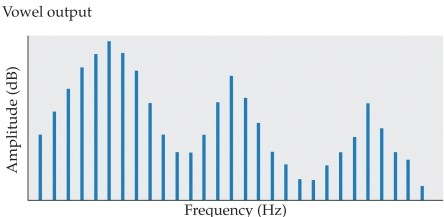 In this graph, the peaks are referred to as
 (Multiple Choice)
4.8/5  (71)
(71) Refer to the figure.
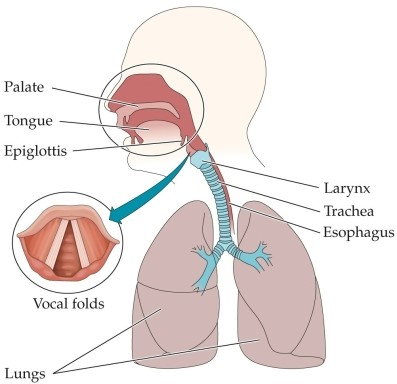 In the figure, phonation occurs in the
 (Multiple Choice)
4.7/5 (74)
(74) The _______ is the airway above the larynx that is used for the production of speech and includes the oral and nasal tracts.
(Multiple Choice)
4.8/5 (66)
(66) _______ is a sound quality shared by tones that have the same octave interval.
(Multiple Choice)
4.8/5 (82)
(82) The development of _______ has made it possible for us to learn about how speech is processed in the brain.
(Multiple Choice)
4.9/5 (75)
(75) A _______ is a combination of three or more musical notes with different pitches played simultaneously.
(Multiple Choice)
4.8/5 (84)
(84) The three basic components of the production of speech are respiration, phonation, and
(Multiple Choice)
4.7/5 (75)
(75) The phenomenon in speech whereby attributes of successive speech units overlap in articulatory or acoustic patterns is known as
(Multiple Choice)
4.8/5 (75)
(75) 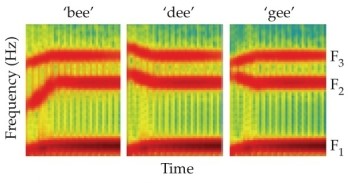 This figure shows _______ of sounds.

Filters
- Essay(0)
- Multiple Choice(0)
- Short Answer(0)
- True False(0)
- Matching(0)