



 Chat with AI
Exam 31: Fungi

Exam 1: Evolution, the Themes of Biology, and Scientific Inquiry51 Questions
Exam 2: The Chemical Context of Life61 Questions
Exam 3: Water and Life55 Questions
Exam 4: Carbon and the Molecular Diversity of Life58 Questions
Exam 5: The Structure and Function of Large Biological Molecules70 Questions
Exam 6: A Tour of the Cell66 Questions
Exam 7: Membrane Structure and Function68 Questions
Exam 8: An Introduction to Metabolism67 Questions
Exam 9: Cellular Respiration and Fermentation68 Questions
Exam 10: Photosynthesis65 Questions
Exam 11: Cell Communication65 Questions
Exam 12: The Cell Cycle66 Questions
Exam 13: Meiosis and Sexual Life Cycles64 Questions
Exam 14: Mendel and the Gene Idea62 Questions
Exam 15: The Chromosomal Basis of Inheritance58 Questions
Exam 16: The Molecular Basis of Inheritance65 Questions
Exam 17: Gene Expression: From Gene to Protein67 Questions
Exam 18: Regulation of Gene Expression66 Questions
Exam 19: Viruses54 Questions
Exam 20: DNA Tools and Biotechnology57 Questions
Exam 21: Genomes and Their Evolution44 Questions
Exam 22: Descent with Modification: A Darwinian View of Life60 Questions
Exam 23: The Evolution of Populations64 Questions
Exam 24: The Origin of Species67 Questions
Exam 25: The History of Life on Earth59 Questions
Exam 26: Phylogeny and the Tree of Life75 Questions
Exam 27: Bacteria and Archaea75 Questions
Exam 28: Protists79 Questions
Exam 29: Plant Diversity I: How Plants Colonized Land82 Questions
Exam 30: Plant Diversity II: The Evolution of Seed Plants80 Questions
Exam 31: Fungi75 Questions
Exam 32: An Overview of Animal Diversity67 Questions
Exam 33: An Introduction to Invertebrates83 Questions
Exam 34: The Origin and Evolution of Vertebrates82 Questions
Exam 35: Vascular Plant Structure, Growth, and Development65 Questions
Exam 36: Resource Acquisition and Transport in Vascular Plants74 Questions
Exam 37: Soil and Plant Nutrition52 Questions
Exam 38: Angiosperm Reproduction and Biotechnology60 Questions
Exam 39: Plant Responses to Internal and External Signals61 Questions
Exam 40: Basic Principles of Animal Form and Function68 Questions
Exam 41: Animal Nutrition64 Questions
Exam 42: Circulation and Gas Exchange67 Questions
Exam 43: The Immune System69 Questions
Exam 44: Osmoregulation and Excretion64 Questions
Exam 45: Hormones and the Endocrine System66 Questions
Exam 46: Animal Reproduction68 Questions
Exam 47: Animal Development70 Questions
Exam 48: Neurons, Synapses, and Signaling68 Questions
Exam 49: Nervous Systems65 Questions
Exam 50: Sensory and Motor Mechanisms67 Questions
Exam 51: Animal Behavior69 Questions
Exam 52: An Introduction to Ecology and the Biosphere68 Questions
Exam 53: Population Ecology69 Questions
Exam 54: Community Ecology71 Questions
Exam 55: Ecosystems and Restoration Ecology68 Questions
Exam 56: Conservation Biology and Global Change69 Questions
Select questions type


Use the information to answer the following question.
The figure depicts the outline of a large fairy ring that has appeared overnight in an open meadow, as viewed from above. The fairy ring represents the furthest advance of this mycelium through the soil. Locations A-D are all 0.5 meters below the soil surface.
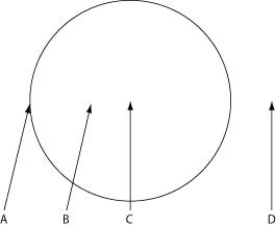 At which location should one find the lowest concentration of fungal enzymes, assuming that the enzymes do not diffuse far from their source and that no other fungi are present in this habitat?
 (Multiple Choice)
4.9/5  (87)
(87) In most fungi, karyogamy does not immediately follow plasmogamy, which consequently ________.
(Multiple Choice)
4.8/5 (70)
(70) Use the following information to answer the question.
Heterobasidion is a basidiomycete that contributes to mortality of trees. Kuhlman isolated 23 strains of Heterobasidion and applied them to 16 seedlings of 10 different tree species. Partial results of this experiment are shown in the table.
% mortality of five host species from five Heterobasidion isolates
Isolate Isolate Isolate Isolate Isolate Host 63 117 195 126 118 Slash Pine 50 69 94 100 94 Shortleaf Pine 75 56 94 94 100 Red Cedar 38 32 19 50 25 Yellow-Poplar 0 0 0 6 6 6 Sycamore 0 0 0 0 6
Which of the following conclusions can best be drawn from these results?
(Multiple Choice)
4.8/5 (71)
(71) You observe the gametes of a fungal species under the microscope and realize that they resemble animal sperm. To which of the following groups does the fungus belong?
(Multiple Choice)
4.9/5 (84)
(84) Orchid seeds are tiny, with virtually no endosperm and with miniscule cotyledons. If such seeds are deposited in a dark, moist environment, then which of the following represents the most likely means by which fungi might assist in seed germination, given what the seeds lack?
(Multiple Choice)
4.8/5 (78)
(78) Use the following information to answer the question.
The figure depicts the outline of a large fairy ring that has appeared overnight in an open meadow, as viewed from above. The fairy ring represents the furthest advance of this mycelium through the soil. Locations A-D are all 0.5 meters below the soil surface.
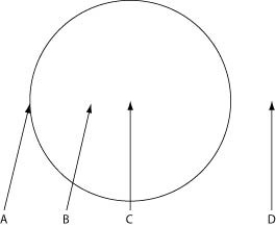 In which of the following human mycoses should one expect to find a growth pattern most similar to that of the mycelium that produced the fairy ring?
 (Multiple Choice)
4.9/5 (86)
(86) Use the information to answer the following question.
The figure depicts the outline of a large fairy ring that has appeared overnight in an open meadow, as viewed from above. The fairy ring represents the furthest advance of this mycelium through the soil. Locations A-D are all 0.5 meters below the soil surface.
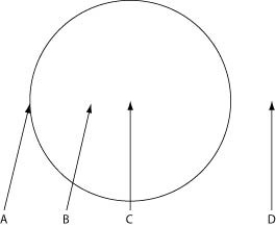 If the fungus that produced the fairy ring can also produce arbuscules, then which of the following is most likely to be buried at location "C"?
 (Multiple Choice)
4.8/5 (99)
(99) Use the following information to answer the question.
Rose-picker's disease is caused by the yeast Sporothrix schenkii (S. schenkii). The yeast grows on the exteriors of rose-bush thorns. If a human gets pricked by such a thorn, the yeasts can be introduced under the skin. The yeasts then assume a hyphal morphology and grow along the interiors of lymphatic vessels until they reach a lymph node. This often results in the accumulation of pus in the lymph node, which subsequently ulcerates through the skin surface and then drains.
Suppose that S. schenkii had initially been classified as a deuteromycete. Asci were later discovered in the pus that oozed from an ulcerated lymph node, and the spores therein germinated, giving rise to S. schenkii yeasts. Which of these statements make sense on the basis of this information?
(Multiple Choice)
4.8/5 (66)
(66) Chitin is a long-chain polymer derived from glucose. It strengthens cell walls of fungi and the outer covering (exoskeleton)of arthropods (including crabs, shrimps, and insects). The presence of chitin in these groups is likely due to ________.
(Multiple Choice)
4.7/5 (78)
(78) Which feature seen in chytrids supports the hypothesis that they diverged earliest in fungal evolution?
(Multiple Choice)
4.8/5 (85)
(85) Asexual reproduction in yeasts occurs by budding. Due to unequal cytokinesis, the "bud" cell receives less cytoplasm than the parent cell. Which of the following statements should be an accurate characterization of the smaller cell until it reaches the size of the larger cell?
(Multiple Choice)
4.8/5 (86)
(86) Which of the following characteristics would be most helpful in distinguishing among different species of fungi?
(Multiple Choice)
4.9/5 (83)
(83) Which of the following best describes the physical relationship of the partners involved in lichens?
(Multiple Choice)
4.9/5 (60)
(60) If you wanted to use fungi to improve the environment, which of the following research goals would make the most sense?
(Multiple Choice)
4.9/5 (82)
(82) Use the following information to answer the question.
There is much discussion in the media about protecting biodiversity. But does biodiversity really matter? Canadian and Swiss researchers wanted to know if the diversity of arbuscular mycorrhizal fungi (AMF)was important to the productivity of grasslands (M.G.A. van der Heijden, J. N. Klironomos, M. Ursic, P. Moutoglis, R. Streitwolf-Engel, T. Boler, A. Wiemken, and I. R. Sanders. 1998. Mycorrhizal fungal diversity determines plant biodiversity, ecosystem variability, and productivity. Nature 396:69-72). Specifically, they wanted to know if it mattered which specific AMF species were present, or just that some type of AMF was present. They grew various plants in combination with one of four AMF species (A, B, C, and D), no AMF species (O), or all four AMF species together (A + B + C + D); and they measured plant growth under each set of conditions. All plant species were grown in each plot, so they always competed with each other, with the only difference being which AMF species were present.
On the graphs, the x-axis labels indicate the number and identity of AMF species (bar 0 = no fungi; bars A - D = individual AMF species; bar A + B + C + D = all AMF species together). The y-axis indicates the amount (grams)of plant biomass for the species shown in italics above each graph.
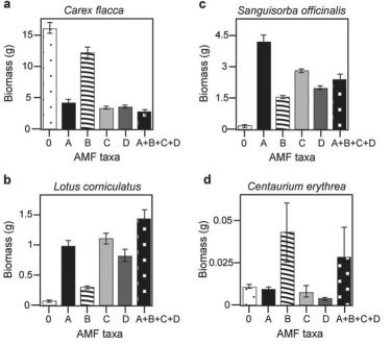 Based on the van der Heijden et al. (1998)graphs in the figure, which of the following is the best description of the data supporting the idea that a plant species did not form mycorrhizae with a fungus? Its biomass is greatest when ________.
 (Multiple Choice)
4.9/5 (94)
(94) Use the following information to answer the question.
Suzanne Simard and colleagues knew that the same mycorrhizal fungal species could colonize multiple types of trees. They wondered if the same fungal individual would colonize different trees, forming an underground network that potentially could transport carbon and nutrients from one tree to another (S. Simard et al. 1997. Net transfer of carbon between mycorrhizal tree species in the field. Nature 388:579-82).
Pots containing seedlings of three different tree species were set up and grown under natural conditions for three years (Fig. A). Two of the three species (Douglas fir, birch)could form ectomycorrhizal connections with the same fungal species, but the third species (cedar)could not form an ectomycorrhizal connection with the fungal species. In some of the pots, the researchers placed airtight bags over the Douglas fir and birch seedlings and injected carbon dioxide made from carbon-13 into the bags with the Douglas fir and carbon dioxide made from carbon-14 into the bags with the birch. (13C and 14C are different isotopes of carbon that can be detected and measured by researchers.)As the seedlings photosynthesized, the carbon dioxide was converted into sugars that could be tracked and measured by the researchers. The researchers measured whether the sugars in each plant contained only the carbon isotope that was in the air of their plastic bag or also the carbon isotope from the air around the other plant.
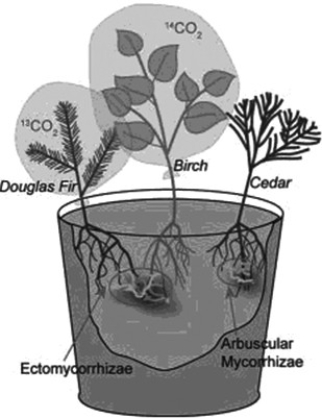 Figure A
 (Multiple Choice)
4.8/5 (83)
(83) The most important adaptive advantage associated with the filamentous nature of fungal mycelia is
(Multiple Choice)
4.9/5 (81)
(81) 
Filters
- Essay(0)
- Multiple Choice(0)
- Short Answer(0)
- True False(0)
- Matching(0)