



 Chat with AI
Exam 3: Environmental History, Politics, and Economics

Exam 1: The Environmental Challenges We Face76 Questions
Exam 2: Sustainability and Human Values70 Questions
Exam 3: Environmental History, Politics, and Economics81 Questions
Exam 4: Risk Analysis and Environmental Health Hazards78 Questions
Exam 5: How Ecosystems Work91 Questions
Exam 6: Ecosystems and Evolution94 Questions
Exam 7: Human Population Change and the Environment89 Questions
Exam 8: Air and Air Pollution80 Questions
Exam 9: Global Atmospheric Changes68 Questions
Exam 10: Freshwater Resources and Water Pollution96 Questions
Exam 11: The Ocean and Fisheries74 Questions
Exam 12: Mineral and Soil Resources98 Questions
Exam 13: Land Resources78 Questions
Exam 14: Agriculture and Food Resources69 Questions
Exam 15: Biodiversity and Conservation73 Questions
Exam 16: Solid and Hazardous Waste69 Questions
Exam 17: Nonrenewable Energy Resources68 Questions
Exam 18: Renewable Energy Resources70 Questions
Select questions type


All of the following would contribute to natural capital, EXCEPT:
(Multiple Choice)
4.9/5  (68)
(68) What is NEPA and how did it revolutionize environmental protection in the USA?
(Essay)
4.9/5 (83)
(83) The study of how people use their limited resources to try to satisfy their unlimited wants is:
(Multiple Choice)
4.8/5 (72)
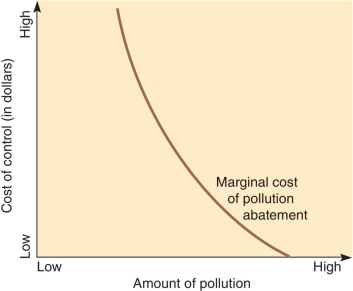
(72) 
The legislation that requires the federal government to consider the environmental impact of a proposed federal action, such as financing highway or dam construction, when making decisions about that action is:
(Multiple Choice)
4.8/5 (86)
(86) Conservation and preservation are considered the same in environmental science.
(True/False)
4.8/5 (89)
(89) What is natural capital? Draw a schematic to show how economics is related to natural capital?
(Essay)
4.9/5 (84)
(84) Setting aside undisturbed areas, maintaining them in a pristine state, and protecting them from human activities that might alter them from their natural state is known as __________.
(Short Answer)
4.9/5 (78)
(78) In the field of economics, the additional cost associated with one more unit of something is called a(n)
(Multiple Choice)
4.8/5 (86)
(86) Who among the following would most likely believe that natural resources should be used for the greatest good for the most people for the longest time?
(Multiple Choice)
4.8/5 (67)
(67) Systems perspective is only concerned with the immediate or intended effects of activities.
(True/False)
4.9/5 (92)
(92) How might the pollution be controlled using command and control regulations? How might it be controlled using incentive-based regulations? Provide examples to illustrate your answer.
(Essay)
4.9/5 (85)
(85) The author of which of the following books would likely have lectured during the Earth Day celebrations in 1970?
(Multiple Choice)
4.9/5 (78)
(78) Only the source contributes to the natural capital not the sink.
(True/False)
4.8/5 (79)
(79) Who wrote Man and Nature, one of the first books discussing human impact on global environmental change?
(Multiple Choice)
4.8/5 (80)
(80) Laws that impose rules and regulations and set limits of pollution are called:
(Multiple Choice)
4.8/5 (81)
(81) Environmental regulations passed by the United States Congress have included the Clean Air Act, the Clean Water Act, and the Resource Conservation and Recovery Act.
(True/False)
4.8/5 (80)
(80) When consumption or production of a product has a harmful side effect that is borne by people not directly involved in the market exchange for that product, the side effect is called a(n)
(Multiple Choice)
4.9/5 (79)
(79) Describe the optimum amount of pollution concept and identify any weaknesses in this approach. What is the nature of the conflicts between this economic view of the environment and an environmentalist's perspective? How can these discrepancies be resolved in a way that benefits the environment?
(Essay)
4.7/5 (83)
(83) Controversy over damming in National Parks surrounds which clause of the US Park service's mission?
(Multiple Choice)
4.8/5 (84)
(84) 
Filters
- Essay(0)
- Multiple Choice(0)
- Short Answer(0)
- True False(0)
- Matching(0)