



 Chat with AI
Exam 4: Risk Analysis and Environmental Health Hazards

Exam 1: The Environmental Challenges We Face76 Questions
Exam 2: Sustainability and Human Values70 Questions
Exam 3: Environmental History, Politics, and Economics81 Questions
Exam 4: Risk Analysis and Environmental Health Hazards78 Questions
Exam 5: How Ecosystems Work91 Questions
Exam 6: Ecosystems and Evolution94 Questions
Exam 7: Human Population Change and the Environment89 Questions
Exam 8: Air and Air Pollution80 Questions
Exam 9: Global Atmospheric Changes68 Questions
Exam 10: Freshwater Resources and Water Pollution96 Questions
Exam 11: The Ocean and Fisheries74 Questions
Exam 12: Mineral and Soil Resources98 Questions
Exam 13: Land Resources78 Questions
Exam 14: Agriculture and Food Resources69 Questions
Exam 15: Biodiversity and Conservation73 Questions
Exam 16: Solid and Hazardous Waste69 Questions
Exam 17: Nonrenewable Energy Resources68 Questions
Exam 18: Renewable Energy Resources70 Questions
Select questions type


Compare and contrast the two images below in the context of human health. How are the two images connected? 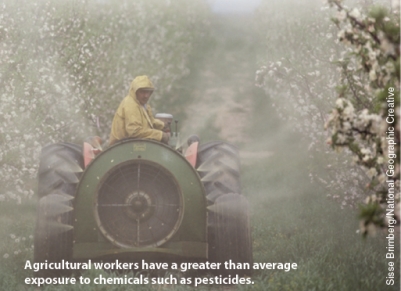
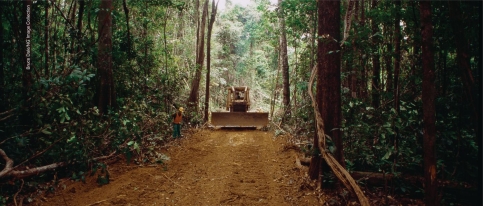
(Essay)
4.8/5  (73)
(73) Which of the following action(s)may unintentionally contribute to outbreaks and rapid spread of infectious disease?
(Multiple Choice)
4.8/5 (81)
(81) Which of the following associations between children, adults, and pesticides is CORRECT?
(Multiple Choice)
4.7/5 (75)
(75) An antagonistic interaction in a chemical mixture results in:
(Multiple Choice)
4.9/5 (69)
(69) Which of the following would be considered an infectious disease-causing agent?
(Multiple Choice)
4.9/5 (70)
(70) The four steps in risk assessment are hazard identification, dose-response assessment, exposure assessment, and risk characterizations.
(True/False)
4.7/5 (63)
(63) Which of the following statements about risk, risk assessment, and risk management is CORRECT?
(Multiple Choice)
4.9/5 (64)
(64) What is the major risk associated with endocrine disruptors?
(Multiple Choice)
4.9/5 (75)
(75) How might the clearing of roads and pristine areas like the one shown below lead to an increase in infectious disease? 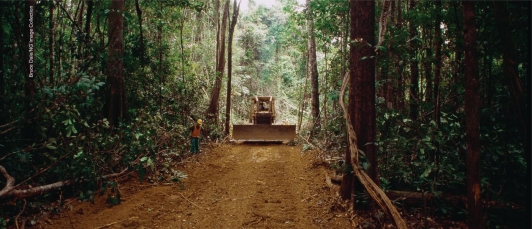
(Multiple Choice)
4.8/5 (79)
(79) Put the following steps of risk assessment in the correct order:
I. risk characterization
II. risk management
III. hazard identification
IV. dose-response and exposure assessment
(Multiple Choice)
4.8/5 (84)
(84) DDT was sprayed in a Long Island salt marsh over a period of years for mosquito control. A portion of the food web is as follows: algae -> shrimp-> American eel -> Atlantic needlefish -> ring-billed gull
In which organism would biological magnification be MOST evident?
(Multiple Choice)
4.9/5 (84)
(84) What is believed to account for the differences in the two drawings shown below? 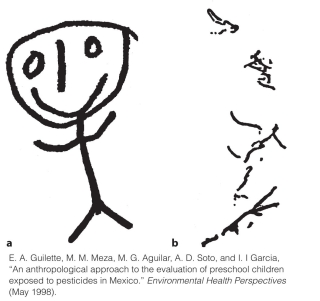
(Multiple Choice)
4.9/5 (77)
(77) The _________ is the type and amount of damage that exposure to a particular dose causes.
(Short Answer)
4.9/5 (85)
(85) 
Filters
- Essay(0)
- Multiple Choice(0)
- Short Answer(0)
- True False(0)
- Matching(0)