



 Chat with AI
Exam 1: The Nature of Geology

Exam 1: The Nature of Geology110 Questions
Exam 2: Investigating Geologic Questions106 Questions
Exam 3: Plate Tectonics152 Questions
Exam 4: Earth Materials131 Questions
Exam 5: Igneous Environments147 Questions
Exam 6: Volcanoes and Volcanic Hazards186 Questions
Exam 7: Sedimentary Environments155 Questions
Exam 8: Deformation and Metamorphism144 Questions
Exam 9: Geologic Time126 Questions
Exam 10: Seafloor and Continental Margins105 Questions
Exam 11: Mountains, Basins, and Continents124 Questions
Exam 12: Earthquakes and Earths Interior119 Questions
Exam 13: Climate and Weathering109 Questions
Exam 14: Glaciers, Shorelines, and Changing Sea Levels109 Questions
Exam 15: Weathering, Soil, and Unstable Slopes92 Questions
Exam 16: Streams and Flooding137 Questions
Exam 17: Water Resources142 Questions
Exam 18: Energy and Mineral Resources95 Questions
Exam 19: Geology of the Solar System77 Questions
Select questions type


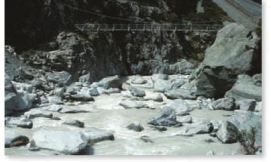
Which of the following surface environments is the most likely site for deposits in this photograph? 
(Multiple Choice)
4.7/5  (78)
(78) A type of rock that forms directly from precipitates of hot water is called an):
(Multiple Choice)
4.8/5 (98)
(98) What happens to a mountain in terms of isostatic adjustment following a period of significant erosion?
(Multiple Choice)
4.9/5 (77)
(77) The uppermost part of the oceans, as expressed by normal ocean waves, are in constant motion due to the effects of the:
(Multiple Choice)
4.9/5 (74)
(74) Based on this topographic profile across the central United States, which region probably has the thinnest crust? 
(Multiple Choice)
4.7/5 (88)
(88) Choose appropriate ways) that volcanoes might impact people living nearby:
(Multiple Choice)
4.8/5 (81)
(81) Radioactive decay in the Earth, especially in the Earth's crust, creates a tremendous amount of:
(Multiple Choice)
4.7/5 (75)
(75) The Earth's orbit around the Sun is almost circular. Therefore, Earth receives about the same amount of year-round ________.
(Multiple Choice)
4.8/5 (83)
(83) According to the rock cycle, sediment that is being transported by a river could become a metamorphic rock after:
(Multiple Choice)
4.9/5 (74)
(74) Choose the answer that best explains why a rock might not go through the complete rock cycle.
(Multiple Choice)
4.9/5 (85)
(85) Which layer in the earth is similar to the composition of granite?
(Multiple Choice)
4.8/5 (71)
(71) What type of rock would the materials shown in this photograph produce? 
(Multiple Choice)
4.9/5 (74)
(74) Which of the following does NOT list processes in an order consistent with a logical progression through the rock cycle?
(Multiple Choice)
4.9/5 (81)
(81) 
Which of these best describes the location of the core within the Earth?
(Multiple Choice)
4.9/5 (85)
(85) 
Which of the following is NOT an important difference between continents and oceans?
(Multiple Choice)
4.9/5 (69)
(69) 

Filters
- Essay(0)
- Multiple Choice(0)
- Short Answer(0)
- True False(0)
- Matching(0)