



 Chat with AI
Exam 4: Earth Materials

Exam 1: The Nature of Geology110 Questions
Exam 2: Investigating Geologic Questions106 Questions
Exam 3: Plate Tectonics152 Questions
Exam 4: Earth Materials131 Questions
Exam 5: Igneous Environments147 Questions
Exam 6: Volcanoes and Volcanic Hazards186 Questions
Exam 7: Sedimentary Environments155 Questions
Exam 8: Deformation and Metamorphism144 Questions
Exam 9: Geologic Time126 Questions
Exam 10: Seafloor and Continental Margins105 Questions
Exam 11: Mountains, Basins, and Continents124 Questions
Exam 12: Earthquakes and Earths Interior119 Questions
Exam 13: Climate and Weathering109 Questions
Exam 14: Glaciers, Shorelines, and Changing Sea Levels109 Questions
Exam 15: Weathering, Soil, and Unstable Slopes92 Questions
Exam 16: Streams and Flooding137 Questions
Exam 17: Water Resources142 Questions
Exam 18: Energy and Mineral Resources95 Questions
Exam 19: Geology of the Solar System77 Questions
Select questions type


What mineral property is illustrated by this photograph? 

Free
(Multiple Choice)
4.9/5  (88)
(88) Correct Answer: Verified
D
The mineral in the image is quartz. Take a look at the irregularly broken left end of the crystal and determine which of the following is true. 
Free
(Multiple Choice)
4.8/5 (76)
(76) Correct Answer:Verified
VerifiedA
What type of cleavage is illustrated in this figure? 
Free
(Multiple Choice)
4.8/5 (64)
(64) Correct Answer:Verified
VerifiedA
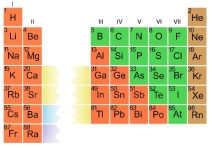
In this part of the Periodic Table, what type of elements are in the group that includes elements He, Ne, and Ar? 
(Multiple Choice)
5.0/5 (74)
(74) Which layer in the earth has a composition similar to the green olivine in the center of this rock? 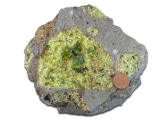
(Multiple Choice)
4.9/5 (89)
(89) 
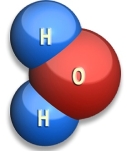
Which of the following minerals are common in Earth's crust?
(Multiple Choice)
4.8/5 (84)
(84) Why are silicate minerals the most abundant in Earth's crust and mantle?
(Multiple Choice)
4.7/5 (71)
(71) 
The mineral halite is seen in the image. One part of the atomic arrangement repeats indefinitely to make the entire crystal. This property of a mineral is called: 
(Multiple Choice)
4.9/5 (80)
(80) What class of minerals form when the element Si is bonded with element O, as in the mineral quartz? 
(Multiple Choice)
4.9/5 (89)
(89) What type of cleavage would be exhibited by a mineral that has this arrangement of silicon tetrahedron? 
(Multiple Choice)
4.9/5 (88)
(88) What class of mineral forms when the element C is bonded with element O, as in the mineral calcite? 
(Multiple Choice)
4.9/5 (73)
(73) The dominant shape in which silicon and oxygen atoms combine in silicate minerals is:
(Multiple Choice)
4.7/5 (69)
(69) Which of the following is NOT a characteristic of rocks with clastic textures?
(Multiple Choice)
4.8/5 (92)
(92) What class of mineral forms when the element O is bonded with a metal, as in the mineral hematite? 
(Multiple Choice)
4.8/5 (81)
(81) 
Filters
- Essay(0)
- Multiple Choice(0)
- Short Answer(0)
- True False(0)
- Matching(0)