



 Chat with AI
Exam 4: Exponential and Logarithmic Functions

Exam 1: Functions and Their Graphs301 Questions
Exam 2: Linear and Quadratic Functions301 Questions
Exam 3: Polynomial and Rational Functions350 Questions
Exam 4: Exponential and Logarithmic Functions518 Questions
Exam 5: Trigonometric Functions366 Questions
Exam 6: Analytic Trigonometry402 Questions
Exam 7: Applications of Trigonometric Functions103 Questions
Exam 8: Polar Coordinates; Vectors270 Questions
Exam 9: Analytic Geometry197 Questions
Exam 10: Systems of Equations and Inequalities235 Questions
Exam 11: Sequences; Induction; the Binomial Theorem238 Questions
Exam 12: Counting and Probability108 Questions
Exam 13: A Preview of Calculus: the Limit, Derivative, and Integral of a Function145 Questions
Exam 14: Review228 Questions
Select questions type


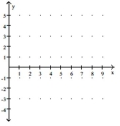
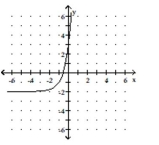
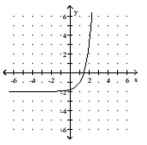
Graph the function using a graphing utility and the Change-of-Base Formula.
-
 A)
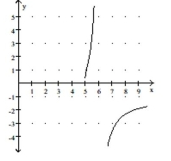 B)
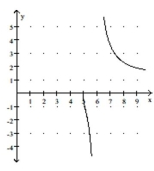 C)
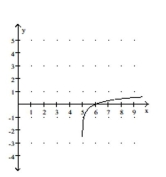 D)
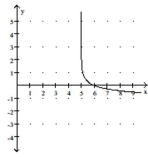
A)
B)
C)
D)
(Multiple Choice)
4.8/5  (90)
(90) Solve the problem.
-Bob, the incredible shrinking man, loses half of his height each day after he was exposed to a mysterious form of
cosmic radiation. How many days before he is literally "knee-high to a grasshopper"? Assume that a
grasshopper's knee is 4 millimeters high and that Bob is 2 meters tall. Round your answer to the nearest whole
day. (1000 millimeters = 1 meter)
(Short Answer)
4.9/5 (73)
(73) Find the effective rate of interest.
-12.25% compounded monthly
(Multiple Choice)
5.0/5 (88)
(88) Solve the exponential equation. Express the solution set in terms of natural logarithms.
-
(Multiple Choice)
4.9/5 (81)
(81) Find the amount that results from the investment.
-$14,000 invested at 15% compounded semiannually after a period of 9 years
(Multiple Choice)
4.9/5 (70)
(70) Find the inverse function of f. State the domain and range of f.
-
(Multiple Choice)
4.8/5 (83)
(83) Decide whether the composite functions, f nd f, are equal to x.
-
(Multiple Choice)
4.9/5 (86)
(86) Solve the problem.
-A thermometer reading 11°C is brought into a room with a constant temperature of 30°C. If the thermometer reads 17°C after 4 minutes, what will it read after being in the room for 7 minutes? Assume the cooling follows
Newton's Law of Cooling: (Round your answer to two decimal places.)
(Multiple Choice)
4.9/5 (77)
(77) 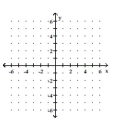 A)
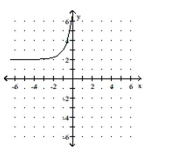 B)
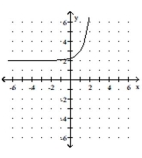 C)
 D)
The Richter scale converts seismographic readings into numbers for measuring the magnitude of an earthquake according to this
function
-Find the magnitude (to one decimal place) of an earthquake whose seismographic reading is 2000 millimeters at
a distance of 100 kilometers from its epicenter.
(Essay)
4.8/5 (68)
(68) Change the logarithmic expression to an equivalent expression involving an exponent.
-
(Multiple Choice)
4.8/5 (93)
(93) Solve the problem.
-The value of a particular investment follows a pattern of exponential growth. In the year 2000, you invested money in a money market account. The value of your investment t years after 2000 is given by the exponential
Growth model A . How much did you initially invest in the account?
(Multiple Choice)
4.8/5 (73)
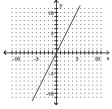
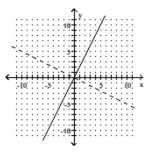
(73) The graph of a one-to-one function f is given. Draw the graph of the inverse function f-1 as a dashed line or curve.
-
 A)
 B)
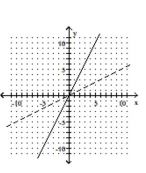
A)
B)
(Multiple Choice)
4.8/5 (88)
(88) Use a graphing calculator to solve the equation. Round your answer to two decimal places.
-
(Multiple Choice)
4.7/5 (78)
(78) 
Filters
- Essay(0)
- Multiple Choice(0)
- Short Answer(0)
- True False(0)
- Matching(0)