Exam 4: Exponential and Logarithmic Functions

arrow
  • Select Tags
search iconSearch Question
  • Select Tags

Graph the function. - y=log⁡1/4xy=\log _{1 / 4} x  Graph the function. - y=\log _{1 / 4} x     A)   B)   C)   D)   A)  Graph the function. - y=\log _{1 / 4} x     A)   B)   C)   D)   B)  Graph the function. - y=\log _{1 / 4} x     A)   B)   C)   D)   C)  Graph the function. - y=\log _{1 / 4} x     A)   B)   C)   D)   D)  Graph the function. - y=\log _{1 / 4} x     A)   B)   C)   D)

(Multiple Choice)
4.7/5
(69)

Find the inverse of the function and state its domain and range . - {(−3,4),(−1,5),(0,2),(2,6),(5,7)}\{ ( - 3,4 ) , ( - 1,5 ) , ( 0,2 ) , ( 2,6 ) , ( 5,7 ) \}

(Multiple Choice)
4.8/5
(80)

Solve the equation. - log⁡5x=2\log _ { 5 } x = 2

(Multiple Choice)
4.9/5
(74)

Find the value of the expression. -Let log⁡bA=5\log _ { b } A = 5 and log⁡bB=−4\log _ { b } B = - 4 . Find log⁡bB2\log _ { b } B ^ { 2 } .

(Multiple Choice)
4.9/5
(69)

Solve the problem. Round your answer to three decimals. -How long will it take for an investment to triple in value if it earns 8.5% compounded continuously?

(Multiple Choice)
4.7/5
(85)

Write as the sum and/or difference of logarithms. Express powers as factors. - ln⁡((x+5)(x−2)(x−8)4)4/3,x>2\ln \left( \frac { ( x + 5 ) ( x - 2 ) } { ( x - 8 ) ^ { 4 } } \right) ^ { 4 / 3 } , \quad x > 2

(Multiple Choice)
4.8/5
(82)

Solve the problem. -The logistic growth functi f(t)=8001+9.0e−0.16tf ( t ) = \frac { 800 } { 1 + 9.0 e ^ { - 0.16 t } } describes the population of a species of butterflies t months after they are introduced to a non-threatening habitat. How many butterflies are expected in the habitat after 15 Months?

(Multiple Choice)
4.7/5
(80)

Choose the one alternative that best completes the statement or answers the question. Solve the exponential equation. Use a calculator to obtain a decimal approximation, correct to two decimal places, for the solution. - 46x=4.84 ^ { 6 x } = 4.8

(Multiple Choice)
4.8/5
(75)

Change the logarithmic expression to an equivalent expression involving an exponent. - log⁡5x=2\log _ { 5 } x = 2

(Multiple Choice)
4.8/5
(80)

Use transformations to graph the function. Determine the domain, range, and horizontal asymptote of the function. - f(x)=+5  Use transformations to graph the function. Determine the domain, range, and horizontal asymptote of the function. - \begin{array} { l }  f ( x ) = 2 ^ { - x } + 5 \\  \end{array}     A) domain of  f : ( - \infty , \infty ) ; range of  f : ( 2 , \infty )   horizontal asymptote:  \mathrm { y } = 2     B) domain of  f : ( - \infty , \infty ) ; range of  f : ( 5 , \infty )   horizontal asymptote:  \mathrm { y } = 5    C) domain of  f : ( - \infty , \infty ) ; range of  f : ( 2 , \infty )  horizontal asymptote:  \mathrm { y } = 2     D) domain of  f : ( - \infty , \infty ) ; range of  f : ( 5 , \infty )    horizontal asymptote:  \mathrm { y } = 5     A) domain of f:(−∞,∞)f : ( - \infty , \infty ) ; range of f:(2,∞)f : ( 2 , \infty ) horizontal asymptote: y=2\mathrm { y } = 2  Use transformations to graph the function. Determine the domain, range, and horizontal asymptote of the function. - \begin{array} { l }  f ( x ) = 2 ^ { - x } + 5 \\  \end{array}     A) domain of  f : ( - \infty , \infty ) ; range of  f : ( 2 , \infty )   horizontal asymptote:  \mathrm { y } = 2     B) domain of  f : ( - \infty , \infty ) ; range of  f : ( 5 , \infty )   horizontal asymptote:  \mathrm { y } = 5    C) domain of  f : ( - \infty , \infty ) ; range of  f : ( 2 , \infty )  horizontal asymptote:  \mathrm { y } = 2     D) domain of  f : ( - \infty , \infty ) ; range of  f : ( 5 , \infty )    horizontal asymptote:  \mathrm { y } = 5     B) domain of f:(−∞,∞)f : ( - \infty , \infty ) ; range of f:(5,∞)f : ( 5 , \infty ) horizontal asymptote: y=5\mathrm { y } = 5  Use transformations to graph the function. Determine the domain, range, and horizontal asymptote of the function. - \begin{array} { l }  f ( x ) = 2 ^ { - x } + 5 \\  \end{array}     A) domain of  f : ( - \infty , \infty ) ; range of  f : ( 2 , \infty )   horizontal asymptote:  \mathrm { y } = 2     B) domain of  f : ( - \infty , \infty ) ; range of  f : ( 5 , \infty )   horizontal asymptote:  \mathrm { y } = 5    C) domain of  f : ( - \infty , \infty ) ; range of  f : ( 2 , \infty )  horizontal asymptote:  \mathrm { y } = 2     D) domain of  f : ( - \infty , \infty ) ; range of  f : ( 5 , \infty )    horizontal asymptote:  \mathrm { y } = 5     C) domain of f:(−∞,∞)f : ( - \infty , \infty ) ; range of f:(2,∞)f : ( 2 , \infty ) horizontal asymptote: y=2\mathrm { y } = 2  Use transformations to graph the function. Determine the domain, range, and horizontal asymptote of the function. - \begin{array} { l }  f ( x ) = 2 ^ { - x } + 5 \\  \end{array}     A) domain of  f : ( - \infty , \infty ) ; range of  f : ( 2 , \infty )   horizontal asymptote:  \mathrm { y } = 2     B) domain of  f : ( - \infty , \infty ) ; range of  f : ( 5 , \infty )   horizontal asymptote:  \mathrm { y } = 5    C) domain of  f : ( - \infty , \infty ) ; range of  f : ( 2 , \infty )  horizontal asymptote:  \mathrm { y } = 2     D) domain of  f : ( - \infty , \infty ) ; range of  f : ( 5 , \infty )    horizontal asymptote:  \mathrm { y } = 5     D) domain of f:(−∞,∞)f : ( - \infty , \infty ) ; range of f:(5,∞)f : ( 5 , \infty ) horizontal asymptote: y=5\mathrm { y } = 5  Use transformations to graph the function. Determine the domain, range, and horizontal asymptote of the function. - \begin{array} { l }  f ( x ) = 2 ^ { - x } + 5 \\  \end{array}     A) domain of  f : ( - \infty , \infty ) ; range of  f : ( 2 , \infty )   horizontal asymptote:  \mathrm { y } = 2     B) domain of  f : ( - \infty , \infty ) ; range of  f : ( 5 , \infty )   horizontal asymptote:  \mathrm { y } = 5    C) domain of  f : ( - \infty , \infty ) ; range of  f : ( 2 , \infty )  horizontal asymptote:  \mathrm { y } = 2     D) domain of  f : ( - \infty , \infty ) ; range of  f : ( 5 , \infty )    horizontal asymptote:  \mathrm { y } = 5
(Multiple Choice)
4.8/5
(80)

Solve the equation. - 3−x=193 ^ { - x } = \frac { 1 } { 9 }

(Multiple Choice)
4.8/5
(83)

For the given functions f and g, find the requested composite function value. - f(x)=13x2−4x,g(x)=16x−10;f ( x ) = 13 x ^ { 2 } - 4 x , \quad g ( x ) = 16 x - 10 ; \quad Find (f∘g)(9)( f \circ g ) ( 9 ) .

(Multiple Choice)
4.8/5
(79)

Use transformations to graph the function. -  Use the graph of log⁡4x to obtain the graph of f(x)=log⁡4(x−1). \text { Use the graph of } \log _ { 4 } x \text { to obtain the graph of } f ( x ) = \log _ { 4 } ( x - 1 ) \text {. }  Use transformations to graph the function. - \text { Use the graph of } \log _ { 4 } x \text { to obtain the graph of } f ( x ) = \log _ { 4 } ( x - 1 ) \text {. }     A)   B)   C)   D)    A)  Use transformations to graph the function. - \text { Use the graph of } \log _ { 4 } x \text { to obtain the graph of } f ( x ) = \log _ { 4 } ( x - 1 ) \text {. }     A)   B)   C)   D)    B)  Use transformations to graph the function. - \text { Use the graph of } \log _ { 4 } x \text { to obtain the graph of } f ( x ) = \log _ { 4 } ( x - 1 ) \text {. }     A)   B)   C)   D)    C)  Use transformations to graph the function. - \text { Use the graph of } \log _ { 4 } x \text { to obtain the graph of } f ( x ) = \log _ { 4 } ( x - 1 ) \text {. }     A)   B)   C)   D)    D)  Use transformations to graph the function. - \text { Use the graph of } \log _ { 4 } x \text { to obtain the graph of } f ( x ) = \log _ { 4 } ( x - 1 ) \text {. }     A)   B)   C)   D)

(Multiple Choice)
4.8/5
(86)

Write the word or phrase that best completes each statement or answers the question. Solve the problem. -The profit P for selling x items is given by the equation P(x) = 2x - 500. Express the sales amount x as a function of the profit P.

(Essay)
4.8/5
(76)

Solve the problem. -Which of the two rates would yield the larger amount in 1 year: 5.2% compounded monthly or 5.1% compounded daily?

(Multiple Choice)
4.8/5
(71)

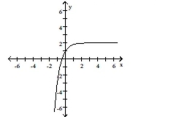
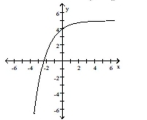
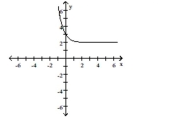
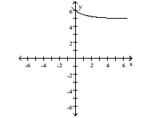
Graph the function. - f(x)=e−xf ( x ) = e ^ { - x }  Graph the function. - f ( x ) = e ^ { - x }     A)    B)     C)    D)    A)  Graph the function. - f ( x ) = e ^ { - x }     A)    B)     C)    D)    B)  Graph the function. - f ( x ) = e ^ { - x }     A)    B)     C)    D)    C)  Graph the function. - f ( x ) = e ^ { - x }     A)    B)     C)    D)    D)  Graph the function. - f ( x ) = e ^ { - x }     A)    B)     C)    D)

(Multiple Choice)
4.9/5
(81)

Solve the problem. -If $5,000 is invested for 6 years at 5%, compounded continuously, find the future value.

(Short Answer)
4.7/5
(71)

Find the exact value of the logarithmic expression. - log⁡101,000\log _ { 10 } 1,000

(Multiple Choice)
4.7/5
(85)

Write as the sum and/or difference of logarithms. Express powers as factors. - log⁡3(x2y6)\log _ { 3 } \left( \frac { x ^ { 2 } } { y ^ { 6 } } \right)

(Multiple Choice)
4.7/5
(77)

Use transformations to graph the function. -  Use the graph of log⁡4x to obtain the graph of f(x)=−1+log⁡4x. \text { Use the graph of } \log _ { 4 } x \text { to obtain the graph of } f ( x ) = - 1 + \log _ { 4 } x \text {. }  Use transformations to graph the function. - \text { Use the graph of } \log _ { 4 } x \text { to obtain the graph of } f ( x ) = - 1 + \log _ { 4 } x \text {. }     A)   B)   C)   D)    A)  Use transformations to graph the function. - \text { Use the graph of } \log _ { 4 } x \text { to obtain the graph of } f ( x ) = - 1 + \log _ { 4 } x \text {. }     A)   B)   C)   D)    B)  Use transformations to graph the function. - \text { Use the graph of } \log _ { 4 } x \text { to obtain the graph of } f ( x ) = - 1 + \log _ { 4 } x \text {. }     A)   B)   C)   D)    C)  Use transformations to graph the function. - \text { Use the graph of } \log _ { 4 } x \text { to obtain the graph of } f ( x ) = - 1 + \log _ { 4 } x \text {. }     A)   B)   C)   D)    D)  Use transformations to graph the function. - \text { Use the graph of } \log _ { 4 } x \text { to obtain the graph of } f ( x ) = - 1 + \log _ { 4 } x \text {. }     A)   B)   C)   D)

(Multiple Choice)
4.7/5
(87)
Showing 241 - 260 of 518
close modal

Filters

  • Essay(0)
  • Multiple Choice(0)
  • Short Answer(0)
  • True False(0)
  • Matching(0)