



 Chat with AI
Exam 3: Everyday Chemistry of Life

Exam 1: What Is Life55 Questions
Exam 2: Where Do We Come From and Where Do We Fit54 Questions
Exam 3: Everyday Chemistry of Life67 Questions
Exam 4: Cells: Organization and Communication65 Questions
Exam 5: Tissues54 Questions
Exam 6: The Skeletomuscular System107 Questions
Exam 7: The Nervous System78 Questions
Exam 8: The Special Senses53 Questions
Exam 9: Immunity and the Lymphatic System72 Questions
Exam 10: Infectious Disease and Epidemiology55 Questions
Exam 11: The Human Microbiome52 Questions
Exam 12: Cancer59 Questions
Exam 13: The Cardiovascular System63 Questions
Exam 14: The Respiratory System: Movement of Air63 Questions
Exam 15: Nutrition: You Are What You Eat53 Questions
Exam 16: The Digestive System55 Questions
Exam 17: The Urinary System56 Questions
Exam 18: The Endocrine System and Development54 Questions
Exam 19: The Reproductive Systems: Maintaining the Species58 Questions
Exam 20: Pregnancy: Development From Conception to Newborn58 Questions
Exam 21: Inheritance, Genetics, and Molecular Biology54 Questions
Select questions type


Which of the following organic molecules can serve as a library of genetic information?
(Multiple Choice)
4.9/5  (84)
(84) All the millions of different proteins are formed by just ____ amino acids.
(Short Answer)
4.9/5 (65)
(65) Which of the following organic chemicals is the most abundant in your body?
(Multiple Choice)
4.9/5 (68)
(68) An imbalance of the common ions found in the human body is life threatening.
(True/False)
4.9/5 (93)
(93) 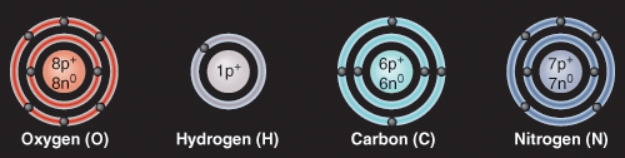
Since carbon has 4 electrons in the outer energy level, it can form 4 covalent bonds.
(True/False)
4.8/5 (84)
(84) The positively charged particle labeled A is called a(n) ____. 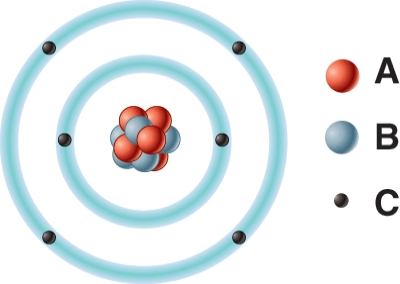
(Multiple Choice)
4.8/5 (86)
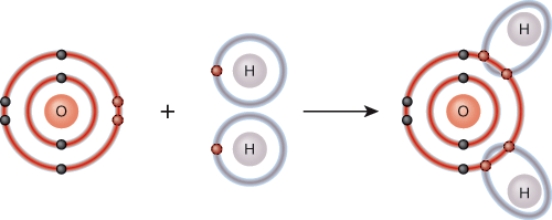
(86) What kind of bond is indicated by the arrow in this diagram? 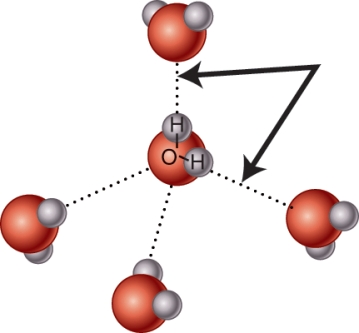
(Multiple Choice)
4.8/5 (69)
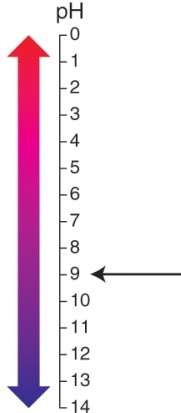
(69) 

Filters
- Essay(0)
- Multiple Choice(0)
- Short Answer(0)
- True False(0)
- Matching(0)