



 Chat with AI
Exam 10: Infectious Disease and Epidemiology

Exam 1: What Is Life55 Questions
Exam 2: Where Do We Come From and Where Do We Fit54 Questions
Exam 3: Everyday Chemistry of Life67 Questions
Exam 4: Cells: Organization and Communication65 Questions
Exam 5: Tissues54 Questions
Exam 6: The Skeletomuscular System107 Questions
Exam 7: The Nervous System78 Questions
Exam 8: The Special Senses53 Questions
Exam 9: Immunity and the Lymphatic System72 Questions
Exam 10: Infectious Disease and Epidemiology55 Questions
Exam 11: The Human Microbiome52 Questions
Exam 12: Cancer59 Questions
Exam 13: The Cardiovascular System63 Questions
Exam 14: The Respiratory System: Movement of Air63 Questions
Exam 15: Nutrition: You Are What You Eat53 Questions
Exam 16: The Digestive System55 Questions
Exam 17: The Urinary System56 Questions
Exam 18: The Endocrine System and Development54 Questions
Exam 19: The Reproductive Systems: Maintaining the Species58 Questions
Exam 20: Pregnancy: Development From Conception to Newborn58 Questions
Exam 21: Inheritance, Genetics, and Molecular Biology54 Questions
Select questions type


The plague has been eradicated in America thanks to the efforts of the WHO.
(True/False)
4.8/5  (91)
(91) What characteristic is used when classifying a bacterium as bacilli or spirochete?
(Multiple Choice)
4.9/5 (67)
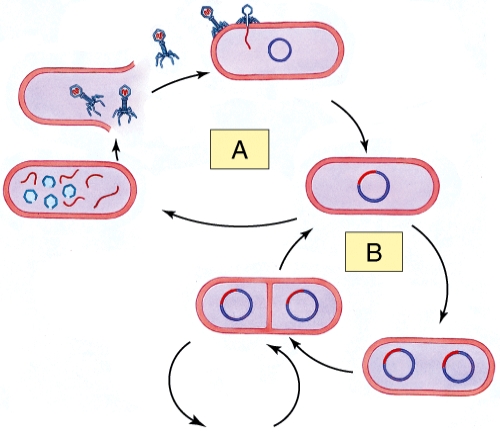
(67) 
The major difference between prokaryotes and eukaryotes is:
(Multiple Choice)
4.8/5 (62)
(62) What makes it difficult to control the pathogens shown in the figure? 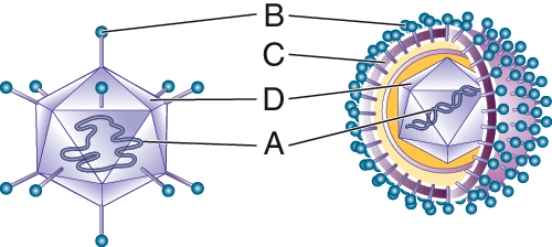
(Multiple Choice)
4.8/5 (79)
(79) What is the only virus thus far successfully eradicated from the human population?
(Multiple Choice)
4.8/5 (86)
(86) The United Nations works to vaccinate children in developing nations through:
(Multiple Choice)
4.9/5 (74)
(74) 
Filters
- Essay(0)
- Multiple Choice(0)
- Short Answer(0)
- True False(0)
- Matching(0)