



 Chat with AI
Exam 5: Chemical Reactions

Exam 1: Matter and Measurement87 Questions
Exam 2: Atoms and the Periodic Table95 Questions
Exam 3: Ionic Compounds100 Questions
Exam 4: Covalent Compounds101 Questions
Exam 5: Chemical Reactions98 Questions
Exam 6: Energy Changes,reaction Rates,and Equilibrium102 Questions
Exam 7: Gases,liquids,and Solids98 Questions
Exam 8: Solutions98 Questions
Exam 9: Acids and Bases108 Questions
Exam 10: Nuclear Chemistry93 Questions
Exam 11: Introduction to Organic Molecules and Functional Groups123 Questions
Exam 12: Alkanes104 Questions
Exam 13: Unsaturated Hydrocarbons104 Questions
Exam 14: Organic Compounds That Contain Oxygen,halogen,or Sulfur112 Questions
Exam 15: The Three-Dimensional Shape of Molecules101 Questions
Exam 16: Aldehydes and Ketones114 Questions
Exam 17: Carboxylic Acids,esters,and Amides107 Questions
Exam 18: Amines and Neurotransmitters115 Questions
Exam 19: Lipids115 Questions
Exam 20: Carbohydrates100 Questions
Exam 21: Amino Acids,proteins,and Enzymes98 Questions
Exam 22: Nucleic Acids and Protein Synthesis98 Questions
Exam 23: Metabolism and Energy Production102 Questions
Exam 24: Carbohydrate,lipid,and Protein Metabolism99 Questions
Select questions type


A 100-g sample of the compound below contains less than 6.02 × 10²³ molecules. 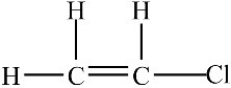
(True/False)
4.8/5  (85)
(85) The molar mass of dibromomethane (CH2Br2)is larger than the molar mass of dichloromethane (CH2Cl2).
(True/False)
4.9/5 (77)
(77) The balanced reaction: 4 Fe(s)+ 3 O2(g)→ 2 Fe2O3(s)is an oxidation-reduction reaction.
(True/False)
4.9/5 (87)
(87) Identify the correct classification for the reaction 2 PbSO4 → 2 PbSO3 + O2
(Multiple Choice)
4.9/5 (87)
(87) A student runs the reaction: LiOH + CO2 → LiHCO3. The reaction consumes 45.0 g LiOH and produces 72.8 g of LiHCO3. Which of the statements concerning this reaction is true?
(Multiple Choice)
4.9/5 (77)
(77) The molar mass of CaCO3 is greater than the molar mass of Ca(NO3)2.
(True/False)
4.8/5 (88)
(88) Complete the following table using the given balanced equation and the initial quantities of reactants. Equation: S8 + 12 O2 → 8 SO3 
(Multiple Choice)
4.9/5 (64)
(64) Consider the oxidation of sodium metal to sodium oxide described by the balanced equation: 4 Na + O2 → 2 Na2O. What is the theoretical yield of Na2O in grams from 9.0 mol of O2?
(Multiple Choice)
4.9/5 (87)
(87) How many moles of sulfur trioxide are formed from 3 moles of oxygen using the given balanced equation? 2 SO2 + O2 → 2 SO3
(Multiple Choice)
4.9/5 (94)
(94) The reaction: Mg(s)+ 2 HBr(aq)→ MgBr2(s)+ H2(g)is an oxidation-reduction reaction.
(True/False)
4.8/5 (83)
(83) A balanced chemical equation tells the number of ________ of each reactant that combine and the number of ________ of each product formed.
(Multiple Choice)
4.9/5 (77)
(77) The conversion factor shown below was obtained from the balanced chemical equation: 4 KO2(s)+ 2 CO2(g)→ 2 K2CO3(s)+ 3 O2(g). This conversion factor would be used to calculate which of the following? 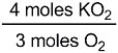
(Multiple Choice)
4.8/5 (81)
(81) How many moles of chloroethylene (C2H3Cl)contain 5.47 × 1026 molecules?
(Multiple Choice)
4.9/5 (84)
(84) In a redox reaction,the ________ agent is the substance that gets oxidized.
(Short Answer)
4.8/5 (62)
(62) A 100-g sample of the compound below contains greater than one mole of molecules. 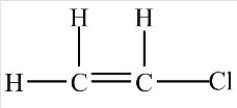
(True/False)
4.7/5 (75)
(75) 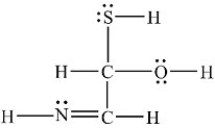
If a synthesis has four steps and each step has a 75% yield (0.75 written as a decimal),what is the overall percent yield?
(Multiple Choice)
4.9/5 (78)
(78) 
Filters
- Essay(0)
- Multiple Choice(0)
- Short Answer(0)
- True False(0)
- Matching(0)