



 Chat with AI
Exam 3: Topics in Deifferentiation

Exam 1: Limits and Continuity186 Questions
Exam 2: The Derivative198 Questions
Exam 3: Topics in Deifferentiation171 Questions
Exam 4: The Derivative in Graphing and Applications656 Questions
Exam 5: Integration323 Questions
Exam 6: Applications of the Definite Integral in Geometry, Science and Engineering314 Questions
Exam 7: Principle of Integral Evaluation269 Questions
Exam 8: Mathematical Modeling With Differential Equations77 Questions
Exam 9: Infinte Series288 Questions
Exam 10: Parametric and Polar Curves; Conic Sections199 Questions
Exam 11: Three-Dimensional Space; Vectors173 Questions
Exam 12: Vector-Valued Functions147 Questions
Exam 13: Partial Derivatives194 Questions
Exam 14: Multiple Integrals117 Questions
Exam 15: Topics in Vector Calculus149 Questions
Select questions type


A circular hole 6 inches in diameter and 12 feet deep is to be drilled out of a glacier. The diameter of the hole is exact but the depth of the hole is measured with an error of ±1%. Estimate the percentage error in the volume of ice removed. (  is the volume of a cylinder of diameter d and height h.)
 (Essay)
4.9/5  (80)
(80)  . Find dy at x = 3 if dx = 0.032.
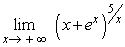
 ,

 if
 .
 if
 .
 if
 .
Answer true or false. Suppose z = 4yx. Then dz/dt = 4(dy/dt)(dx/dt).
(True/False)
4.7/5 (91)
(91) The surface area of a sphere is given by S = 4 r2 where r is the radius of the sphere. The radius is measured to be 6cm with an error of ±0.07cm. Use differentials to estimate the error in the calculated surface area.
(Essay)
4.8/5 (96)
(96) A particle moves according to s = t3. Find ds if t = 5 and dt = 4.
(Multiple Choice)
4.8/5 (67)
(67) A straw is used to drink soda from the bottom of a cylindrical shaped cup. The diameter of the cup is 4 inches. The liquid is being consumed at the rate of 3 cubic inches per second. How fast is the level of the soda dropping? 
(Essay)
4.8/5 (88)
(88)  . Find
 .
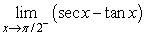
 if
 .
 .

Filters
- Essay(0)
- Multiple Choice(0)
- Short Answer(0)
- True False(0)
- Matching(0)