



 Chat with AI
Exam 3: Topics in Deifferentiation

Exam 1: Limits and Continuity186 Questions
Exam 2: The Derivative198 Questions
Exam 3: Topics in Deifferentiation171 Questions
Exam 4: The Derivative in Graphing and Applications656 Questions
Exam 5: Integration323 Questions
Exam 6: Applications of the Definite Integral in Geometry, Science and Engineering314 Questions
Exam 7: Principle of Integral Evaluation269 Questions
Exam 8: Mathematical Modeling With Differential Equations77 Questions
Exam 9: Infinte Series288 Questions
Exam 10: Parametric and Polar Curves; Conic Sections199 Questions
Exam 11: Three-Dimensional Space; Vectors173 Questions
Exam 12: Vector-Valued Functions147 Questions
Exam 13: Partial Derivatives194 Questions
Exam 14: Multiple Integrals117 Questions
Exam 15: Topics in Vector Calculus149 Questions
Select questions type


A circular cylinder has a radius r and a height h feet. If the height and radius both increase at the constant rate of 16 feet per minute, at what rate is the lateral surface area increasing? 
(Essay)
4.8/5  (84)
(84)  if y sin x = 24.
 .
 if
 .
The surface area S of a cube is to be computed from a measured value of its side x. Estimate the maximum permissible percentage error in the side measurement if the percentage error in the surface area must be kept to within ±1%.
(Essay)
4.9/5 (79)
(79) A small suspended droplet of radius 10 microns is growing. If dr = 0.004 micron find the change in the volume, dV, to the nearest thousandth of a cubic micron.
(Multiple Choice)
4.8/5 (84)
(84)  if
 .
The volume of a cylinder is given by V = r2h. Find  in terms of
 . (Assume that r is a constant.)
in terms of . (Assume that r is a constant.) (Multiple Choice)
4.8/5 (77)
(77) The volume of a sphere is given by  , where r is the radius. Given that the radius increases at 0.002 m/s when r = 1.2 m, find the rate at which the volume increases. Round your answer to four decimal places.
 (Short Answer)
4.9/5 (89)
(89)  if x ln y = 3.
 .
 .
The area of a circle is to be computed from a measured value of its diameter. Estimate the maximum permissible percentage error in the measurement if the percentage error in the area must be kept within 0.5%.
(Essay)
4.9/5 (72)
(72) Let y = x3 - 6. Find y if x = 3 and the initial value of x is x = 2.
(Short Answer)
4.9/5 (81)
(81)  .
 if
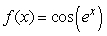 .
The elastic modulus of a piece of steel rod under a load of 1600 pounds, is given by the formula  , L is the original, unloaded, length in inches, A is the cross-sectional area in square inches, and l is the elongation due to a load in inches. A 60 inch long steel rod is with a cross-sectional area of A = 0.35 square inches, is stretching 0.007 inches under a load of 1600 pounds. Due to changes in temperature, the elastic modulus E of the rod is changing. Find the rate of change of the elastic modulus if the elongation is currently 0.007 and is changing at a rate of 0.00029 in/s.
 (Multiple Choice)
4.8/5 (74)
(74) 
Filters
- Essay(0)
- Multiple Choice(0)
- Short Answer(0)
- True False(0)
- Matching(0)