



 Chat with AI
Exam 9: Infinte Series

Exam 1: Limits and Continuity186 Questions
Exam 2: The Derivative198 Questions
Exam 3: Topics in Deifferentiation171 Questions
Exam 4: The Derivative in Graphing and Applications656 Questions
Exam 5: Integration323 Questions
Exam 6: Applications of the Definite Integral in Geometry, Science and Engineering314 Questions
Exam 7: Principle of Integral Evaluation269 Questions
Exam 8: Mathematical Modeling With Differential Equations77 Questions
Exam 9: Infinte Series288 Questions
Exam 10: Parametric and Polar Curves; Conic Sections199 Questions
Exam 11: Three-Dimensional Space; Vectors173 Questions
Exam 12: Vector-Valued Functions147 Questions
Exam 13: Partial Derivatives194 Questions
Exam 14: Multiple Integrals117 Questions
Exam 15: Topics in Vector Calculus149 Questions
Select questions type


Determine whether or not the following series converges. If it converges, find its sum. 
(Multiple Choice)
5.0/5  (79)
(79) 

How many terms of the following series are needed to insure that the difference between the resulting partial sum and the infinite series is <  ?

? (Short Answer)
4.7/5 (68)
(68) Classify the following series as absolutely convergent, conditionally convergent, or divergent. 
(Short Answer)
4.8/5 (60)
(60) Use a suitable Maclaurin Series to estimate  to five decimal place accuracy.
 (Multiple Choice)
4.8/5 (85)
(85) Classify the following series as absolutely convergent, conditionally convergent, or divergent. 
(Short Answer)
4.9/5 (81)
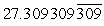
(81) 


Determine whether or not the following series converges. If it converges, find its sum. 
(Multiple Choice)
4.9/5 (89)
(89) 
Find the first three nonzero terms of the Maclaurin series for the function  by using an appropriate substitution in a known Maclaurin series and performing any algebraic operations that are required. State the radius of convergence of the series.
 (Short Answer)
4.8/5 (76)
(76) 

The following are the first five terms of an infinite sequence. Find a formula for the general term starting with n = 1 , and write down the entire sequence. 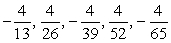
(Multiple Choice)
4.7/5 (78)
(78) Use a suitable Maclaurin Series to estimate  to five decimal place accuracy.
 (Short Answer)
4.8/5 (88)
(88) Classify the following series as absolutely convergent, conditionally convergent, or divergent. 
(Multiple Choice)
4.8/5 (88)
(88) 
Filters
- Essay(0)
- Multiple Choice(0)
- Short Answer(0)
- True False(0)
- Matching(0)