



 Chat with AI
Exam 41: Ecological Communities

Exam 1: Introduction: Evolution and the Foundations of Biology36 Questions
Exam 2: The Chemical Context of Life135 Questions
Exam 3: Carbon and the Molecular Diversity of Life136 Questions
Exam 4: A Tour of the Cell75 Questions
Exam 5: Membrane Transport and Cell Signaling86 Questions
Exam 6: An Introduction to Metabolism79 Questions
Exam 7: Cellular Respiration and Fermentation99 Questions
Exam 8: Photosynthesis68 Questions
Exam 9: The Cell Cycle57 Questions
Exam 10: Meiosis and Sexual Life Cycles59 Questions
Exam 11: Mendel and the Gene Idea57 Questions
Exam 12: The Chromosomal Basis of Inheritance43 Questions
Exam 13: The Molecular Basis of Inheritance62 Questions
Exam 14: Gene Expression: From Gene to Protein77 Questions
Exam 15: Regulation of Gene Expression48 Questions
Exam 16: Development,stem Cells,and Cancer34 Questions
Exam 17: Viruses35 Questions
Exam 18: Genomes and Their Evolution31 Questions
Exam 19: Descent With Modification61 Questions
Exam 20: Phylogeny72 Questions
Exam 21: The Evolution of Populations81 Questions
Exam 22: The Origin of Species75 Questions
Exam 23: Broad Patterns of Evolution60 Questions
Exam 24: Early Life and the Diversification of Prokaryotes99 Questions
Exam 25: The Origin and Diversification of Eukaryotes80 Questions
Exam 26: The Colonization of Land by Plants and Fungi128 Questions
Exam 27: The Rise of Animal Diversity93 Questions
Exam 28: Plant Structure and Growth67 Questions
Exam 29: Resource Acquisition,nutrition,and Transport in Vascular Plants115 Questions
Exam 30: Reproduction and Domestication of Flowering Plants72 Questions
Exam 31: Plant Responses to Internal and External Signals74 Questions
Exam 32: Homeostasis and Endocrine Signaling116 Questions
Exam 33: Animal Nutrition75 Questions
Exam 34: Circulation and Gas Exchange94 Questions
Exam 35: The Immune System96 Questions
Exam 36: Reproduction and Development123 Questions
Exam 37: Neurons,synapses,and Signaling77 Questions
Exam 38: Nervous and Sensory Systems105 Questions
Exam 39: Motor Mechanisms and Behavior83 Questions
Exam 40: Population Ecology and the Distribution of Organisms93 Questions
Exam 41: Ecological Communities59 Questions
Exam 42: Ecosystems and Energy86 Questions
Exam 43: Conservation Biology and Global Change71 Questions
Select questions type


In 1988,a severe drought contributed to a forest fire in Yellowstone National Park.Approximately one year later,herbaceous plants,unlike those in the original forest,covered the forest floor.Which of the following most correctly describes the process of this herbaceous growth?
(Multiple Choice)
4.8/5  (67)
(67) Elephants are not the most dominant species in African grasslands,yet they influence community structure.The grasslands contain scattered woody plants,but they are kept in check by the uprooting activities of the elephants.If the elephants are taken away,the grasslands convert to forests or to shrublands.The newly growing forests support fewer species than the previous grasslands.Which of the following describes why elephants are the keystone species in this scenario?
(Multiple Choice)
4.9/5 (83)
(83) 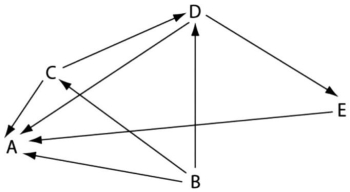 Figure 41.3
-Examine the diagram of a hypothetical food web in Figure 41.3.The arrows represent the transfer of energy between the various trophic levels.Which letter represents an organism that could be a primary producer?
Figure 41.3
-Examine the diagram of a hypothetical food web in Figure 41.3.The arrows represent the transfer of energy between the various trophic levels.Which letter represents an organism that could be a primary producer? (Multiple Choice)
4.8/5 (71)
(71) Evidence shows that some grasses benefit from being grazed.Which of the following terms would best describe this plant-herbivore interaction?
(Multiple Choice)
4.9/5 (86)
(86) Tuberculosis is a human disease caused by the bacteria Mycobacterium tuberculosis.When this pathogen is inhaled,it grows in lung cells,causing damage to the human host.Which of the following best describes the interaction between the bacterial pathogen Mycobacterium tuberculosis and its human host?
(Multiple Choice)
4.9/5 (72)
(72) Which of the following is a correct statement about the MacArthur/Wilson Island Equilibrium Model?
(Multiple Choice)
4.8/5 (85)
(85) Chthamalus and Balanus belong to the same trophic level.Based on this information and their distributions in the low tide zone in Connell's experiment,what is the best way to represent the interaction between the two species using the symbols for positive (+)and negative (-)interaction?
(Multiple Choice)
4.9/5 (77)
(77) Which of the following terms is most correct in describing any interaction in which one of two species benefits by feeding on the other species?
(Multiple Choice)
4.7/5 (70)
(70) White-breasted nuthatches and Downy woodpeckers both eat insects that hide in the furrows of bark in hardwood trees.The Downy woodpecker searches for insects by hunting from the bottom of the tree trunk toward the top,whereas the white-breasted nuthatch searches from the top of the trunk down.These hunting behaviors best illustrate which of the following ecological concepts?
(Multiple Choice)
4.9/5 (81)
(81) Which of the following best describes resource partitioning?
(Multiple Choice)
4.9/5 (80)
(80) Which of the following studies would shed light on the mechanism of spread of H5N1 from Asia to North America?
(Multiple Choice)
4.8/5 (76)
(76) Which of the following is an example of aposematic coloration?
(Multiple Choice)
5.0/5 (83)
(83) The feeding relationships between species in a community is called
(Multiple Choice)
4.9/5 (83)
(83) Which of the following factors influences the species richness of a community the most?
(Multiple Choice)
5.0/5 (74)
(74) Evapotranspiration varies based on the latitude of a community and the area a community occupies.Which of the following would result in the highest degree of evapotranspiration?
(Multiple Choice)
5.0/5 (74)
(74) 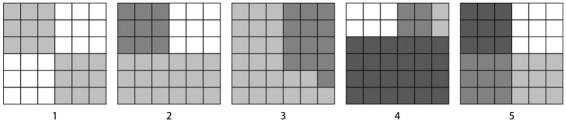 Figure 41.2
Examine Figure 41.2.Which block shows the greatest diversity?
Figure 41.2
Examine Figure 41.2.Which block shows the greatest diversity? (Multiple Choice)
4.8/5 (86)
(86) 
Filters
- Essay(0)
- Multiple Choice(0)
- Short Answer(0)
- True False(0)
- Matching(0)