



 Chat with AI
Exam 2: The Chemical Level of Organization

Exam 1: An Introduction to Anatomy and Physiology90 Questions
Exam 2: The Chemical Level of Organization105 Questions
Exam 3: Cell Structure and Function126 Questions
Exam 4: The Tissue Level of Organization88 Questions
Exam 5: The Integumentary System103 Questions
Exam 6: The Skeletal System218 Questions
Exam 7: The Muscular System115 Questions
Exam 8: The Nervous System149 Questions
Exam 9: The General and Special Senses118 Questions
Exam 10: The Endocrine System100 Questions
Exam 11: The Cardiovascular System: Blood84 Questions
Exam 12: The Cardiovascular System: the Heart115 Questions
Exam 13: The Cardiovascular System: Blood Vessels and Circulation121 Questions
Exam 14: The Lymphatic System and Immunity105 Questions
Exam 15: The Respiratory System101 Questions
Exam 16: The Digestive System129 Questions
Exam 17: Metabolism and Energetics77 Questions
Exam 18: The Urinary System114 Questions
Exam 19: The Reproductive System118 Questions
Exam 20: Development and Inheritance97 Questions
Select questions type


Which of the following constitutes most of the total body weight in humans?
(Multiple Choice)
4.7/5  (86)
(86) Which of these is a molecule but is not considered to be a compound?
(Multiple Choice)
4.9/5 (74)
(74)  Figure 2-4 An Overview of the Structures of Organic Compounds in the Body
Use Figure 2-4 to answer the following questions:
-What is/are the primary function(s) of the structure labeled #9?
Figure 2-4 An Overview of the Structures of Organic Compounds in the Body
Use Figure 2-4 to answer the following questions:
-What is/are the primary function(s) of the structure labeled #9? (Multiple Choice)
4.8/5 (76)
(76) Which of the following is a characteristic of hydrogen bonds?
(Multiple Choice)
4.8/5 (81)
(81) Which of the following substances would be nearest the pH of human blood?
(Multiple Choice)
4.9/5 (73)
(73) 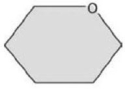 Figure 2-2 A Molecule
Use Figure 2-2 to answer the following question:
The molecule shown in the figure is considered to be the most important metabolic "fuel" in the body. Choose the best category of molecules to which it belongs.
Figure 2-2 A Molecule
Use Figure 2-2 to answer the following question:
The molecule shown in the figure is considered to be the most important metabolic "fuel" in the body. Choose the best category of molecules to which it belongs. (Multiple Choice)
4.8/5 (87)
(87) A bond between a phosphate group and a sugar can be found linking together
(Multiple Choice)
4.9/5 (70)
(70) Atoms that are of the same element but contain different numbers of neutrons are called
(Multiple Choice)
4.8/5 (74)
(74) 
Filters
- Essay(0)
- Multiple Choice(0)
- Short Answer(0)
- True False(0)
- Matching(0)