



 Chat with AI
Exam 3: Cell Structure and Function

Exam 1: An Introduction to Anatomy and Physiology90 Questions
Exam 2: The Chemical Level of Organization105 Questions
Exam 3: Cell Structure and Function126 Questions
Exam 4: The Tissue Level of Organization88 Questions
Exam 5: The Integumentary System103 Questions
Exam 6: The Skeletal System218 Questions
Exam 7: The Muscular System115 Questions
Exam 8: The Nervous System149 Questions
Exam 9: The General and Special Senses118 Questions
Exam 10: The Endocrine System100 Questions
Exam 11: The Cardiovascular System: Blood84 Questions
Exam 12: The Cardiovascular System: the Heart115 Questions
Exam 13: The Cardiovascular System: Blood Vessels and Circulation121 Questions
Exam 14: The Lymphatic System and Immunity105 Questions
Exam 15: The Respiratory System101 Questions
Exam 16: The Digestive System129 Questions
Exam 17: Metabolism and Energetics77 Questions
Exam 18: The Urinary System114 Questions
Exam 19: The Reproductive System118 Questions
Exam 20: Development and Inheritance97 Questions
Select questions type


During which process do DNA strands unwind and DNA polymerase begin attaching complementary DNA nucleotides along each strand?
(Multiple Choice)
4.7/5  (77)
(77) Modification and packaging of proteins with other molecules is done by the
(Multiple Choice)
4.9/5 (83)
(83) Due to exposure to a chemical, a compound other than the correct structure #3 has been inserted into the DNA strand during replication. This could result in
(Multiple Choice)
4.8/5 (79)
(79) 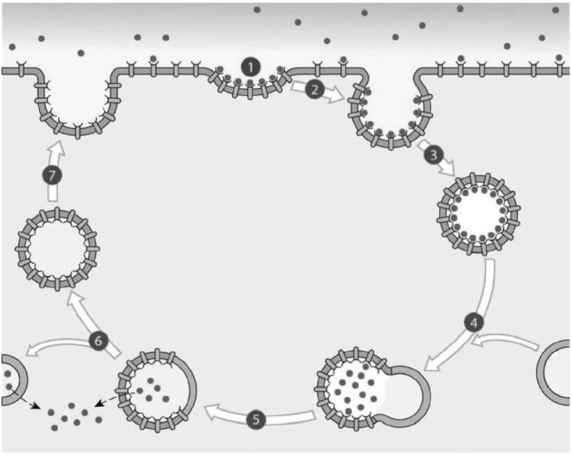 Figure 3-2 A Process
Use Figure 3-2 to answer the following questions:
-Identify the primary process that is featured in the preceding image.
Figure 3-2 A Process
Use Figure 3-2 to answer the following questions:
-Identify the primary process that is featured in the preceding image. (Multiple Choice)
4.7/5 (72)
(72) You mix a drop of blood with a drop of an unknown solution and look at the solution under the microscope. The cells look normal to you, so the solution you mixed with the blood would likely be
(Multiple Choice)
4.9/5 (85)
(85) When a person receives intravenous fluids to help build up blood volume, why could it be detrimental to administer a hypotonic solution?
(Essay)
4.9/5 (83)
(83) Membrane-bound proteins that allow identification of a cell as "self" or "nonself" are called ________ proteins.
(Multiple Choice)
4.8/5 (79)
(79) Before a cell can divide by mitosis, which of the following must occur?
(Multiple Choice)
5.0/5 (81)
(81) DNA contains the nucleotide thymine, but RNA uniquely contains ________, which is complementary to adenine.
(Multiple Choice)
4.8/5 (88)
(88) Which of the following terms is used to define the structure that separates the contents of a human cell from its surrounding medium?
(Multiple Choice)
4.8/5 (75)
(75) How does facilitated diffusion differ from simple diffusion?
(Multiple Choice)
4.8/5 (71)
(71) Plasma membranes allow certain molecules to pass, while blocking others. Membranes with this property are called
(Multiple Choice)
4.9/5 (83)
(83) Two solutions are separated by a semipermeable membrane with the same properties as a cell membrane. Solution A is 5 percent glucose and solution B is 10 percent glucose. Under these circumstances,
(Multiple Choice)
4.8/5 (64)
(64) The movement of a molecule from an area of high concentration to an area of low concentration by interacting with a carrier protein is an example of
(Multiple Choice)
4.8/5 (80)
(80) 
Filters
- Essay(0)
- Multiple Choice(0)
- Short Answer(0)
- True False(0)
- Matching(0)