



 Chat with AI
Exam 6: American Revolutions

Exam 1: Three Old Worlds Create a New108 Questions
Exam 2: Europeans Colonize North America108 Questions
Exam 3: North America in the Atlantic World101 Questions
Exam 4: Becoming America112 Questions
Exam 5: The Ends of Empire133 Questions
Exam 6: American Revolutions109 Questions
Exam 7: Forging a Nation161 Questions
Exam 8: Defining the Nation170 Questions
Exam 9: The Rise of the South111 Questions
Exam 10: The Restless North177 Questions
Exam 11: The Contested West100 Questions
Exam 12: Politics and the Fate of the Union178 Questions
Exam 13: Transforming Fire: the Civil War160 Questions
Exam 14: Reconstruction: an Unfinished Revolution122 Questions
Select questions type


Instructions:
∙ Identify each item. Give an explanation or description of the item. Answer the questions who, what, where, and when.
Explain the historical significance of each item. Establish the historical context in which the
∙ item exists. Establish the item as the result of or as the cause of other factors existing in the society under study. Answer this question: What were the political, social, economic,
and/or cultural consequences of this item?
-democratic "Painean") republicanism
(Essay)
4.9/5  (77)
(77) Map Exercise 6-3
On the outline map that follows:
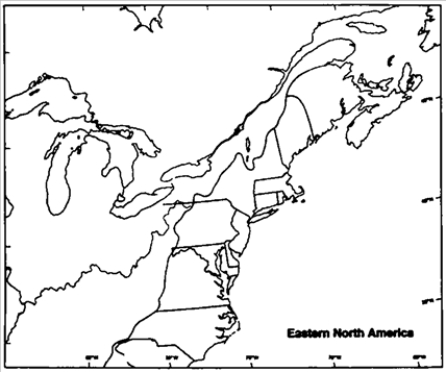 -Refer to Map Exercise 6-3. Mark the location of and label Yorktown.
 (Short Answer)
4.8/5 (84)
(84) Instructions:
∙ Identify each item. Give an explanation or description of the item. Answer the questions who, what, where, and when.
Explain the historical significance of each item. Establish the historical context in which the
∙ item exists. Establish the item as the result of or as the cause of other factors existing in the society under study. Answer this question: What were the political, social, economic,
and/or cultural consequences of this item?
-the Battle of Breed's Bunker) Hill
(Essay)
5.0/5 (87)
(87) Map Exercise 6-3
On the outline map that follows:
-Refer to Map Exercise 6-3. Using one pen color to designate the British and another pen color to designate the Americans, mark and label the routes of the following:
British
British squadron Cornwallis
American
De Grasse
Washington and Rochambeau
-Refer to Map Exercise 6-3. Using one pen color to designate the British and another pen color to designate the Americans, mark and label the routes of the following:
British
British squadron Cornwallis
American
De Grasse
Washington and Rochambeau (Essay)
4.9/5 (83)
(83) Instructions:
∙ Identify each item. Give an explanation or description of the item. Answer the questions who, what, where, and when.
Explain the historical significance of each item. Establish the historical context in which the
∙ item exists. Establish the item as the result of or as the cause of other factors existing in the society under study. Answer this question: What were the political, social, economic,
and/or cultural consequences of this item?
-classical republicanism
(Essay)
4.8/5 (72)
(72) The outcome of the Battles of King's Mountain, Cowpens, and Guilford Court House supports which of the following conclusions?
(Multiple Choice)
4.8/5 (84)
(84) Map Exercise 6-1
On the outline map that follows:
 -Refer to Map Exercise 6-1. Label the following colonies: Connecticut
New Jersey New York
-Refer to Map Exercise 6-1. Label the following colonies: Connecticut
New Jersey New York (Short Answer)
4.7/5 (91)
(91) Instructions:
∙ Identify each item. Give an explanation or description of the item. Answer the questions who, what, where, and when.
Explain the historical significance of each item. Establish the historical context in which the
∙ item exists. Establish the item as the result of or as the cause of other factors existing in the society under study. Answer this question: What were the political, social, economic,
and/or cultural consequences of this item?
-Howe's Philadelphia campaign
(Essay)
4.9/5 (83)
(83) Instructions:
∙ Identify each item. Give an explanation or description of the item. Answer the questions who, what, where, and when.
Explain the historical significance of each item. Establish the historical context in which the
∙ item exists. Establish the item as the result of or as the cause of other factors existing in the society under study. Answer this question: What were the political, social, economic,
and/or cultural consequences of this item?
-profile of Continental soldiers
(Essay)
4.7/5 (65)
(65) Which of the following was the most important consequence of the Battle of Saratoga?
(Multiple Choice)
4.8/5 (72)
(72) Map Exercise 6-2
On the outline map that follows and referring to an historical atlas as a reference:
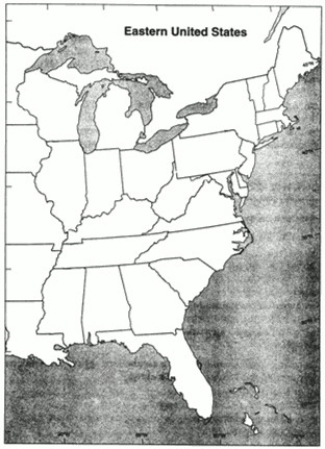 -Refer to Map Exercise 6-2. Using one pen color to designate the British and another pen color to designate the Americans, mark and label the routes of the following:
British
Cornwallis and Clinton
American
Brigadier General Daniel Morgan General Nathanael Greene Horatio Gates
-Refer to Map Exercise 6-2. Using one pen color to designate the British and another pen color to designate the Americans, mark and label the routes of the following:
British
Cornwallis and Clinton
American
Brigadier General Daniel Morgan General Nathanael Greene Horatio Gates (Essay)
4.8/5 (85)
(85) Instructions:
∙ Identify each item. Give an explanation or description of the item. Answer the questions who, what, where, and when.
Explain the historical significance of each item. Establish the historical context in which the
∙ item exists. Establish the item as the result of or as the cause of other factors existing in the society under study. Answer this question: What were the political, social, economic,
and/or cultural consequences of this item?
-"Continentals"
(Essay)
4.8/5 (93)
(93) Map Exercise 6-1
On the outline map that follows:
-Refer to Map Exercise 6-1. Draw and label the following rivers: Delaware River
East River Hudson River
-Refer to Map Exercise 6-1. Draw and label the following rivers: Delaware River
East River Hudson River (Essay)
4.8/5 (80)
(80) What is virtue? Why did Americans believe virtue to be essential in their society after the Revolution? What efforts were made to promote virtue?
(Essay)
4.8/5 (81)
(81) Discuss the condition of the patriot cause in the South when General Nathanael Greene assumed command of the southern army in December 1780; explain the policies undertaken by Greene in the region; and evaluate the effectiveness of those policies.
(Essay)
4.9/5 (77)
(77) What was the western border of the American nation established by the Treaty of Paris?
(Multiple Choice)
5.0/5 (81)
(81) Instructions:
∙ Identify each item. Give an explanation or description of the item. Answer the questions who, what, where, and when.
Explain the historical significance of each item. Establish the historical context in which the
∙ item exists. Establish the item as the result of or as the cause of other factors existing in the society under study. Answer this question: What were the political, social, economic,
and/or cultural consequences of this item?
-endemic diseases in the Continental Army
(Essay)
4.7/5 (80)
(80) Ratification of the Articles of Confederation was delayed for several years by a dispute over
(Multiple Choice)
4.8/5 (80)
(80) Instructions:
∙ Identify each item. Give an explanation or description of the item. Answer the questions who, what, where, and when.
Explain the historical significance of each item. Establish the historical context in which the
∙ item exists. Establish the item as the result of or as the cause of other factors existing in the society under study. Answer this question: What were the political, social, economic,
and/or cultural consequences of this item?
-Sir William Howe
(Essay)
4.8/5 (80)
(80) Instructions:
∙ Identify each item. Give an explanation or description of the item. Answer the questions who, what, where, and when.
Explain the historical significance of each item. Establish the historical context in which the
∙ item exists. Establish the item as the result of or as the cause of other factors existing in the society under study. Answer this question: What were the political, social, economic,
and/or cultural consequences of this item?
-Common Sense
(Essay)
4.9/5 (84)
(84) 
Filters
- Essay(0)
- Multiple Choice(0)
- Short Answer(0)
- True False(0)
- Matching(0)