



 Chat with AI
Exam 33: Muscle and Movement

Exam 1: Introduction81 Questions
Exam 2: The Chemistry and Energy of Life87 Questions
Exam 3: Nucleic Acids, Proteins, and Enzymes118 Questions
Exam 4: Cells: the Working Units of Life115 Questions
Exam 5: Cell Membranes and Signaling95 Questions
Exam 6: Pathways That Harvest and Store Chemical Energy130 Questions
Exam 7: The Cell Cycle and Cell Division119 Questions
Exam 8: Inheritance, Genes, and Chromosomes80 Questions
Exam 9: DNA and Its Role in Heredity94 Questions
Exam 10: From Dna to Protein: Gene Expression80 Questions
Exam 11: Regulation of Gene Expression94 Questions
Exam 12: Genomes78 Questions
Exam 13: Biotechnology83 Questions
Exam 14: Genes, Development, and Evolution94 Questions
Exam 15: Processes of Evolution83 Questions
Exam 16: Reconstructing and Using Phylogenies76 Questions
Exam 17: Speciation80 Questions
Exam 18: The History of Life on Earth82 Questions
Exam 19: Bacteria, Archaea, and Viruses100 Questions
Exam 20: The Origin and Diversification of Eukaryotes96 Questions
Exam 21: The Evolution of Plants130 Questions
Exam 22: The Evolution and Diversity of Fungi103 Questions
Exam 23: Animal Origins and Diversity136 Questions
Exam 24: The Plant Body90 Questions
Exam 25: Plant Nutrition and Transport129 Questions
Exam 26: Plant Growth and Development85 Questions
Exam 27: Reproduction of Flowering Plants85 Questions
Exam 28: Plants in the Environment85 Questions
Exam 29: Fundamentals of Animal Function86 Questions
Exam 30: Nutrition and Digestion81 Questions
Exam 31: Breathing83 Questions
Exam 32: Circulation80 Questions
Exam 33: Muscle and Movement75 Questions
Exam 34: Neurons, Sense Organs, and Nervous Systems171 Questions
Exam 35: Nervous and Endocrine Control94 Questions
Exam 36: Water and Salts: Excretion85 Questions
Exam 37: Animal Reproduction84 Questions
Exam 38: Animal Development104 Questions
Exam 39: Immunology: Animal Defense Systems91 Questions
Exam 40: Animal Behavior83 Questions
Exam 41: The Distribution of Earths Ecological Systems82 Questions
Exam 42: Populations78 Questions
Exam 43: Ecological and Evolutionary Consequences of Interactions Within and Among Species114 Questions
Exam 44: Ecological Communities121 Questions
Exam 45: The Global Ecosystem127 Questions
Select questions type


Which represents a similarity between fast- and slow-twitch muscle fibers?
(Multiple Choice)
4.8/5  (72)
(72) A biologist studying the electric organ in a fish species observes very little actin or myosin in the cells,even though they are known to have evolved from muscle cells.Several hypotheses have been proposed to account for this observation.Which hypothesis is the most probable?
(Multiple Choice)
4.9/5 (87)
(87) Protein conformational change is essential during the molecular sequence of events of muscle contraction.If the muscle begins in a relaxed mode and is stimulated to contract by a nerve impulse,what is the correct order of protein conformational changes that will follow?
(Multiple Choice)
4.7/5 (73)
(73) 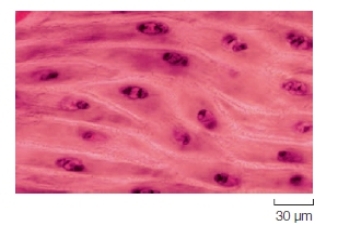
Using mice,a biologist studying the cycle of protein interactions in muscle contraction has induced a mutation in one of the genes encoding proteins involved in this cycle.She finds that the muscle fibers expressing this mutation are not able to contract.Upon further investigation,she finds that calcium release into the sarcoplasm is normal,and calcium binding to protein filaments is normal.Which hypothesis could explain this mutation?
(Multiple Choice)
4.8/5 (78)
(78) Fast-twitch skeletal muscle fibers,called white muscle,are characterized by
(Multiple Choice)
4.8/5 (67)
(67) The animals listed in the table below were grouped together because they share certain characteristics.What would be the appropriate heading for this grouping? 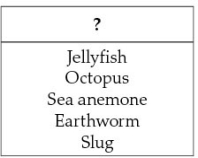
(Multiple Choice)
4.9/5 (89)
(89) Refer to the diagram below.Based on the diagram,which sequence represents the stages of muscle contraction in the correct order? 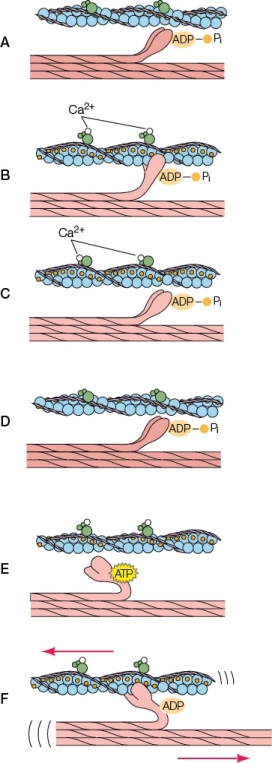
(Multiple Choice)
5.0/5 (69)
(69) Which structure uses smooth muscle contractions to function?
(Multiple Choice)
4.9/5 (88)
(88) A grasshopper is capable of jumping extremely long distances.What is the most likely explanation of the mechanism that makes this possible?
(Multiple Choice)
4.8/5 (86)
(86) Refer to the graph below showing the capacity of three systems that provide ATP for muscle contraction in humans.Based on the diagram,which statement is true? 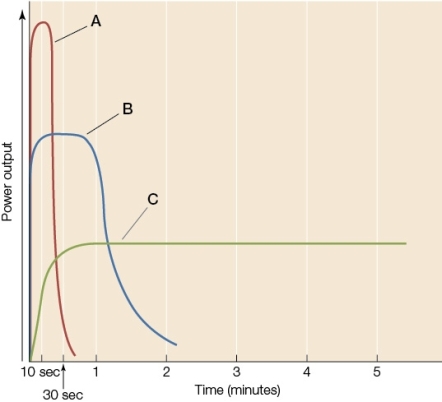
(Multiple Choice)
4.8/5 (73)
(73) Salmon returning to spawn in their native stream require extreme endurance for the journey.An examination of the muscles used to perform this activity would show that they
(Multiple Choice)
4.9/5 (81)
(81) 
Filters
- Essay(0)
- Multiple Choice(0)
- Short Answer(0)
- True False(0)
- Matching(0)