



 Chat with AI
Exam 5: Stereochemistry

Exam 1: Structure and Bonding127 Questions
Exam 2: Acids and Bases; Functional Groups136 Questions
Exam 3: Structure and Stereochemistry of Alkanes134 Questions
Exam 4: The Study of Chemical Reactions128 Questions
Exam 5: Stereochemistry132 Questions
Exam 6: Alkyl Halides; Nucleophilic Substitution137 Questions
Exam 7: Structure and Synthesis of Alkenes; Elimination131 Questions
Exam 8: Reactions of Alkenes134 Questions
Exam 10: Structure and Synthesis of Alcohols136 Questions
Exam 11: Reactions of Alcohols125 Questions
Exam 12: Infrared Spectroscopy and Mass Spectrometry121 Questions
Exam 13: Nuclear Magnetic Resonance Spectroscopy130 Questions
Exam 14: Ethers, Epoxides, and Thioethers127 Questions
Exam 15: Conjugated Systems, Orbital Symmetry, and Ultraviolet Spectroscopy130 Questions
Exam 16: Aromatic Compounds128 Questions
Exam 17: Reactions of Aromatic Compounds129 Questions
Exam 18: Ketones and Aldehydes131 Questions
Exam 19: Amines127 Questions
Exam 20: Carboxylic Acids125 Questions
Exam 21: Carboxylic Acid Derivatives130 Questions
Exam 22: Condensations and Alpha Substitutions of Carboxyl Compounds127 Questions
Exam 23: Carbohydrates and Nucleic Acids126 Questions
Exam 24: Amino Acids, Peptides, and Proteins127 Questions
Exam 25: Lipids127 Questions
Exam 26: Synthetic Polymers128 Questions
Select questions type


Can the molecule shown below be properly described as a meso compound? 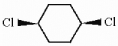
(Short Answer)
4.8/5  (74)
(74) What term describes the structural relationship between cis-1,2-dimethylcyclopentane and trans-1,3-dimethylcyclopentane?
(Multiple Choice)
4.8/5 (73)
(73) How many enantiomers are there of the molecule shown below? 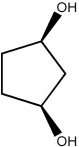
(Multiple Choice)
4.7/5 (85)
(85) 
Which of the following terms best describes the pair of compounds shown: enantiomers, diastereomers, or the same compound? 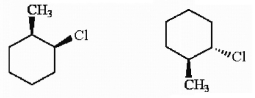
(Short Answer)
5.0/5 (85)
(85) Use the following three structures to answer the two questions below. 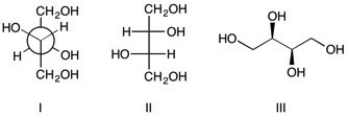 -The relationship between I and II is: ________.
 (Multiple Choice)
4.7/5 (84)
(84) Would a 50/50 mixture of the two compounds below be optically active? Briefly explain your answer. 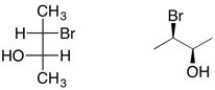
(Essay)
4.9/5 (97)
(97) 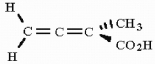
(-)-Lactic acid has a specific rotation of -3.8°. What is the specific rotation of a solution containing 7.5 g of (-)-lactic acid and 2.5 g of (+)-lactic acid?
(Short Answer)
4.7/5 (72)
(72) Assign the proper configurational label, R or S, to each chiral carbon in the molecule below. 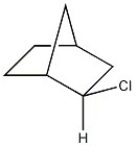
(Essay)
4.8/5 (90)
(90) Which of the following terms best describes the pair of compounds shown: enantiomers, diastereomers, or the same compound? 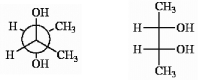
(Short Answer)
4.8/5 (74)
(74) Label each asymmetric carbon in the molecule below as having the R or S configuration. 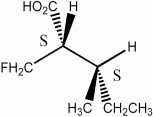
(Essay)
4.7/5 (89)
(89) A mixture of two enantiomers with a composition of 65.0% R has an observed rotation of -25.3° in a  polarimeter tube. If the mixture has a concentration of 2.038 g/mL at 25°C, what is the predicted
 Of an optically pure sample of the S enantiomer?
polarimeter tube. If the mixture has a concentration of 2.038 g/mL at 25°C, what is the predicted
Of an optically pure sample of the S enantiomer? (Multiple Choice)
4.8/5 (86)
(86) How many asymmetric carbon atoms are present in the molecule shown? 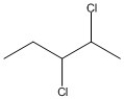
(Multiple Choice)
4.8/5 (69)
(69) 
The boiling point of S-2-butanol is 99°C. What is the boiling point of R-2-butanol?
(Multiple Choice)
4.9/5 (86)
(86) How many enantiomers are there of the molecule shown below? 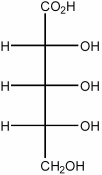
(Multiple Choice)
5.0/5 (76)
(76) How many diastereomers are there of the molecule shown below? 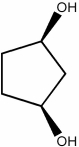
(Multiple Choice)
4.8/5 (80)
(80) How many asymmetric carbon atoms are present in the following compound? 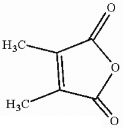
(Multiple Choice)
4.9/5 (82)
(82) What is the structural relationship between the two molecule shown below? 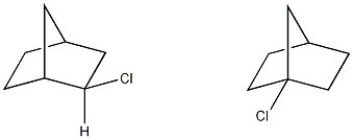
(Multiple Choice)
4.8/5 (76)
(76) 
Filters
- Essay(0)
- Multiple Choice(0)
- Short Answer(0)
- True False(0)
- Matching(0)