Multiple Choice
Passage
At the blood-brain barrier, the cerebral spinal fluid (CSF) is separated from lymphatic circulation by epithelial cells bound by tight junctions. Within the central nervous system (CNS) , CSF surrounds and protects the brain and spinal cord and is believed to function in waste clearance for the CNS analogous to the role of the lymphatic system within the body.This waste clearance system has been dubbed the "glymphatic system." Although the mechanism of clearance is largely unknown, specialized glial cells known as astrocytes appear to modify the interstitial volume between neurons. This increase in interstitial volume allows for greater CSF flow, which increases the efficiency of neurotoxic clearance. Waste products removed from the brain include metabolic products such as ammonia and harmful compounds such as amyloid proteins.Recent advances in imaging technology suggest that interstitial clearance may be modified during sleep. To test this hypothesis, researchers indirectly studied changes in interstitial volume by measuring the percentage of CSF coverage in animal models during the first hour of sleep and again during the first hour of wakefulness (Figure 1) .
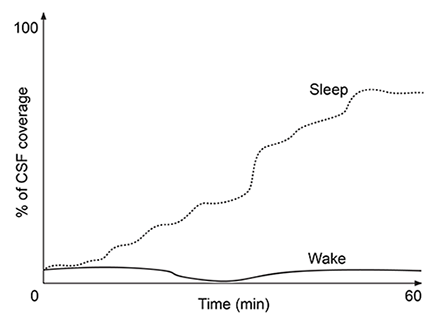 Figure 1. Percentage of CSF coverage of interstitial space during sleep and wakefulness
-Which of the following is true regarding the organization of neuronal tracts in the spinal cord?
A) Afferent neuronal fibers carry motor commands from the brain to the body through tracts in the spinal gray matter.
B) Afferent neuronal fibers carry sensory information from the body to the brain through tracts in the spinal gray matter.
C) Efferent neuronal fibers carry motor commands from the brain to the body through tracts in the spinal white matter.
D) Efferent neuronal fibers carry sensory information from the body to the brain through tracts in the spinal white matter.
Correct Answer:

Verified
Correct Answer:
Verified
Q271: Passage<br>Lipopolysaccharides (LPS) found in gram-negative bacterial cells
Q272: Passage<br>Spinal muscular atrophy (SMA) is an autosomal
Q273: Passage<br>Spinal muscular atrophy (SMA) is an autosomal
Q274: Passage<br>Alzheimer disease (AD) is a progressive condition
Q275: Passage<br>The nicotinic acetylcholine receptor (nAChR) is a
Q277: Passage<br>Eukaryotic organelles such as mitochondria and chloroplasts
Q278: Passage<br>The lumen of the human gut is
Q279: Passage<br>Hematological anomalies have been observed in patients
Q280: Certain turtle species exhibit embryonic expression of
Q281: Passage<br>Beta-thalassemia is a blood disorder caused by