Multiple Choice
Passage
The ABO blood groups are determined by the polysaccharide antigens linked to sphingolipids on red blood cell membranes. The polysaccharide known as the H-antigen (O-type blood) consists of a polysaccharide (R-group) glycosidically linked to D-galactose, which is connected to L-fucose in an α-1,2 linkage. Type A and type B blood express the A- and B-antigens, respectively (Figure 1) . These antigens are modified forms of the H-antigen, in which D-galactose (B-antigen) or a derivative of D-galactose called GalNAc (A-antigen) is added in an α-1,3 linkage to the D-galactose moiety of the H-antigen.
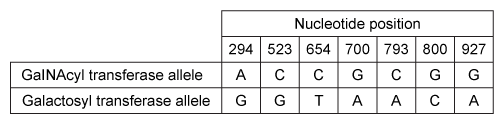
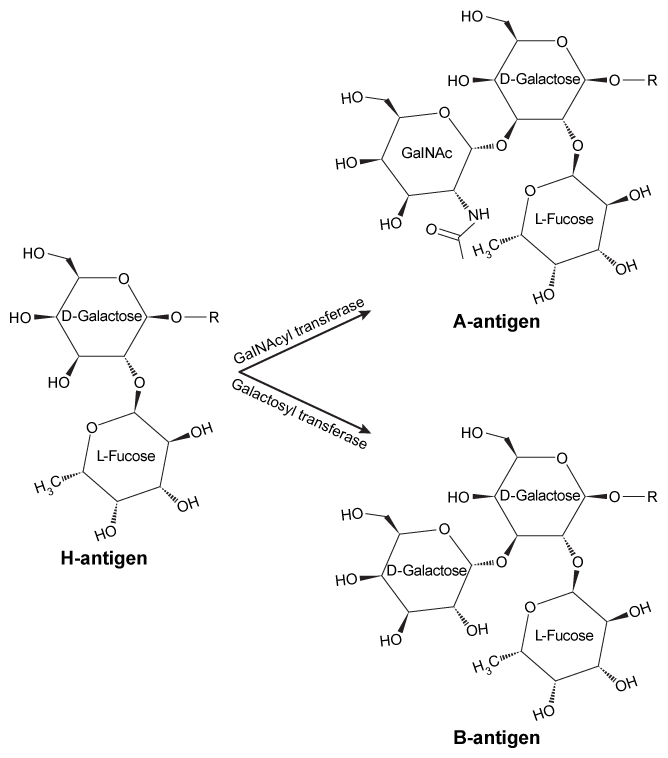 Figure 1 Structures of the H-, A-, and B-antigens. The R-group represents additional carbohydrates.The addition of GalNAc or galactose to the H-antigen is catalyzed by an enzyme encoded by the ABO gene. One allele of the gene encodes GalNAcyl transferase and produces the A-antigen, while another allele encodes galactosyl-transferase and yields the B-antigen (Figure 1) . The two alleles differ at seven nucleotide positions, summarized in Table 1.Table 1 Nucleotide Positions Where the Alleles Encoding GalNAcyl Transferase and Galactosyl Transferase Differ
 Individuals with both alleles express both antigens and have type AB blood. Those with type O blood have a third allele that encodes an inactive form of the enzyme. A study of blood type abundance was conducted, and the number of participants with each type is shown in Table 2. Table 3 shows several fatty-acyl chains found in the sphingolipids to which the antigens were attached.Table 2 Number of Participants That Express Each Blood Type in a Study of 10,000 Individuals
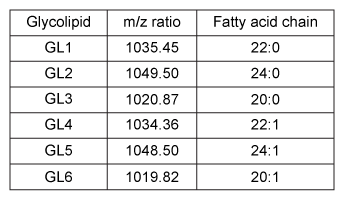
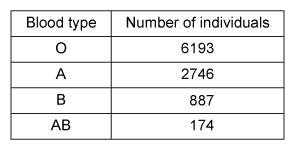 Table 3 Types of Sphingolipids to Which Polysaccharide Antigens Were Bound, as Determined by Mass Spectrometry (Note: For fatty acid chains, the numbers on the left and right of the colon indicate number of carbons and number of C=C double bonds, respectively)
-Approximately what percentage of the population measured in Table 2 expresses GalNAcyl transferase?
A) 29%
B) 27%
C) 11%
D) 9%
Correct Answer:

Verified
Correct Answer:
Verified
Q194: Passage<br>The innate immune system relies heavily on
Q195: Escherichia coli bacteria containing only <sup>15</sup>N-labeled DNA
Q196: Passage<br>Dystroglycan (Dg) is a transmembrane protein that
Q197: Passage<br>The tumor suppressor p53 is a homotetrameric
Q198: Passage<br>Human gamma-glutamyl transpeptidase (hGGT) is an enzyme
Q200: Passage<br>The ABO blood groups are determined by
Q201: Passage<br>The bacterium Clostridium difficile secretes protein toxins
Q202: Passage<br>Porphyrin biosynthesis is a multistep process that
Q203: Passage<br>Spinocerebellar ataxia 3 (SCA3) is a neurodegenerative
Q204: Passage<br>The innate immune system relies heavily on