Multiple Choice
Passage
Antimicrobial peptides are an important component of innate immunity. Since their discovery in 1939, over 5,000 peptides with antimicrobial properties have been isolated from organisms in every domain of life. They have demonstrated activity against enveloped viruses, bacteria, fungi, and even tumor cells and have recently gained interest for their potential in fighting antibiotic-resistant bacteria. Most known antimicrobial peptides are positively charged, but some with negative charges have also been discovered.Frogs are known to secrete a variety of antimicrobial peptides as a major source of immunity. Secretions from a new species of frog were collected and the peptides were separated by cation exchange chromatography. Four of the isolated peptides demonstrated strong antibacterial activity and were characterized by isoelectric focusing and sequencing:
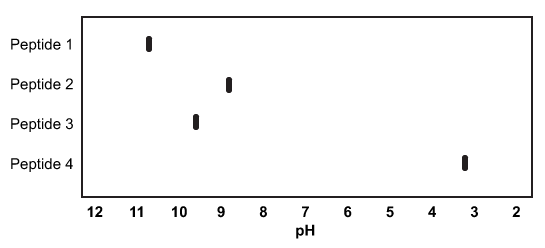 Figure 1 Results of isoelectric focusing of four antimicrobial peptidesTable 1 Amino Acid Compositions of Four Antimicrobial Peptides
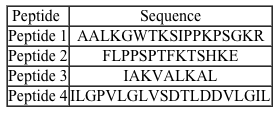 Adapted from Wang Z, Wang G. APD: the Antimicrobial Peptide Database. Nucleic Acids Res. 2004;32(Database issue) :D590-2.
-Suppose the peptides had been purified by size exclusion chromatography instead of cation exchange. Which peptide would elute last?
A) Peptide 1
B) Peptide 2
C) Peptide 3
D) Peptide 4
Correct Answer:

Verified
Correct Answer:
Verified
Q262: In order to transport long-chain fatty acids
Q263: Passage<br>Diabetic nephropathy (kidney disease) is characterized in
Q264: Passage<br>Upon entering muscle cells, glucose is immediately
Q265: The pK<sub>a</sub> for the side chain of
Q266: Passage<br>Tumor hypoxia is a marker of resistance
Q268: Which type of molecule, primarily obtained from
Q269: Two possible mechanisms, shown below, were designed
Q270: Passage<br>The K-ras gene codes for a small
Q271: Passage<br>The sirtuins are a class of enzymes
Q272: Interleukin-1β is a cytokine that upregulates the