Multiple Choice
Passage
The innate immune system relies heavily on the phagocytic action of neutrophils, mobile white blood cells that engulf and degrade bacteria and viruses as the first line of host defense against invading pathogens. One mechanism for eliminating viruses engulfed in the phagosome involves the degradation of viral proteins by neutrophil serine proteases (NSPs) .NSPs, which form part of the chymotrypsin family of serine proteases, cleave viral proteins using a catalytic triad relay system. Originally discovered in granules released by neutrophils, NSP4 is a novel monomeric serine protease that has been studied to elucidate the catalytic mechanism of NSPs. Prior experimental data suggest that NSP4 alters its tertiary structure upon substrate binding and cleaves viral proteins using the acylation reaction shown in Figure 1.
 Figure 1 Degradation of viral proteins by acylation of NSP4Computational methods were used to identify the energetic parameters of reactions between NSP4 and synthetic viral proteins. To ensure that simulated reactions resembled physiological conditions, algorithms were adjusted to account for the enzyme being in an aqueous environment. The rate-determining step in the acylation reaction was determined by calculating the changes in free energy in both the enzyme and substrate (Figure 2) .
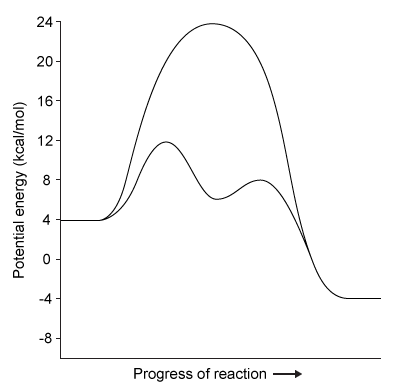 Figure 2 Free energy profiles of synthetic viral protein cleavageKnowledge of amino acid frequency distribution at an enzymatic active site may facilitate the design of novel active sites and enzyme-specific inhibitors. Researchers analyzed the composition of amino acids that form the NSP4 active site during protein folding to study the characteristics of residues involved in active site formation (Figure 3) .
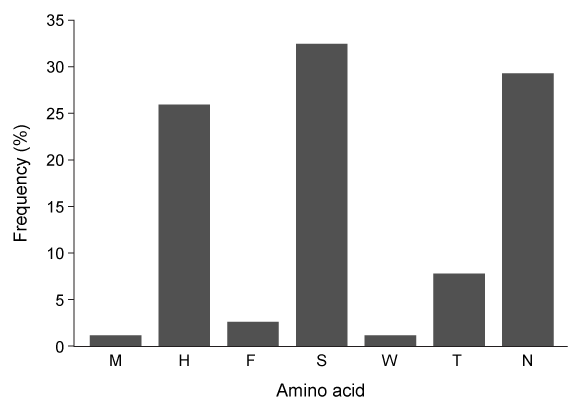 Figure 3 Frequency distribution of amino acid residues at the NSP4 active site
Adapted from Stapels DA, Geisbrecht BV, Rooijakkers SH. Neutrophil serine proteases in antibacterial defense. Curr Opin Microbiol. 2015;23:42-8.
-Based on the passage, the cleavage of viral proteins by NSP4 is:
A) an exergonic process moving in the reverse direction.
B) an endergonic process moving in the forward direction.
C) a nonspontaneous reaction requiring energy to proceed.
D) a spontaneous reaction resulting in a release of energy.
Correct Answer:

Verified
Correct Answer:
Verified
Q28: Passage<br>Upon entering muscle cells, glucose is immediately
Q29: Passage<br>NDPK is an enzyme in budding yeast
Q30: Passage<br>Leptin signaling is vital for maintaining adequate
Q31: Passage<br>Diabetic nephropathy (kidney disease) is characterized in
Q32: In the electron transport chain, four electrons
Q34: Passage<br>Mitochondria are double membrane-bound cellular organelles that
Q35: Passage<br>DNA polymerization is one of the most
Q36: Passage<br>Many cephalopods can change color to blend
Q37: Passage<br>Aldehyde dehydrogenase 2 (ALDH2) is essential for
Q38: Which of the following peptides would exhibit