Multiple Choice
Passage
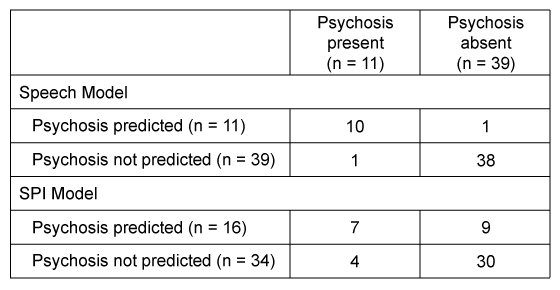
Psychotic disorders are characterized by a loss of contact with reality. The most common psychotic disorder is schizophrenia, which has a typical onset of psychotic symptoms in early adulthood. Schizophrenia displays considerable inter-individual variation throughout the course of the disorder; many factors appear to influence its progression. Comorbid (co-occurring) conditions, common in schizophrenia, may lead to poorer prognoses. For example, research suggests that fewer depressive symptoms are moderately associated with higher rates of medication compliance, whereas more depressive symptoms are associated with increased future relapses. The early detection of psychosis also appears to have a significant impact on long-term outcomes in schizophrenia. A first psychotic episode that goes untreated for a longer period is associated with more future hospitalizations and a diminished response to future therapeutic interventions.Researchers conducted a study to determine which was better at predicting the development of psychosis, a major component of schizophrenia, in high-risk young adults: the presence of certain speech pattern features or a standard clinical symptom inventory. The participant sample was restricted to 50 younger adults (age 18-30) who either met criteria for prodromal syndrome (preclinical signs of psychosis) or had a first-degree relative with schizophrenia.Every three months for three years, participants were interviewed and given the Symptoms of Psychosis Inventory (SPI) , a standardized clinical assessment designed to measure psychosis and related symptoms. The SPI contains two subscales based on the major symptoms of schizophrenia: the Positive Symptom Scale (PSS) and the Negative Symptom Scale (NSS) , which are summed to provide a total SPI score. Transcribed interview data were analyzed with software designed to assess the following speech pattern features: semantic coherence (the relatedness of phrases to one another) , the number of determiners (eg, "that," "which," "what") used in a phrase (determiner density) , and phrase length.Experienced clinicians diagnosed 11 participants with active psychosis by the end of the study. A computer program generated two models that predicted the development of active psychosis based on the data collected. One model based the prediction solely on a combination of the three speech pattern features ("Speech Model") and the other model based the prediction solely on SPI symptoms data ("SPI Model") (Table 1) .Table 1 Comparison of Predictive Models
-Which of the following would support the claim that the SPI is a valid assessment?
A) Scores are positively correlated from one administration to the next.
B) Scores are positively correlated to an already established measure of psychotic symptoms.
C) Scores are similar for the same patient, regardless of interviewer.
D) Scores are similar for all participants at the end of the study.
Correct Answer:

Verified
Correct Answer:
Verified
Q57: Passage<br>Epidemiologists now consider obesity to be a
Q58: Which of the following is true regarding
Q59: Passage<br>The diagnosis of a child with a
Q60: Passage<br>During the 19th century, the industrial revolution
Q61: Passage<br>Both institutional and interpersonal factors contribute to
Q63: Passage<br>Post-traumatic stress disorder (PTSD) and generalized anxiety
Q64: Symptoms of a myocardial infarction can differ
Q65: Passage<br>Psychophysiology examines the relationship between the properties
Q66: Passage<br>Numerous studies suggest that physicians make both
Q67: Which of the following statements about race