Multiple Choice
A 53-year-old Caucasian man comes to the office for intermittent generalized headaches 8 months after deceased donor kidney transplantation. The patient's post-transplantation course was complicated by an episode of acute rejection at 2 months that was treated effectively with high-dose corticosteroids. He has diabetes mellitus and hypertension. His medications include insulin, atenolol, cyclosporine, mycophenolate mofetil, and vitamin D. No changes were made to his medications recently and his immunosuppressants are at therapeutic levels. The kidney donor had no personal or family history of hypertension. The patient's temperature is 36.1 C (97 F) , blood pressure is 180/110 mm Hg, and heart rate is 90/min. Examination shows no abnormalities. His serum laboratory values are: 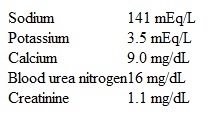 The patient is started on sodium restriction, amlodipine, and enalapril to control the hypertension. One week later, he returns with a blood pressure of 138/86 mm Hg. His serum creatinine level is 2.4 mg/dL. Which of the following is the most likely underlying cause of this patient's hypertension?
A) Increased cardiac output
B) Increased sympathetic output
C) Overproduction of endothelin
D) Renin-angiotensin system activation
E) Sodium and fluid retention
Correct Answer:

Verified
Correct Answer:
Verified
Q385: A study was conducted to assess the
Q386: A 32-year-old business executive comes to the
Q387: A 32-year-old woman is hospitalized with left
Q388: An 81-year-old woman is brought to the
Q389: Several tests have been developed to measure
Q391: A 28-year-old man comes to the emergency
Q392: A randomized controlled trial investigated the effect
Q393: A 60-year-old man has experienced progressive shortness
Q394: A 63-year-old man comes to the emergency
Q395: A 55-year-old man with a history of