



 Chat with AI
Exam 8: Budgeting for Planning and Control

Exam 1: Introduction to Cost Management151 Questions
Exam 2: Basic Cost Management Concepts199 Questions
Exam 3: Cost Behavior193 Questions
Exam 4: Activity-Based Costing198 Questions
Exam 5: Product and Service Costing: Job-Order System149 Questions
Exam 6: Process Costing181 Questions
Exam 7: Allocating Costs of Support Departments and Joint Products171 Questions
Exam 8: Budgeting for Planning and Control202 Questions
Exam 9: Standard Costing: a Functional-Based Control Approach125 Questions
Exam 10: Decentralization: Responsibility, Accounting, Performance Evaluation, and Transfer Pricing134 Questions
Exam 11: Strategic Cost Management148 Questions
Exam 12: Activity-Based Management146 Questions
Exam 13: The Balanced Scorecard: Strategic-Based Control124 Questions
Exam 14: Quality and Environmental Cost Management199 Questions
Exam 15: Lean Accounting and Productivity Measurement161 Questions
Exam 16: Cost-Volume-Profit Analysis128 Questions
Exam 17: Activity Resource Usage Model and Tactical Decision Making121 Questions
Exam 18: Pricing and Profitability Analysis159 Questions
Exam 19: Capital Investment125 Questions
Exam 20: Inventory Management: Economic Order Quantity, Jit, and the Theory of Constraints127 Questions
Select questions type


Figure 8-7
Macheski Company, an importer and retailer of Polish pottery and kitchenware, prepares a monthly master budget. Data for the July master budget are given below:
The June 30th balance sheet follows:
 Actual sales for June and budgeted sales for July, August, and September are given below:
 Sales are 20 percent for cash and 80 percent on credit. All credit sales are collected in the month following the
sale. There are no bad debts.
The gross margin percentage is 40 percent of sales. The desired ending inventory is equal to 25 percent of the following month's sales. One fourth of the purchases are paid for in the month of purchase and the others are purchased on account and paid in full the following month.
The monthly cash operating expenses are $43,000, and the monthly depreciation expenses are $7,000.
-Refer to Figure 8-7. What is the balance of the retained earnings account at the end of July?
Actual sales for June and budgeted sales for July, August, and September are given below:
Sales are 20 percent for cash and 80 percent on credit. All credit sales are collected in the month following the
sale. There are no bad debts.
The gross margin percentage is 40 percent of sales. The desired ending inventory is equal to 25 percent of the following month's sales. One fourth of the purchases are paid for in the month of purchase and the others are purchased on account and paid in full the following month.
The monthly cash operating expenses are $43,000, and the monthly depreciation expenses are $7,000.
-Refer to Figure 8-7. What is the balance of the retained earnings account at the end of July? (Multiple Choice)
4.9/5  (79)
(79) Figure 8-7
Macheski Company, an importer and retailer of Polish pottery and kitchenware, prepares a monthly master budget. Data for the July master budget are given below:
The June 30th balance sheet follows:
Actual sales for June and budgeted sales for July, August, and September are given below:
Sales are 20 percent for cash and 80 percent on credit. All credit sales are collected in the month following the
sale. There are no bad debts.
The gross margin percentage is 40 percent of sales. The desired ending inventory is equal to 25 percent of the following month's sales. One fourth of the purchases are paid for in the month of purchase and the others are purchased on account and paid in full the following month.
The monthly cash operating expenses are $43,000, and the monthly depreciation expenses are $7,000.
-Refer to Figure 8-7. What is the balance of the accounts payable at the end of July?
Actual sales for June and budgeted sales for July, August, and September are given below:
Sales are 20 percent for cash and 80 percent on credit. All credit sales are collected in the month following the
sale. There are no bad debts.
The gross margin percentage is 40 percent of sales. The desired ending inventory is equal to 25 percent of the following month's sales. One fourth of the purchases are paid for in the month of purchase and the others are purchased on account and paid in full the following month.
The monthly cash operating expenses are $43,000, and the monthly depreciation expenses are $7,000.
-Refer to Figure 8-7. What is the balance of the accounts payable at the end of July? (Multiple Choice)
4.8/5 (84)
(84) Villanova, Inc., has done a cost analysis for its production of rubber stamps. The following activities and cost drivers have been developed: Activity Cost Formula
Design $5,000 + $0.05 per machine hour
Machining $25,000 + $0.01 per machine hour
Setups $35 per batch
Purchasing $50 + $15 per purchase order
Following are the actual costs of producing 35,000 rubber stamps: 1,000 machine hours; 5 batches; 30 purchase orders
Design $5,080
Machining ?
Setups ?
Purchasing $600
The following variances were given in the activity performance report:
Design ?
Machining $40 F
Setups 15 F
Purchasing ?
What is the actual cost of machining?
(Multiple Choice)
4.9/5 (80)
(80) The cash budget is the least priority budget in the master budget.
(True/False)
4.8/5 (79)
(79) The activity-based budget begins with output and then determines the resources necessary to create that output.
(True/False)
4.9/5 (80)
(80) Figure 8-8
Rammazzotti, Inc., is looking for feedback on company performance. The company compares the budget for the year with the actual costs. Data have been collected below:
Rammazzotti Inc., had the following budgeted data:
Unit sales for 2016 26,000
Unit production for 2016 26,000
Budgeted fixed overhead for 2016:
Supervision $ 800
Depreciation 2,000
Rent 100
Budgeted variable costs per unit:
Direct materials $0.15
Direct labor 0.20
Supplies 0.02
Indirect labor 0.05
Power 0.02
The following actually occurred:
Actual unit sales for 2016 24,000
Actual unit production for 2016 28,000
Actual fixed overhead for 2016:
Supervision $ 850
Depreciation 2,000
Rent 100
Actual variable costs:
Direct materials $3,500
Direct labor 4,900
Supplies 530
Indirect labor 1,250
Power 470
-Refer to Figure 8-8. The static budget variance for supervision is
(Multiple Choice)
4.9/5 (75)
(75) Figure 8-8
Rammazzotti, Inc., is looking for feedback on company performance. The company compares the budget for the year with the actual costs. Data have been collected below:
Rammazzotti Inc., had the following budgeted data:
Unit sales for 2016 26,000
Unit production for 2016 26,000
Budgeted fixed overhead for 2016:
Supervision $ 800
Depreciation 2,000
Rent 100
Budgeted variable costs per unit:
Direct materials $0.15
Direct labor 0.20
Supplies 0.02
Indirect labor 0.05
Power 0.02
The following actually occurred:
Actual unit sales for 2016 24,000
Actual unit production for 2016 28,000
Actual fixed overhead for 2016:
Supervision $ 850
Depreciation 2,000
Rent 100
Actual variable costs:
Direct materials $3,500
Direct labor 4,900
Supplies 530
Indirect labor 1,250
Power 470
-Refer to Figure 8-8. The static budget variance for total variable costs is
(Multiple Choice)
4.8/5 (67)
(67) Participative budgeting detracts from a manager's sense of responsibility and creativity.
(True/False)
4.9/5 (87)
(87) Compare and contrast static budgets, flexible budgets, and activity-based budgets.
(Essay)
4.9/5 (61)
(61) Colorado Corporation has the following sales forecast for the next quarter: July, 4,000 units; August, 4,800 units; September, 5,600 units
Sales totaled 3,200 units in June. The June ending finished goods inventory was 800 units. End-of-month finished goods inventory levels are planned to be equal to 30 percent of next month's planned sales.
The planned production for Colorado Corporation for July is
(Multiple Choice)
4.9/5 (94)
(94) A budget is a financial plan for the future used for planning, controlling, and decision making.
(True/False)
4.8/5 (74)
(74) The body responsible for reviewing the budget, providing policy guidelines and budgetary goals, resolving differences that may arise, and approving the final budget is the __________ committee.
(Short Answer)
4.9/5 (70)
(70) Figure 8-8
Rammazzotti, Inc., is looking for feedback on company performance. The company compares the budget for the year with the actual costs. Data have been collected below:
Rammazzotti Inc., had the following budgeted data:
Unit sales for 2016 26,000
Unit production for 2016 26,000
Budgeted fixed overhead for 2016:
Supervision $ 800
Depreciation 2,000
Rent 100
Budgeted variable costs per unit:
Direct materials $0.15
Direct labor 0.20
Supplies 0.02
Indirect labor 0.05
Power 0.02
The following actually occurred:
Actual unit sales for 2016 24,000
Actual unit production for 2016 28,000
Actual fixed overhead for 2016:
Supervision $ 850
Depreciation 2,000
Rent 100
Actual variable costs:
Direct materials $3,500
Direct labor 4,900
Supplies 530
Indirect labor 1,250
Power 470
-Refer to Figure 8-8. The total budgeted costs for 2016 were
(Multiple Choice)
4.9/5 (86)
(86) Colorado Corporation has the following sales forecast for the next quarter: July, 4,000 units; August, 4,800 units; September, 5,600 units
Sales totaled 3,200 units in June. The June ending finished goods inventory was 800 units. End-of-month finished goods inventory levels are planned to be equal to 30 percent of the next month's planned sales.
The planned ending inventory of finished goods for August is
(Multiple Choice)
4.9/5 (72)
(72) Foremost Corporation manufactures boxes. The estimated number of boxes sold for the first three months of 2016 are as follows: 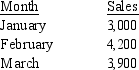 Finished goods inventory at the end of December was 900 units. Ending finished goods inventory is equal to 20
Percent of the next month's sales. General Corporation expects to sell the boxes for $5 each. April 2016 sales is projected at 4,500 boxes.
How many boxes should be produced in February?
Finished goods inventory at the end of December was 900 units. Ending finished goods inventory is equal to 20
Percent of the next month's sales. General Corporation expects to sell the boxes for $5 each. April 2016 sales is projected at 4,500 boxes.
How many boxes should be produced in February? (Multiple Choice)
5.0/5 (71)
(71) Figure 8-7
Macheski Company, an importer and retailer of Polish pottery and kitchenware, prepares a monthly master budget. Data for the July master budget are given below:
The June 30th balance sheet follows:
Actual sales for June and budgeted sales for July, August, and September are given below:
Sales are 20 percent for cash and 80 percent on credit. All credit sales are collected in the month following the
sale. There are no bad debts.
The gross margin percentage is 40 percent of sales. The desired ending inventory is equal to 25 percent of the following month's sales. One fourth of the purchases are paid for in the month of purchase and the others are purchased on account and paid in full the following month.
The monthly cash operating expenses are $43,000, and the monthly depreciation expenses are $7,000.
-Refer to Figure 8-7. What is the balance of the cash account at the end of July?
Actual sales for June and budgeted sales for July, August, and September are given below:
Sales are 20 percent for cash and 80 percent on credit. All credit sales are collected in the month following the
sale. There are no bad debts.
The gross margin percentage is 40 percent of sales. The desired ending inventory is equal to 25 percent of the following month's sales. One fourth of the purchases are paid for in the month of purchase and the others are purchased on account and paid in full the following month.
The monthly cash operating expenses are $43,000, and the monthly depreciation expenses are $7,000.
-Refer to Figure 8-7. What is the balance of the cash account at the end of July? (Multiple Choice)
5.0/5 (75)
(75) This problem can be broken into components…
a. Given the following information, prepare a quarterly sales budget and production budget, in units:
Last year sales = 500,000 units. The organization is planning a 10 percent increase in sales for the year 2012. The company is a retail organization that sees higher sales due to the holidays in the 4th quarter. 40 percent of the sales occur in the 4th quarter and the remaining units are sold equally over the other three quarters.
The beginning inventory for the year amounts to 20,000 units. The estimated sales for the first quarter of 2013 amount to 115,000 units. The company requires an ending inventory of 20 percent of the next quarters' sales.
b. Given the schedules above, if the projected sales price is $50 per unit, what is the expected revenue per quarter? Also, given the following information, what is the estimated costs of production?
Materials: Each unit requires 1 yard of fabric and 1/2 pound of fiberfill stuffing. Fabric can be purchased at $9.00 per yard and fiberfill sells for $4.00 per pound. Inventories of materials are listed as follows:
 Beginning inventory of fabric is 16,000 yards and 6,000 lbs of fiberfill.
It takes an estimated time of .25 hours to produce one unit of output. The labor cost per hour is $25 per hour and the taxes and benefit load is 25 percent.
Beginning inventory of fabric is 16,000 yards and 6,000 lbs of fiberfill.
It takes an estimated time of .25 hours to produce one unit of output. The labor cost per hour is $25 per hour and the taxes and benefit load is 25 percent. (Essay)
4.8/5 (77)
(77) Which of the following is NOT a key feature of an ideal budgetary system?
(Multiple Choice)
4.8/5 (76)
(76) 
Filters
- Essay(0)
- Multiple Choice(0)
- Short Answer(0)
- True False(0)
- Matching(0)