



 Chat with AI
Exam 23: Metabolism and Energy Production

Exam 1: Chemistry in Our Lives51 Questions
Exam 2: Chemistry and Measurements90 Questions
Exam 3: Energy and Matter87 Questions
Exam 4: Atoms100 Questions
Exam 5: Nuclear Chemistry79 Questions
Exam 6: Ionic and Molecular Compounds98 Questions
Exam 7: Chemical Reactions and Quantities114 Questions
Exam 8: Gases96 Questions
Exam 9: Solutions87 Questions
Exam 10: Reaction Rates and Chemical Equilibrium67 Questions
Exam 11: Acids and Bases92 Questions
Exam 12: Introduction to Organic Chemistry: Hydrocarbons140 Questions
Exam 13: Alcohols, Phenols, Thiols, and Ethers66 Questions
Exam 14: Aldehydes, Ketones, and Chiral Molecules85 Questions
Exam 15: Carbohydrates75 Questions
Exam 16: Carboxylic Acids and Esters83 Questions
Exam 17: Lipids85 Questions
Exam 18: Amines and Amides91 Questions
Exam 19: Amino Acids and Proteins84 Questions
Exam 20: Enzymes and Vitamins87 Questions
Exam 21: Nucleic Acids and Protein Synthesis80 Questions
Exam 22: Metabolic Pathways for Carbohydrates80 Questions
Exam 23: Metabolism and Energy Production81 Questions
Exam 24: Metabolic Pathways for Lipids and Amino Acids73 Questions
Select questions type


Which of the following metabolic pathways can occur in the absence of oxygen?

Free
(Multiple Choice)
4.8/5  (81)
(81) Correct Answer: Verified
D
In the third major step of the citric acid cycle, NAD+ is converted to
Free
(Multiple Choice)
4.8/5 (78)
(78) Correct Answer:Verified
VerifiedE
Citrate is one of the products of the citric acid cycle.
Free
(True/False)
4.9/5 (79)
(79) Correct Answer:Verified
VerifiedFalse
Which coenzyme is the electron acceptor in the following reaction?
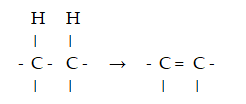
(Multiple Choice)
4.7/5 (82)
(82) In this figure, depicting part 1 of the Citric Acid Cycle, taken from your text, identify the substances numbered. 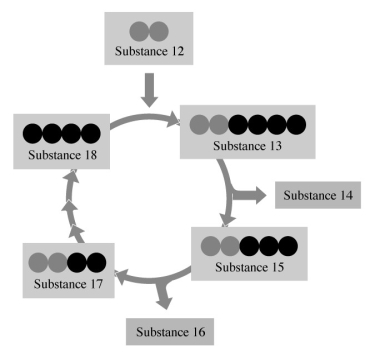 -Substance 13
 (Short Answer)
4.9/5 (84)
(84) In the chemiosmotic model, protons circulate through a protein complex called
(Multiple Choice)
4.9/5 (92)
(92) In this figure depicting the Stages of Metabolism taken from your text, identify the metabolic substance numbered. 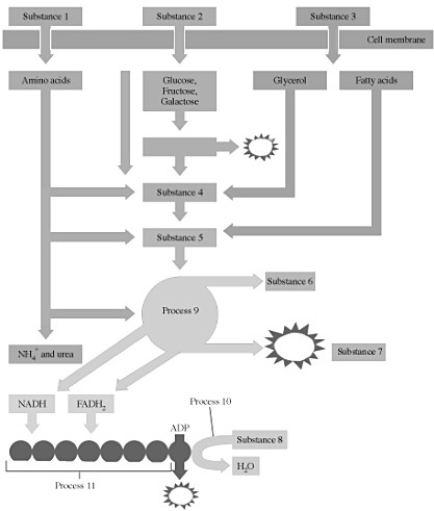 -Substance 1
 (Short Answer)
4.7/5 (75)
(75) In reaction 4 of the citric acid cycle, α-ketoglutarase, a five-carbon keto acid, is decarboxylated.
(True/False)
4.9/5 (94)
(94) The compounds in the respiratory chain that remove hydrogen ions and electrons from NADH are classified as
(Multiple Choice)
4.9/5 (79)
(79) In this figure, depicting part 1 of the Citric Acid Cycle, taken from your text, identify the substances numbered.
-Substance 18
-Substance 18 (Short Answer)
4.7/5 (79)
(79) Which coenzyme is the electron acceptor in the following reaction?
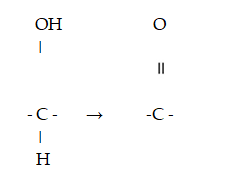
(Multiple Choice)
4.9/5 (86)
(86) In electron transport, the synthesis of ATP from ADP + Pi is called
(Multiple Choice)
4.7/5 (86)
(86) In the hydrolysis of succinyl CoA in step 5 of the citric acid cycle, CoA is released as
(Multiple Choice)
4.9/5 (68)
(68) Which of the three major stages of metabolism includes the citric acid cycle?
(Multiple Choice)
5.0/5 (73)
(73) 
Filters
- Essay(0)
- Multiple Choice(0)
- Short Answer(0)
- True False(0)
- Matching(0)