



 Chat with AI
Exam 27: Reproduction and Embryonic Development

Exam 1: Biology: Exploring Life47 Questions
Exam 2: The Chemical Basis of Life73 Questions
Exam 3: The Molecules of Cells89 Questions
Exam 4: A Tour of the Cell93 Questions
Exam 5: The Working Cell81 Questions
Exam 6: How Cells Harvest Chemical Energy82 Questions
Exam 7: Photosynthesis: Using Light to Make Food83 Questions
Exam 8: The Cellular Basis of Reproduction and Inheritance81 Questions
Exam 9: Patterns of Inheritance76 Questions
Exam 10: Molecular Biology of the Gene85 Questions
Exam 11: How Genes Are Controlled84 Questions
Exam 12: DNA Technology and Genomics80 Questions
Exam 13: How Populations Evolve67 Questions
Exam 14: The Origin of Species59 Questions
Exam 15: Tracing Evolutionary History88 Questions
Exam 16: Microbial Life: Prokaryotes and Protists80 Questions
Exam 17: The Evolution of Plant and Fungal Diversity85 Questions
Exam 18: The Evolution of Invertebrate Diversity81 Questions
Exam 19: The Evolution of Vertebrate Diversity77 Questions
Exam 20: Unifying Concepts of Animal Structure and Function68 Questions
Exam 21: Nutrition and Digestion96 Questions
Exam 22: Gas Exchange68 Questions
Exam 23: Circulation81 Questions
Exam 24: The Immune System76 Questions
Exam 25: Control of Body Temperature and Water Balance67 Questions
Exam 26: Hormones and the Endocrine System66 Questions
Exam 27: Reproduction and Embryonic Development88 Questions
Exam 28: Nervous Systems75 Questions
Exam 29: The Senses62 Questions
Exam 30: How Animals Move72 Questions
Exam 31: Plant Structure, Growth, and Reproduction81 Questions
Exam 32: Plant Nutrition and Transport69 Questions
Exam 33: Control Systems in Plants61 Questions
Exam 34: The Biosphere: an Introduction to Earths Diverse Environments61 Questions
Exam 35: Behavioral Adaptations to the Environment54 Questions
Exam 36: Population Ecology57 Questions
Exam 37: Communities and Ecosystems62 Questions
Exam 38: Conservation Biology61 Questions
Select questions type


Cells migrate from one place to another during gastrulation using
(Multiple Choice)
5.0/5  (78)
(78) In this graph of estrogen and progesterone in the female reproductive cycle, the center dotted line represents day 14. Which of these is true? 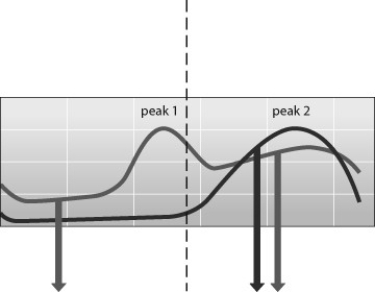
(Multiple Choice)
4.8/5 (87)
(87) Reproductive systems with external fertilization are most common in
(Multiple Choice)
4.7/5 (72)
(72) Which statement regarding spermatogenesis and oogenesis is true?
(Multiple Choice)
4.8/5 (87)
(87) When does the human blastocyst implant in the wall of the uterus?
(Multiple Choice)
4.9/5 (78)
(78) When a chemical signal from a group of embryonic cells causes a different, nearby group of cells to embark on a particular developmental course (say, differentiating into a leg), the interaction between the two groups of cells is called
(Multiple Choice)
4.8/5 (85)
(85) Two important contributions that cleavage makes to development are to
(Multiple Choice)
4.7/5 (70)
(70) 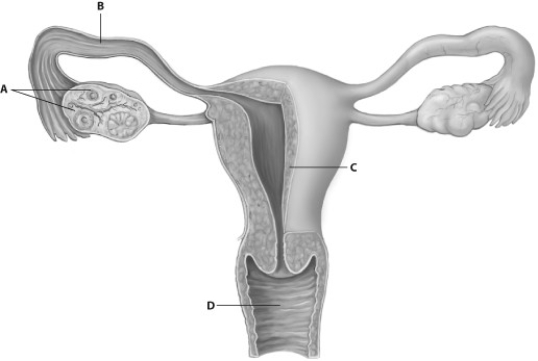 -In which part of the human female reproductive system would an IUD be placed?
 (Multiple Choice)
4.8/5 (74)
(74) The discovery of ________ explains embryonic pattern formation in a wide variety of organisms.
(Multiple Choice)
4.9/5 (70)
(70) If a woman has reached or passed her due date (the date that a woman is expected to give birth), her obstetrician may use hormones to help initiate labor. Which of the following hormones would assist the most in the initiation of labor?
(Multiple Choice)
4.8/5 (85)
(85) Sterilization, in which sperm are surgically prevented from reaching the egg, is accomplished by
(Multiple Choice)
4.8/5 (81)
(81)
-In which part of the human female reproductive system would a spermicide be placed?
-In which part of the human female reproductive system would a spermicide be placed? (Multiple Choice)
4.8/5 (66)
(66) The human egg is swept through the oviduct toward the uterus by
(Multiple Choice)
4.9/5 (89)
(89) Brittany's family includes several individuals with a genetic disorder that affects primarily males. Her husband Tony has no history of the disease. They have decided that their best chance to have a healthy family is to have only daughters. Through a new type of assisted reproductive technology, it is possible to separate sperm that will produce sons from those that will produce daughters. Brittany's eggs will be fertilized by in vitro fertilization (IVF) with sperm that can produce only daughters. The developing female embryo can be implanted into her uterus to complete development normally.
-The daughter-producing sperm used to fertilize Brittany's eggs should be
(Multiple Choice)
4.8/5 (74)
(74) Which agent can cause an infection that can ultimately develop into pelvic inflammatory disease in women?
(Multiple Choice)
4.8/5 (79)
(79) Home pregnancy test kits can detect whether a woman is pregnant within 1 to 3 weeks of her egg being fertilized. The test kits include a short strip of paper that extends from a plastic case. After a woman urinates on the strip of paper and waits 3 to 5 minutes, a symbol is displayed on a small window in the plastic case. Some tests show a single line to indicate the woman is not pregnant (negative result) and two lines to indicate she is pregnant (positive result). Others show a minus or plus sign (or some other variation) to indicate negative and positive results.
The test reports a positive symbol if it detects the presence of HCG in the woman's urine. In order for HCG to be detected, it must be present in the urine at a concentration of at least 10 to 100 units per milliliter. Even though home pregnancy tests are well designed and have been tested extensively, false negative and false positive results do occur. A false positive occurs when a test tells a woman that she is pregnant when she really is not, and a false negative occurs when a test tells a woman that she is not pregnant when she really is. Most home pregnancy test kit manufacturers claim that their tests are over 99% accurate.
-What would be the best experiment for a manufacturer to conduct in order to determine the false negative rate of its test kits?
(Multiple Choice)
4.8/5 (77)
(77) 
Filters
- Essay(0)
- Multiple Choice(0)
- Short Answer(0)
- True False(0)
- Matching(0)