



 Chat with AI
Exam 3: The Molecules of Cells

Exam 1: Biology: Exploring Life47 Questions
Exam 2: The Chemical Basis of Life73 Questions
Exam 3: The Molecules of Cells89 Questions
Exam 4: A Tour of the Cell93 Questions
Exam 5: The Working Cell81 Questions
Exam 6: How Cells Harvest Chemical Energy82 Questions
Exam 7: Photosynthesis: Using Light to Make Food83 Questions
Exam 8: The Cellular Basis of Reproduction and Inheritance81 Questions
Exam 9: Patterns of Inheritance76 Questions
Exam 10: Molecular Biology of the Gene85 Questions
Exam 11: How Genes Are Controlled84 Questions
Exam 12: DNA Technology and Genomics80 Questions
Exam 13: How Populations Evolve67 Questions
Exam 14: The Origin of Species59 Questions
Exam 15: Tracing Evolutionary History88 Questions
Exam 16: Microbial Life: Prokaryotes and Protists80 Questions
Exam 17: The Evolution of Plant and Fungal Diversity85 Questions
Exam 18: The Evolution of Invertebrate Diversity81 Questions
Exam 19: The Evolution of Vertebrate Diversity77 Questions
Exam 20: Unifying Concepts of Animal Structure and Function68 Questions
Exam 21: Nutrition and Digestion96 Questions
Exam 22: Gas Exchange68 Questions
Exam 23: Circulation81 Questions
Exam 24: The Immune System76 Questions
Exam 25: Control of Body Temperature and Water Balance67 Questions
Exam 26: Hormones and the Endocrine System66 Questions
Exam 27: Reproduction and Embryonic Development88 Questions
Exam 28: Nervous Systems75 Questions
Exam 29: The Senses62 Questions
Exam 30: How Animals Move72 Questions
Exam 31: Plant Structure, Growth, and Reproduction81 Questions
Exam 32: Plant Nutrition and Transport69 Questions
Exam 33: Control Systems in Plants61 Questions
Exam 34: The Biosphere: an Introduction to Earths Diverse Environments61 Questions
Exam 35: Behavioral Adaptations to the Environment54 Questions
Exam 36: Population Ecology57 Questions
Exam 37: Communities and Ecosystems62 Questions
Exam 38: Conservation Biology61 Questions
Select questions type


In what part of the world is the mutation for lactose tolerance most concentrated?
(Multiple Choice)
4.9/5  (70)
(70) Below is a molecule of caffeine. Which of the following features are not present in a molecule of caffeine? 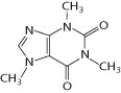
(Multiple Choice)
5.0/5 (77)
(77) The functions of some proteins change depending on whether they are in the light or in the dark they are photoreceptive (PR) proteins. A team of scientists recently determined that PR proteins bind to DNA to regulate gene expression in microbes. Answer the following three questions about this scenario.
-Suppose that the team of scientists conducted the following experiment: They mixed the PR proteins with DNA in a test tube and measured the amount of protein that bound to the DNA after 10 minutes under variable amounts of light. What was the independent variable in their experiment?
(Multiple Choice)
4.9/5 (72)
(72) A scientist suspects that the food in an ecosystem may have been contaminated with radioactive nitrogen over a period of months. Which of the following substances could be examined for radioactivity to test the hypothesis?
(Multiple Choice)
4.9/5 (84)
(84) Which of the following lists contains only polysaccharides?
(Multiple Choice)
4.8/5 (72)
(72) Mad cow disease serves as an example of how interdependent ________ and ________ are to protein.
(Multiple Choice)
4.9/5 (96)
(96) What is the correct flow of information in gene expression?
(Multiple Choice)
5.0/5 (71)
(71) If you could design a modified version of the enzyme to ensure that it would function optimally in the harsh conditions of the washing vat (such as high temperature or high pH), which of the following could you do to achieve this goal?
(Multiple Choice)
4.8/5 (83)
(83) The functions of some proteins change depending on whether they are in the light or in the dark they are photoreceptive (PR) proteins. A team of scientists recently determined that PR proteins bind to DNA to regulate gene expression in microbes. Answer the following three questions about this scenario.
-A single PR protein is composed of four identical polypeptide chains that act together to bind DNA. What is the highest level of protein structure that the PR proteins have?
(Multiple Choice)
4.8/5 (91)
(91) Suppose that an adult black bear adds 50 pounds of fat in order to survive while hibernating through the winter. Approximately how much glycogen would a bear have to add to achieve a similar feat?
(Multiple Choice)
4.8/5 (79)
(79) 
Filters
- Essay(0)
- Multiple Choice(0)
- Short Answer(0)
- True False(0)
- Matching(0)