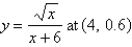
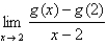
Exam 2: Derivatives

arrow
  • Select Tags
search iconSearch Question
  • Select Tags

Compute Compute   and dy for the given values of x and   .  and dy for the given values of x and Compute   and dy for the given values of x and   .  . Compute   and dy for the given values of x and   .


(Multiple Choice)
4.7/5
(83)

Let Let   . Find the derivative   of  f. . Find the derivative Let   . Find the derivative   of  f. of f.

(Short Answer)
4.9/5
(88)

The quantity Q of charge in coulombs C that has passed through a point in a wire up to time t (measured in seconds) is given by The quantity Q of charge in coulombs C that has passed through a point in a wire up to time t (measured in seconds) is given by   . Find the current when   . . Find the current when The quantity Q of charge in coulombs C that has passed through a point in a wire up to time t (measured in seconds) is given by   . Find the current when   . .

(Multiple Choice)
4.9/5
(72)

A television camera is positioned 4,600 ft from the base of a rocket launching pad. The angle of elevation of the camera has to change at the correct rate in order to keep the rocket in sight. Also, the mechanism for focusing the camera has to take into account the increasing distance from the camera to the rising rocket. Let's assume the rocket rises vertically and its speed is 680 ft/s when it has risen 2,600 ft. If the television camera is always kept aimed at the rocket, how fast is the camera's angle of elevation changing at this moment? Round the result to the nearest thousandth.

(Short Answer)
4.8/5
(82)

Find the derivative of the function. f (x) = 6 sin x + 2x + 9

(Multiple Choice)
4.9/5
(77)

A water trough is 20 m long and a cross-section has the shape of an isosceles trapezoid that is 20 cm wide at the bottom, 60 cm wide at the top, and has height 50 cm. If the trough is being filled with water at the rate of A water trough is 20 m long and a cross-section has the shape of an isosceles trapezoid that is 20 cm wide at the bottom, 60 cm wide at the top, and has height 50 cm. If the trough is being filled with water at the rate of   , how fast is the water level rising when the water is   cm deep? Round the result to the nearest hundredth. , how fast is the water level rising when the water is A water trough is 20 m long and a cross-section has the shape of an isosceles trapezoid that is 20 cm wide at the bottom, 60 cm wide at the top, and has height 50 cm. If the trough is being filled with water at the rate of   , how fast is the water level rising when the water is   cm deep? Round the result to the nearest hundredth. cm deep? Round the result to the nearest hundredth.

(Essay)
4.9/5
(70)

Find an equation of the tangent line to the curve. Find an equation of the tangent line to the curve.

(Essay)
4.9/5
(65)

Suppose the daily total cost (in dollars) of manufacturing x televisions is Suppose the daily total cost (in dollars) of manufacturing x televisions is   What is the marginal cost when x = 600? What is the actual cost incurred in manufacturing the 601st television? What is the marginal cost when x = 600? What is the actual cost incurred in manufacturing the 601st television?

(Multiple Choice)
4.7/5
(69)

Find the limit if Find the limit if    Find the limit if

(Essay)
4.7/5
(79)

Sketch the graph of the derivative Sketch the graph of the derivative   of the function f whose graph is given.  of the function f whose graph is given. Sketch the graph of the derivative   of the function f whose graph is given.
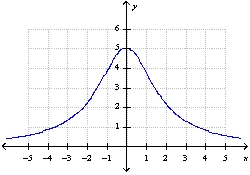
(Essay)
4.8/5
(87)

Use the Product Rule to find the derivative of the function. Use the Product Rule to find the derivative of the function.

(Multiple Choice)
5.0/5
(73)

Differentiate the function. Differentiate the function.

(Multiple Choice)
4.9/5
(78)

A boat is pulled into a dock by a rope attached to the bow of the boat and passing through a pulley on the dock that is 1 m higher than the bow of the boat. If the rope is pulled in at a rate of 1 m/s how fast is the boat approaching the dock when it is A boat is pulled into a dock by a rope attached to the bow of the boat and passing through a pulley on the dock that is 1 m higher than the bow of the boat. If the rope is pulled in at a rate of 1 m/s how fast is the boat approaching the dock when it is   m from the dock? Round the result to the nearest hundredth if necessary.  m from the dock? Round the result to the nearest hundredth if necessary. A boat is pulled into a dock by a rope attached to the bow of the boat and passing through a pulley on the dock that is 1 m higher than the bow of the boat. If the rope is pulled in at a rate of 1 m/s how fast is the boat approaching the dock when it is   m from the dock? Round the result to the nearest hundredth if necessary.
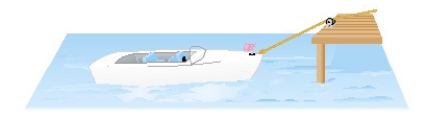
(Essay)
4.8/5
(71)

Find the given derivative by finding the first few derivatives and observing the pattern that occurs. Find the given derivative by finding the first few derivatives and observing the pattern that occurs.

(Multiple Choice)
4.8/5
(95)

If an equation of the tangent line to the curve If an equation of the tangent line to the curve   at the point where   is   find   and   . at the point where If an equation of the tangent line to the curve   at the point where   is   find   and   . is If an equation of the tangent line to the curve   at the point where   is   find   and   . find If an equation of the tangent line to the curve   at the point where   is   find   and   . and If an equation of the tangent line to the curve   at the point where   is   find   and   . .

(Multiple Choice)
5.0/5
(84)

Find an equation of the tangent line to the given curve at the indicated point. Find an equation of the tangent line to the given curve at the indicated point.    Find an equation of the tangent line to the given curve at the indicated point.
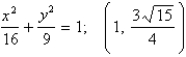
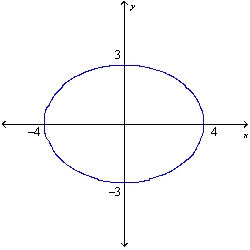
(Multiple Choice)
4.7/5
(72)

If two resistors with resistances  If two resistors with resistances   and   are connected in parallel, as in the figure, then the total resistance   measured in ohms ( \Omega ), is given by   . If   and   are increasing at rates of   and   respectively, how fast is   changing when   and   ? Round the result to the nearest thousandth.   and  If two resistors with resistances   and   are connected in parallel, as in the figure, then the total resistance   measured in ohms ( \Omega ), is given by   . If   and   are increasing at rates of   and   respectively, how fast is   changing when   and   ? Round the result to the nearest thousandth.   are connected in parallel, as in the figure, then the total resistance  If two resistors with resistances   and   are connected in parallel, as in the figure, then the total resistance   measured in ohms ( \Omega ), is given by   . If   and   are increasing at rates of   and   respectively, how fast is   changing when   and   ? Round the result to the nearest thousandth.   measured in ohms ( Ω\Omega ), is given by  If two resistors with resistances   and   are connected in parallel, as in the figure, then the total resistance   measured in ohms ( \Omega ), is given by   . If   and   are increasing at rates of   and   respectively, how fast is   changing when   and   ? Round the result to the nearest thousandth.   . If  If two resistors with resistances   and   are connected in parallel, as in the figure, then the total resistance   measured in ohms ( \Omega ), is given by   . If   and   are increasing at rates of   and   respectively, how fast is   changing when   and   ? Round the result to the nearest thousandth.   and  If two resistors with resistances   and   are connected in parallel, as in the figure, then the total resistance   measured in ohms ( \Omega ), is given by   . If   and   are increasing at rates of   and   respectively, how fast is   changing when   and   ? Round the result to the nearest thousandth.   are increasing at rates of  If two resistors with resistances   and   are connected in parallel, as in the figure, then the total resistance   measured in ohms ( \Omega ), is given by   . If   and   are increasing at rates of   and   respectively, how fast is   changing when   and   ? Round the result to the nearest thousandth.   and  If two resistors with resistances   and   are connected in parallel, as in the figure, then the total resistance   measured in ohms ( \Omega ), is given by   . If   and   are increasing at rates of   and   respectively, how fast is   changing when   and   ? Round the result to the nearest thousandth.   respectively, how fast is  If two resistors with resistances   and   are connected in parallel, as in the figure, then the total resistance   measured in ohms ( \Omega ), is given by   . If   and   are increasing at rates of   and   respectively, how fast is   changing when   and   ? Round the result to the nearest thousandth.   changing when  If two resistors with resistances   and   are connected in parallel, as in the figure, then the total resistance   measured in ohms ( \Omega ), is given by   . If   and   are increasing at rates of   and   respectively, how fast is   changing when   and   ? Round the result to the nearest thousandth.   and  If two resistors with resistances   and   are connected in parallel, as in the figure, then the total resistance   measured in ohms ( \Omega ), is given by   . If   and   are increasing at rates of   and   respectively, how fast is   changing when   and   ? Round the result to the nearest thousandth.   ? Round the result to the nearest thousandth.  If two resistors with resistances   and   are connected in parallel, as in the figure, then the total resistance   measured in ohms ( \Omega ), is given by   . If   and   are increasing at rates of   and   respectively, how fast is   changing when   and   ? Round the result to the nearest thousandth.
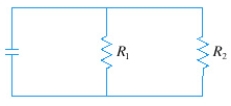
(Multiple Choice)
4.9/5
(86)

Find a third-degree polynomial Q such that Q (1) = Find a third-degree polynomial Q such that Q (1) =   ,   (1) = 7,   (1) = 14, and   (1) = 18. , Find a third-degree polynomial Q such that Q (1) =   ,   (1) = 7,   (1) = 14, and   (1) = 18. (1) = 7, Find a third-degree polynomial Q such that Q (1) =   ,   (1) = 7,   (1) = 14, and   (1) = 18. (1) = 14, and Find a third-degree polynomial Q such that Q (1) =   ,   (1) = 7,   (1) = 14, and   (1) = 18. (1) = 18.

(Essay)
4.7/5
(75)

Find an equation of the tangent line to the graph of Find an equation of the tangent line to the graph of   at the point  at the point Find an equation of the tangent line to the graph of   at the point

(Essay)
4.8/5
(87)

If f is the focal length of a convex lens and an object is placed at a distance v from the lens, then its image will be at a distance u from the lens, where f, v, and u are related by the lens equation If f is the focal length of a convex lens and an object is placed at a distance v from the lens, then its image will be at a distance u from the lens, where f, v, and u are related by the lens equation   . Find the rate of change of v with respect to u. . Find the rate of change of v with respect to u.

(Multiple Choice)
4.8/5
(79)
Showing 121 - 140 of 151
close modal

Filters

  • Essay(0)
  • Multiple Choice(0)
  • Short Answer(0)
  • True False(0)
  • Matching(0)