



 Chat with AI
Exam 17: Digestive System: Glands

Exam 1: Cytoplasm24 Questions
Exam 2: Nucleus14 Questions
Exam 3: Extracellular Matrix14 Questions
Exam 4: Epithelium and Glands18 Questions
Exam 5: Connective Tissue12 Questions
Exam 6: Cartilage and Bone22 Questions
Exam 7: Muscle24 Questions
Exam 8: Nervous Tissue23 Questions
Exam 9: Blood and Hemopoiesis29 Questions
Exam 10: Circulatory System14 Questions
Exam 11: Lymphoid Immune System14 Questions
Exam 12: Endocrine System12 Questions
Exam 13: Integument14 Questions
Exam 14: Respiratory System14 Questions
Exam 15: Digestive System: Oral Cavity8 Questions
Exam 16: Digestive System: Alimentary Canal12 Questions
Exam 17: Digestive System: Glands10 Questions
Exam 18: Urinary System6 Questions
Exam 19: Female Reproductive System6 Questions
Exam 20: Male Reproductive System7 Questions
Exam 21: Special Senses2 Questions
Select questions type


A patient with Wilson's disease presents with gold rings in her cornea. The problem is that the patient's liver cannot

Free
(Multiple Choice)
4.8/5  (92)
(92) Correct Answer: Verified
B
A patient is seen by her pediatrician because she has mumps. Which of the following salivary glands is most likely to be involved?
Free
(Multiple Choice)
4.8/5 (66)
(66) Correct Answer:Verified
VerifiedE
A cell of the pancreas possesses specific proteins that bind secretin. Which of the following is the correct response to that statement?
Free
(Multiple Choice)
4.7/5 (83)
(83) Correct Answer:Verified
VerifiedD
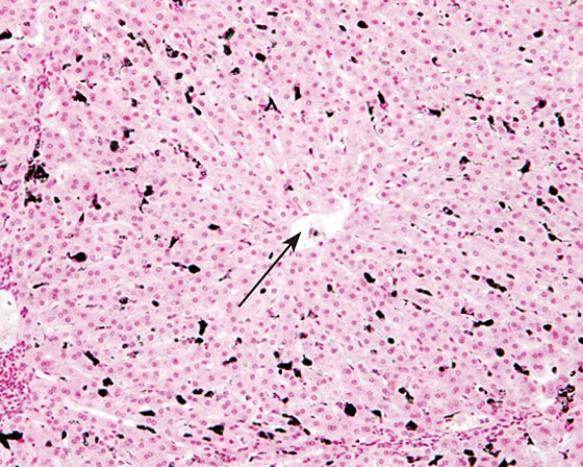
A patient has been a long-term user of prescription barbiturates and has developed an increased tolerance for these substances because her
(Multiple Choice)
4.9/5 (76)
(76) A patient who has a malignancy that causes an overproduction of HCl has a tumor of which of the following cells?
(Multiple Choice)
4.8/5 (90)
(90) The tip of the white arrow is pointing to which of the following? 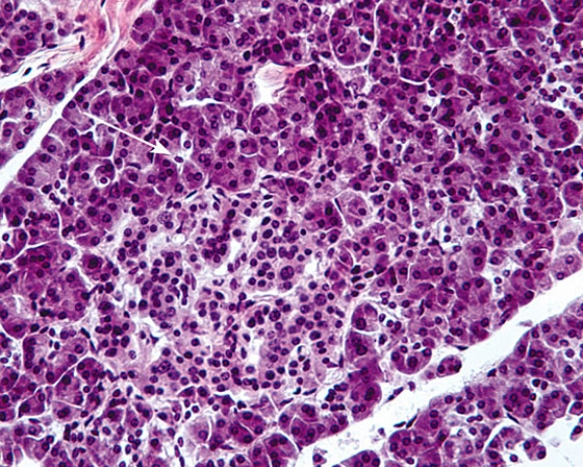
(Multiple Choice)
4.8/5 (85)
(85) 
Filters
- Essay(0)
- Multiple Choice(0)
- Short Answer(0)
- True False(0)
- Matching(0)