



 Chat with AI
Exam 20: Introduction to Carbonyl Chemistry; Organometallic Reagents; Oxidation and Reduction

Exam 1: Structure and Bonding70 Questions
Exam 2: Acids and Bases48 Questions
Exam 3: Introduction to Organic Molecules and Functional Groups48 Questions
Exam 4: Alkanes56 Questions
Exam 5: Stereochemistry68 Questions
Exam 6: Understanding Organic Reactions43 Questions
Exam 7: Alkyl Halides and Nucleophilic Substitution64 Questions
Exam 8: Alkyl Halides and Elimination Reactions45 Questions
Exam 9: Alcohols, Ethers and Epoxides49 Questions
Exam 10: Alkenes47 Questions
Exam 11: Alkynes45 Questions
Exam 12: Oxidation and Reduction43 Questions
Exam 13: Mass Spectrometry and Infrared Spectroscopy42 Questions
Exam 14: Nuclear Magnetic Resonance Spectroscopy43 Questions
Exam 15: Radical Reactions43 Questions
Exam 16: Conjugation, Resonance, and Dienes44 Questions
Exam 17: Benzene and Aromatic Compounds40 Questions
Exam 18: Electrophilic Aromatic Substitution51 Questions
Exam 19: Carboxylic Acids and the Acidity of the O-H Bond44 Questions
Exam 20: Introduction to Carbonyl Chemistry; Organometallic Reagents; Oxidation and Reduction53 Questions
Exam 21: Aldehydes and Ketones Nucleophilic Addition45 Questions
Exam 22: Carboxylic Acids and Derivatives47 Questions
Exam 23: Substitution Reactions of Carbonyl Compounds at the Alpha-Carbon41 Questions
Exam 24: Carbonyl Condensation Reactions45 Questions
Exam 25: Amines58 Questions
Exam 26: Carbon-Carbon Bond Forming Reactions in Organic Synthesis41 Questions
Exam 27: Pericyclic Reactions52 Questions
Exam 28: Carbohydrates41 Questions
Exam 29: Amino Acids and Proteins41 Questions
Exam 30: Lipids41 Questions
Exam 31: Synthetic Polymers41 Questions
Select questions type


The behavior of acid chlorides is different from that of aldehydes in a reaction with a nucleophile because

Free
(Multiple Choice)
5.0/5  (78)
(78) Correct Answer: Verified
A
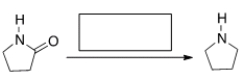
What is the missing reagent in the reaction below? 
Free
(Multiple Choice)
4.9/5 (86)
(86) Correct Answer:Verified
VerifiedA
Rank the following compounds in order of increasing reactivity in nucleophilic acyl substitution reactions, starting with the least reactive compound. 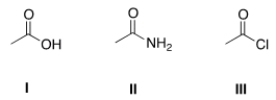
Free
(Multiple Choice)
5.0/5 (88)
(88) Correct Answer:Verified
VerifiedD
Which reagent can be used to reduce the alkene in cyclopentenone?
(Multiple Choice)
4.9/5 (75)
(75) What is the major organic product in the following sequence of reactions? 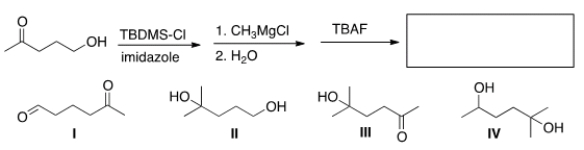
(Multiple Choice)
4.9/5 (84)
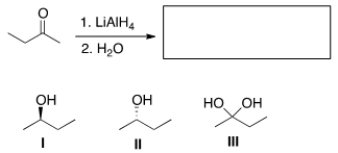
(84) 
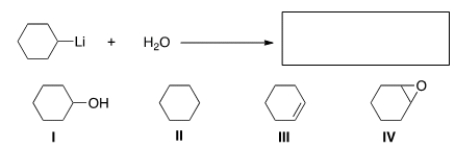
Which of the following terms explain why aldehydes are more reactive than ketones?
(Multiple Choice)
4.8/5 (84)
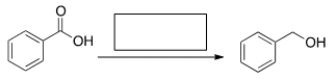
(84) 
Rank the following compounds in order of increasing reactivity toward the nucleophilic hydride reagent, NaBH4. 
(Multiple Choice)
4.7/5 (78)
(78) What is the major organic product of the following reaction? 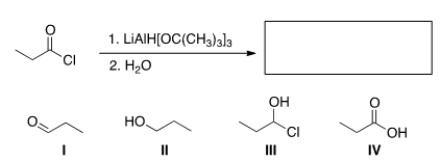
(Multiple Choice)
4.7/5 (84)
(84) Which reagent can be used to reduce the carbonyl in methyl vinyl ketone?
(Multiple Choice)
4.8/5 (69)
(69) What is the major organic product of the following reaction? 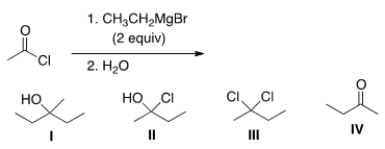
(Multiple Choice)
5.0/5 (87)
(87) If the starting material has no stereogenic centers, when carbonyl compounds are reduced with a reagent such as LiAlH4 or NaBH4 and a new stereogenic center is formed, what will the composition of the product mixture be?
(Multiple Choice)
4.9/5 (77)
(77) What will be the product of the following reaction (before any aqueous work-up)? 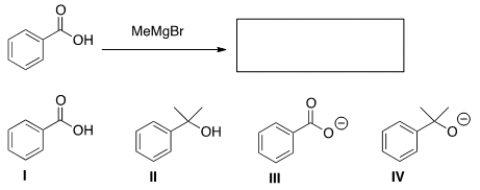
(Multiple Choice)
4.8/5 (84)
(84) What is the major organic product of the following reaction? 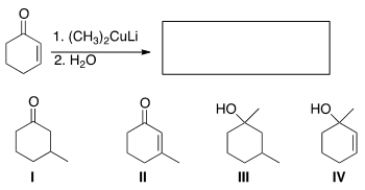
(Multiple Choice)
4.8/5 (86)
(86) What is the major organic product of the following reaction? 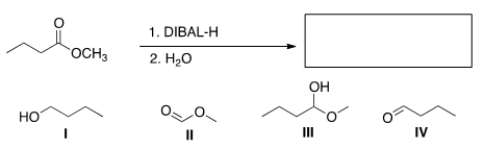
(Multiple Choice)
4.8/5 (81)
(81) What is the major organic product of the following reaction? 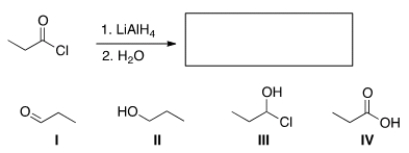
(Multiple Choice)
4.8/5 (78)
(78) 
Filters
- Essay(0)
- Multiple Choice(0)
- Short Answer(0)
- True False(0)
- Matching(0)