



 Chat with AI
Exam 23: Substitution Reactions of Carbonyl Compounds at the Alpha-Carbon

Exam 1: Structure and Bonding70 Questions
Exam 2: Acids and Bases48 Questions
Exam 3: Introduction to Organic Molecules and Functional Groups48 Questions
Exam 4: Alkanes56 Questions
Exam 5: Stereochemistry68 Questions
Exam 6: Understanding Organic Reactions43 Questions
Exam 7: Alkyl Halides and Nucleophilic Substitution64 Questions
Exam 8: Alkyl Halides and Elimination Reactions45 Questions
Exam 9: Alcohols, Ethers and Epoxides49 Questions
Exam 10: Alkenes47 Questions
Exam 11: Alkynes45 Questions
Exam 12: Oxidation and Reduction43 Questions
Exam 13: Mass Spectrometry and Infrared Spectroscopy42 Questions
Exam 14: Nuclear Magnetic Resonance Spectroscopy43 Questions
Exam 15: Radical Reactions43 Questions
Exam 16: Conjugation, Resonance, and Dienes44 Questions
Exam 17: Benzene and Aromatic Compounds40 Questions
Exam 18: Electrophilic Aromatic Substitution51 Questions
Exam 19: Carboxylic Acids and the Acidity of the O-H Bond44 Questions
Exam 20: Introduction to Carbonyl Chemistry; Organometallic Reagents; Oxidation and Reduction53 Questions
Exam 21: Aldehydes and Ketones Nucleophilic Addition45 Questions
Exam 22: Carboxylic Acids and Derivatives47 Questions
Exam 23: Substitution Reactions of Carbonyl Compounds at the Alpha-Carbon41 Questions
Exam 24: Carbonyl Condensation Reactions45 Questions
Exam 25: Amines58 Questions
Exam 26: Carbon-Carbon Bond Forming Reactions in Organic Synthesis41 Questions
Exam 27: Pericyclic Reactions52 Questions
Exam 28: Carbohydrates41 Questions
Exam 29: Amino Acids and Proteins41 Questions
Exam 30: Lipids41 Questions
Exam 31: Synthetic Polymers41 Questions
Select questions type


Will acetone be completely deprotonated by potassium tert-butoxide?

Free
(Multiple Choice)
4.9/5  (75)
(75) Correct Answer: Verified
B
What are the three steps in the malonic ester synthesis?
Free
(Multiple Choice)
4.7/5 (65)
(65) Correct Answer:Verified
VerifiedA
Which is the kinetic enolate of 2-methylcyclohexanone? 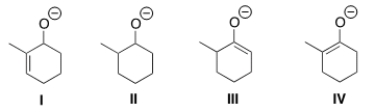
Free
(Multiple Choice)
5.0/5 (73)
(73) Correct Answer:Verified
VerifiedC
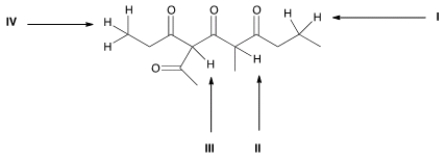
Which of the following compounds is an enol of compound X drawn below? 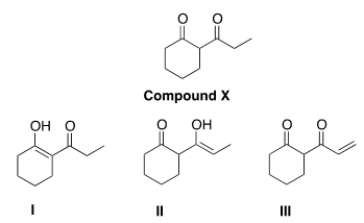
(Multiple Choice)
4.9/5 (71)
(71) 
It has been found that -dicarbonyl compounds have a greater concentration of the enol form over the keto form. This can be explained by:
(Multiple Choice)
4.8/5 (78)
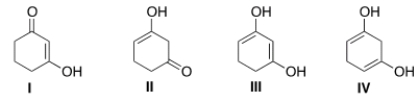
(78) Which of the following is an enol form of the following compound? 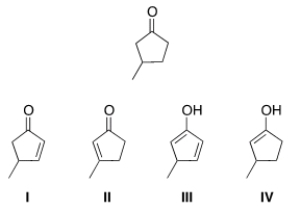
(Multiple Choice)
5.0/5 (76)
(76) Will acetophenone be completely deprotonated by lithium diisopropylamide (LDA)?
(Multiple Choice)
4.8/5 (67)
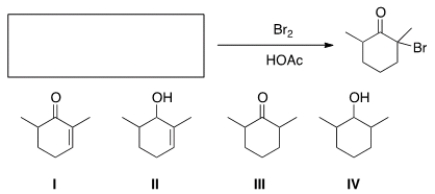
(67) Which of the following is the intermediate for halogenation of ketones under acidic conditions?
(Multiple Choice)
4.9/5 (73)
(73) Which of the following compounds would undergo racemization in the presence of a base? 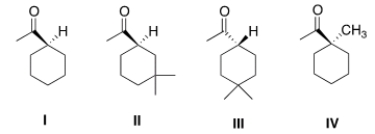
(Multiple Choice)
5.0/5 (65)
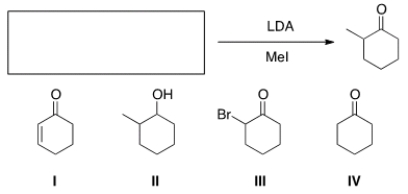
(65) 
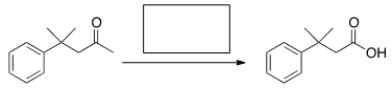
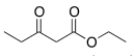
Which of the following bases will completely convert 1,4-cyclohexandione into an enolate?
(Multiple Choice)
4.8/5 (87)
(87) The reaction below is a direct enolate alkylation. It has been found that this reaction only works well with unhindered methyl and 1° alkyl halides. Pick the statement that best explains this observation. 
(Multiple Choice)
4.8/5 (77)
(77) Starting with cyclohexanone, how could you prepare the diketone below? 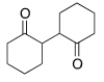
(Multiple Choice)
4.9/5 (87)
(87) 
Filters
- Essay(0)
- Multiple Choice(0)
- Short Answer(0)
- True False(0)
- Matching(0)