



 Chat with AI
Exam 2: Energy: Warming Earth and the Atmosphere

Exam 1: Earth and Its Atmosphere95 Questions
Exam 2: Energy: Warming Earth and the Atmosphere110 Questions
Exam 3: Seasonal and Daily Temperatures116 Questions
Exam 4: Atmospheric Humidity78 Questions
Exam 5: Condensation: Dew, Fog, and Clouds119 Questions
Exam 6: Stability and Cloud Development82 Questions
Exam 7: Precipitation78 Questions
Exam 8: Air Pressure and Winds121 Questions
Exam 9: Wind: Small-Scale and Local Systems104 Questions
Exam 10: Wind: Global Systems75 Questions
Exam 11: Air Masses and Fronts99 Questions
Exam 12: Middle-Latitude Cyclones63 Questions
Exam 13: Weather Forecasting131 Questions
Exam 14: Thunderstorms79 Questions
Exam 15: Tornadoes48 Questions
Exam 16: Hurricanes76 Questions
Exam 17: Earths Changing Climate69 Questions
Exam 18: Global Climate77 Questions
Exam 19: Air Pollution84 Questions
Select questions type


Which of the following processes can occur when heat is transferred outward from the surface of the moon?
(Multiple Choice)
4.8/5  (78)
(78) Which of the following statements explains why low clouds slow surface cooling at night better than clear skies do?
(Multiple Choice)
4.9/5 (79)
(79) Which of the following describes what the average Earth surface temperature would be without the atmospheric greenhouse effect?
(Multiple Choice)
4.9/5 (87)
(87) On a warm summer day, what is the best colour of T-shirt to wear in order to best keep you cool?
(Multiple Choice)
4.8/5 (90)
(90) Which of the following is the range of wavelengths corresponding to the maximum amount of radiation emitted by the Earth?
(Multiple Choice)
4.8/5 (71)
(71) Which of the following would happen to the Earth's radiative equilibrium temperature if the sun suddenly began emitting more energy?
(Multiple Choice)
4.9/5 (72)
(72) Which of the following expresses how far points A and C are apart? 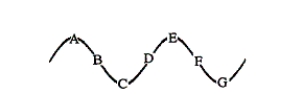
(Multiple Choice)
4.8/5 (74)
(74) Which of the following statements is true about a black object?
(Multiple Choice)
4.9/5 (82)
(82) Which of the following terms refers to the horizontal transport of any atmospheric property by the wind?
(Multiple Choice)
4.9/5 (71)
(71) The albedo of the Earth's surface is about 4 percent, yet the combined albedo of the Earth and the atmosphere is about 30 percent. Which of the following conditions BEST explains why this is the case?
(Multiple Choice)
4.9/5 (81)
(81) As air in the figure above moves from A to B, what will happen to its temperature?
(Multiple Choice)
4.9/5 (90)
(90) Suppose you are outside wearing a winter coat in very cold temperature, and the coat keeps you quite warm. Which of the following describes the reason that you keep warm?
(Multiple Choice)
4.8/5 (71)
(71) Which of the following statements describes the roof of a home where snow melts readily?
(Multiple Choice)
4.8/5 (83)
(83) Which of the following processes explains why our skin feels colder immediately after stepping out of a hot tub?
(Multiple Choice)
4.8/5 (87)
(87) Which of the following gives the name for electromagnetic radiation that has wavelengths between 0.4 and 0.7 micrometres?
(Multiple Choice)
4.8/5 (67)
(67) Which of the following statements describes the difference between red and blue light?
(Multiple Choice)
4.7/5 (86)
(86) Which of the following gases are mainly responsible for the atmospheric greenhouse effect in the Earth's atmosphere?
(Multiple Choice)
4.9/5 (70)
(70) One micrometre is equal to which of the following units of length?
(Multiple Choice)
4.8/5 (70)
(70) Which of the following has a wavelength shorter than that of violet light?
(Multiple Choice)
4.8/5 (77)
(77) At which of the following wavelengths does the Earth emit radiation of greatest intensity?
(Multiple Choice)
4.9/5 (81)
(81) 
Filters
- Essay(0)
- Multiple Choice(0)
- Short Answer(0)
- True False(0)
- Matching(0)