



 Chat with AI
Exam 13: Long Term Liabilities

Exam 1: Uses of Accounting Information and the Financial Statements167 Questions
Exam 2: Analyzing Business Transactions189 Questions
Exam 3: Measuring Business Income171 Questions
Exam 4: Completing the Accounting Cycle176 Questions
Exam 5: Financial Reporting and Analysis177 Questions
Exam 6: The Operating Cycle and Merchandising Operations145 Questions
Exam 7: Internal Control117 Questions
Exam 8: Inventories154 Questions
Exam 9: Cash and Receivables177 Questions
Exam 10: Current Liabilities and Fair Value Accounting180 Questions
Exam 11: Long Term Assets241 Questions
Exam 12: Contributed Capital189 Questions
Exam 13: Long Term Liabilities194 Questions
Exam 14: The Corporate Income Statement and the Statement of Stockholders Equity176 Questions
Exam 15: The Statement of Cash Flows149 Questions
Exam 16: Financial Performance Measurement163 Questions
Exam 17: Partnerships129 Questions
Exam 18: The Changing Business Environment-A Managers Pers130 Questions
Exam 19: Cost Concepts and Cost Allocation188 Questions
Exam 20: Costing Systems: Job Order Costing88 Questions
Exam 21: Costing Systems Process Costing136 Questions
Exam 22: Activity-Based Systems-Abm and Lean152 Questions
Exam 23: Cost Behavior Analysis166 Questions
Exam 24: The Budgeting Process116 Questions
Exam 25: Performance Management and Evaluation117 Questions
Exam 26: Standard Costing and Variance Analysis120 Questions
Exam 27: Short Run Decision Analysis90 Questions
Exam 28: Capital Investment Analysis123 Questions
Select questions type


Most bonds issued today are coupon bonds rather than registered bonds.
(True/False)
4.8/5  (68)
(68) Flint Corporation issues $1,000,000 of 30-year, 8 percent bonds at 106. Interest is paid semiannually, and the effective interest method is used for amortization. Assume that the market interest rate for similar investments is 7 percent and that the bonds are issued on an interest date.
a. What amount was received for the bonds?
b. How much interest is paid each interest period?
c. How much bond interest expense is recorded on the first interest date (after the issue date)?
d. What is the carrying value of the bonds after the first interest date (after the issue date)?
(Essay)
4.9/5 (83)
(83) When interest payments on an investment exceed the earnings from the investment, negative financial leverage has occurred.
(True/False)
5.0/5 (83)
(83) The interest coverage ratio measures the degree of protection a company has from default on interest payments.
(True/False)
4.7/5 (84)
(84) The effective interest method produces a constant dollar amount of bond interest expense to be reported each interest period.
(True/False)
4.7/5 (82)
(82) Knollwood Corporation issued $300,000 of 30-year, 8 percent bonds at 106 on one of its semiannual interest dates. The straight-line method of amortization is to be used. What is the total interest cost of the bonds?
(Multiple Choice)
4.9/5 (76)
(76) If a bond has a face interest rate of 6 percent, a face value of $20,000, and pays interest semiannually, each interest payment will amount to $1,200.
(True/False)
4.9/5 (83)
(83) Accounting for a defined benefit pension plan is simpler than accounting for a defined contribution plan.
(True/False)
4.8/5 (82)
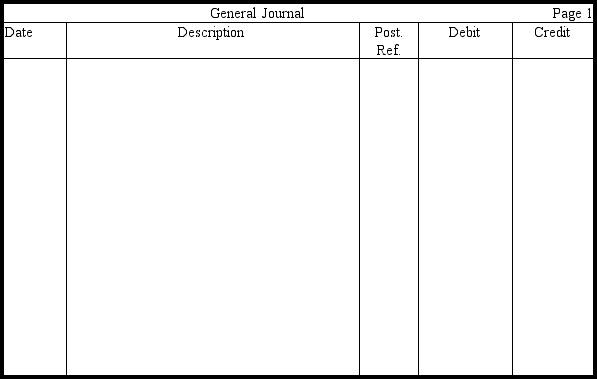
(82) On November 1, 2009, Fields Corporation issued $800,000 worth of ten-year, 9 percent bonds. The semiannual interest dates are November 1 and May 1. Because the market interest rate of similar investments was 8.5 percent, the bonds were issued at a price of 103. Ignoring year-end accruals, prepare entries in journal form without explanations to record the bond issue on November 1, 2009, and the payments of interest and amortization of premium on May 1 and November 1, 2009. Use the effective interest method of amortization. Round answers to the nearest dollar.
(Essay)
4.8/5 (89)
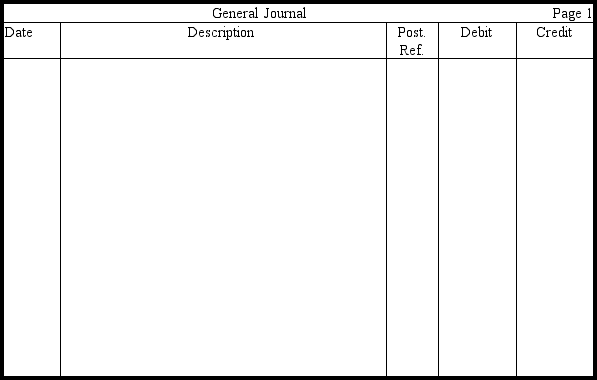
(89) Tatum Corporation has $2,000,000 worth of 7 percent convertible bonds outstanding. On September 1, 2010,there is $80,000 of unamortized discount associated with these bonds. The bonds are convertible at the rate of 30 shares of $10 par value common stock for each $1,000 bond. On September 1, 2010,an interest payment date, bondholders presented $1,400,000 of the bonds for conversion. Prepare an entry in journal form without explanation to record the conversion of the bonds.
(Essay)
4.8/5 (68)
(68) The entry to record the issuance of bonds at a discount on an interest payment date should include a
(Multiple Choice)
4.8/5 (72)
(72) When the straight-line method of amortization is used for a bond discount, the amount of interest expense for an interest period is calculated by
(Multiple Choice)
4.9/5 (78)
(78) If the market interest rate at the date of issuance of a bond exceeds the face interest rate, the present value of the face value plus the present value of all the future interest payments will equal an amount less than the face value of the bond.
(True/False)
4.8/5 (84)
(84) Under an operating lease, each monthly payment is debited by the lessee to Rent Expense.
(True/False)
4.9/5 (82)
(82) The total interest cost on forty-six (46), ten-year, 6 percent, $1,000 bonds that are issued at 98 is
(Multiple Choice)
4.9/5 (79)
(79) Comment on the change in both the carrying value and the balance of the Unamortized Bond Premium account over the life of a bond issue.
(Essay)
4.8/5 (71)
(71) Total interest cost for a bond issued at a premium equals the total of the periodic interest payments minus the premium.
(True/False)
4.9/5 (80)
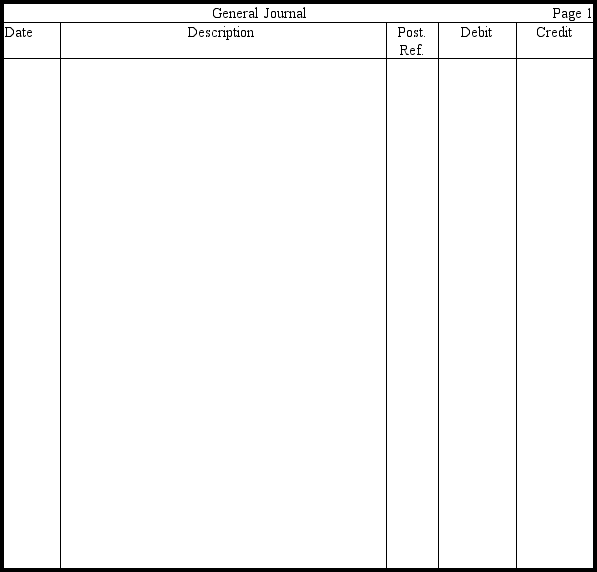
(80) On December 31, 2009, the balance sheet of L and H Corporation reported bonds outstanding with a face value of $5 1,000,000 and a related unamortized premium of $2 50,000. Interest is payable semiannually on January 1 and July 1.
a. Prepare an entry in journal form without explanations to record the retirement of bonds with a face value of $3 600,000 on January 1, 2010, assuming the bonds were redeemed at a call price of 103.
b. Prepare an entry in journal form without explanation on January 1, 2010, to record the conversion of bonds with a face value of $2 400,000 into common stock. Each $1,000 bond is convertible into 25 shares of $10 par value common stock.
(Essay)
4.9/5 (87)
(87) 
Filters
- Essay(0)
- Multiple Choice(0)
- Short Answer(0)
- True False(0)
- Matching(0)