



 Chat with AI
Exam 11: Technology, production, and Costs

Exam 1: Economics: Foundations and Models146 Questions
Exam 2: Trade-Offs, comparative Advantage, and the Market System153 Questions
Exam 3: Where Prices Come From: the Interaction of Demand and Supply147 Questions
Exam 4: Economic Efficiency, government Price Setting, and Taxes138 Questions
Exam 5: Externalities, environmental Policy, and Public Goods133 Questions
Exam 6: Elasticity: the Responsiveness of Demand and Supply150 Questions
Exam 7: The Economics of Health Care115 Questions
Exam 8: Firms, the Stock Market, and Corporate Governance141 Questions
Exam 9: Comparative Advantage and the Gains From International Trade123 Questions
Exam 10: Consumer Choice and Behavioral Economics154 Questions
Exam 11: Technology, production, and Costs165 Questions
Exam 12: Firms in Perfectly Competitive Markets151 Questions
Exam 13: Monopolistic Competition: the Competitive Model in a More Realistic Setting143 Questions
Exam 14: Oligopoly: Firms in Less Competitive Markets135 Questions
Exam 15: Monopoly and Antitrust Policy134 Questions
Exam 16: Pricing Strategy134 Questions
Exam 17: The Markets for Labor and Other Factors of Production147 Questions
Exam 18: Public Choice, taxes, and the Distribution of Income139 Questions
Select questions type


A curve that shows all the combinations of two inputs,such as labor and capital,that will produce the same level of output is called
(Multiple Choice)
4.8/5  (79)
(79) In 1955,the chairman of the Sony corporation offered to sell transistor radios through department stores in the United States.Sony based its selling price on its average total cost of production.If a store bought 5,000 radios,Sony would sell them at $29.95 each.For 10,000 there would be a discount,and for more than 10,000 the price would begin to climb.Based on this information,Sony began experiencing diseconomies of scale
(Multiple Choice)
4.9/5 (77)
(77) The processes a firm uses to turn inputs into outputs of goods and services is called
(Multiple Choice)
4.9/5 (76)
(76) The level of output at which all economies of scale have been exhausted is known as
(Multiple Choice)
4.9/5 (81)
(81) Which of the following can a firm do in the long run but not in the short run?
(Multiple Choice)
4.9/5 (94)
(94) What is the difference between between total costs,variable costs,and fixed costs?
(Essay)
5.0/5 (79)
(79) Figure 11-6  Figure 11-6 illustrates the long-run average cost curve for a firm that produces picture frames.The graph also includes short-run average cost curves for three firm sizes: ATCa,ATCb and ATCc.
-Refer to Figure 11-6.Constant returns to scale
Figure 11-6 illustrates the long-run average cost curve for a firm that produces picture frames.The graph also includes short-run average cost curves for three firm sizes: ATCa,ATCb and ATCc.
-Refer to Figure 11-6.Constant returns to scale (Multiple Choice)
4.8/5 (74)
(74) Table 11-1
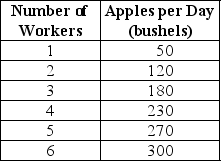 Table 11-1 summarizes production at the Crunchy Apple Orchard for the month of April 2005.
-Refer to Table 11-1.What is the average product of labor when the orchard employs 5 workers?
Table 11-1 summarizes production at the Crunchy Apple Orchard for the month of April 2005.
-Refer to Table 11-1.What is the average product of labor when the orchard employs 5 workers? (Multiple Choice)
4.9/5 (75)
(75) Jennifer Borts moves her office from the premises she rents at a local mall to her home.As a result of this move
(Multiple Choice)
4.8/5 (85)
(85) What is minimum efficient scale? What is likely to happen in the long run to firms that do not reach minimum efficient scale?
(Essay)
4.9/5 (68)
(68) Figure 11-3  Figure 11-3 shows the cost structure for a firm.
-Refer to Figure 11-3.If output is 100 units what is the fixed cost of production?
Figure 11-3 shows the cost structure for a firm.
-Refer to Figure 11-3.If output is 100 units what is the fixed cost of production? (Multiple Choice)
4.9/5 (80)
(80) A change in the slope of an isocost line is due to a change in
(Multiple Choice)
4.8/5 (75)
(75) Figure 11-2  Figure 11-2 contains information about the short run cost structure of a firm.
-Refer to Figure 11-2.In the figure above which letter represents the average variable cost curve?
Figure 11-2 contains information about the short run cost structure of a firm.
-Refer to Figure 11-2.In the figure above which letter represents the average variable cost curve? (Multiple Choice)
4.8/5 (84)
(84) Costs that change as output changes are called incremental costs.
(True/False)
4.8/5 (79)
(79) Suppose two countries use different combinations of inputs,such as labor and capital,to produce the same product.This implies all of the following except that
(Multiple Choice)
4.8/5 (74)
(74) In 1955,the chairman of the Sony corporation offered to sell transistor radios through department stores in the United States.Sony based its selling price on its average total cost of production.If a store bought 5,000 radios,Sony would sell them at $29.95 each.For 10,000 there would be a discount,and for more than 10,000 the price would begin to climb.Based on this information,Sony experienced economies of scale
(Multiple Choice)
4.9/5 (67)
(67) 
Filters
- Essay(0)
- Multiple Choice(0)
- Short Answer(0)
- True False(0)
- Matching(0)