



 Chat with AI
Exam 2: The Chemical Level of Organization

Exam 1: An Introduction to the Human Body74 Questions
Exam 2: The Chemical Level of Organization75 Questions
Exam 3: The Cellular Level of Organization76 Questions
Exam 4: The Tissue Level of Organization75 Questions
Exam 5: The Integumentary System Unit Ii: Principles of Support and Movement74 Questions
Exam 6: The Skeletal System: Bone Tissue75 Questions
Exam 7: The Skeletal System: the Axial Skeleton75 Questions
Exam 8: The Skeletal System: the Appendicular Skeleton75 Questions
Exam 9: Joints75 Questions
Exam 10: Muscle Tissue75 Questions
Exam 11: The Muscular System Unit Iii: Control Systems of the Human Body75 Questions
Exam 12: Nervous Tissue75 Questions
Exam 13: The Spinal Cord and Spinal Nerves75 Questions
Exam 14: The Brain and Cranial Nerves75 Questions
Exam 15: The Autonomic Nervous System75 Questions
Exam 16: Sensory, Motor and Integrative Systems75 Questions
Exam 17: The Special Senses75 Questions
Exam 18: The Endocrine System Unit Iv: Maintenance of the Human Body75 Questions
Exam 19: The Cardiovascular System: the Blood74 Questions
Exam 20: The Cardiovascular System: the Heart74 Questions
Exam 21: The Cardiovascular System: Blood Vessels and Hemodynamics75 Questions
Exam 22: The Lymphatic System, Nonspecific Resistance to Disease, and Immunity75 Questions
Exam 23: The Respiratory System75 Questions
Exam 24: The Digestive System75 Questions
Exam 25: Metabolism73 Questions
Exam 26: The Urinary System73 Questions
Exam 27: Fluid, Electrolyte, and Acid-Base Homeostasis Unit V: Continuity48 Questions
Exam 28: The Reproductive Systems74 Questions
Exam 29: Development and Inheritance75 Questions
Select questions type


Which of the following describes the major function of ATP in cells?
(Multiple Choice)
4.9/5  (75)
(75) An atom or group of atoms with an unpaired electron in the outermost shell is called a(n)
(Multiple Choice)
4.8/5 (83)
(83) The initial energy "investment" needed to start a chemical reaction in a cell is called the
(Multiple Choice)
4.8/5 (87)
(87) Which of the following describes the major significance of the element nitrogen in the human body?
(Multiple Choice)
4.7/5 (86)
(86) 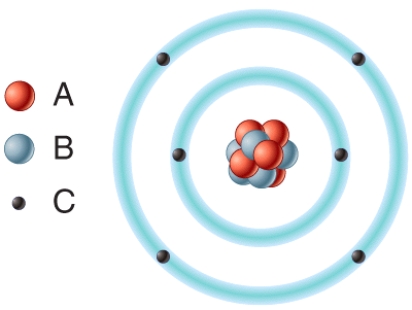
This type of fatty acid contains more than one double bond in its hydrocarbon chain.
(Multiple Choice)
4.9/5 (66)
(66) Which relatively weak type of bond helps stabilize the three dimensional structure of large molecules like proteins and DNA?
(Multiple Choice)
4.8/5 (93)
(93) This type of protein is involved with shortening of muscle cells to produce movement.
(Multiple Choice)
4.8/5 (98)
(98) The chemical bonds formed between the atoms in a water molecule are called
(Multiple Choice)
4.9/5 (76)
(76) Which of the following subatomic particles has a neutral charge?
(Multiple Choice)
4.8/5 (79)
(79) Which of the following can lower the amount of free radicals in the body?
(Multiple Choice)
4.7/5 (84)
(84) Which of the following describes the major significance of the element chlorine in the human body?
(Multiple Choice)
4.8/5 (84)
(84) 
Filters
- Essay(0)
- Multiple Choice(0)
- Short Answer(0)
- True False(0)
- Matching(0)