



 Chat with AI
Exam 2: The Chemical Level of Organization

Exam 1: An Introduction to the Human Body78 Questions
Exam 2: The Chemical Level of Organization81 Questions
Exam 3: The Cellular Level of Organization84 Questions
Exam 4: The Tissue Level of Organization64 Questions
Exam 5: The Integumentary System78 Questions
Exam 6: The Skeletal System: Bone Tissue77 Questions
Exam 7: The Skeletal System: the Axial Skeleton80 Questions
Exam 8: The Skeletal System: The Appendicular Skeleton82 Questions
Exam 9: Joints41 Questions
Exam 10: Muscular Tissue85 Questions
Exam 11: The Muscular System70 Questions
Exam 12: Nervous Tissue17 Questions
Exam 13: The Spinal Cord and Spinal Nerves74 Questions
Exam 14: The Brain and Cranial Nerves72 Questions
Exam 15: The Autonomic Nervous System64 Questions
Exam 16: Sensory, Motor, and Integrative Systems76 Questions
Exam 17: The Special Senses73 Questions
Exam 18: The Endocrine System84 Questions
Exam 19: The Cardiovascular System: the Blood83 Questions
Exam 20: The Cardiovascular System: the Heart82 Questions
Exam 21: The Cardiovascular System: Blood Vessels and Hemodynamics81 Questions
Exam 22: The Lymphatic System and Immunity80 Questions
Exam 23: The Respiratory System85 Questions
Exam 24: The Digestive System85 Questions
Exam 25: Metabolism and Nutrition85 Questions
Exam 26: The Urinary System84 Questions
Exam 27: Fluid, Electrolyte, and Acidbase Homeostasis57 Questions
Exam 28: The Reproductive Systems84 Questions
Exam 29: Development and Inheritance83 Questions
Select questions type


The characteristics listed below represent which element in the periodic table?
1)7 valence electrons
2)easily gains an electron
3)most likely to form an anion
4)high electronegativity
(Multiple Choice)
4.7/5  (80)
(80) What is the most abundant and most important inorganic compound in the body?
(Multiple Choice)
5.0/5 (85)
(85) 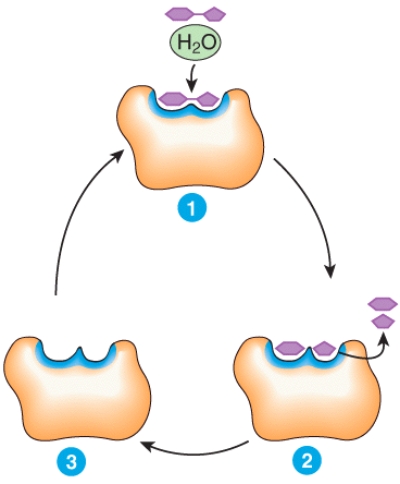
List three factors that increase the rate of chemical reactions.
(Short Answer)
4.9/5 (72)
(72) Which of the following subatomic particles has/have a neutral charge?
(Multiple Choice)
4.8/5 (79)
(79) The initial energy "investment" needed to start a chemical reaction in a cell is called the
(Multiple Choice)
4.7/5 (83)
(83) What functional groups are present on the molecule in the diagram.Choose all that apply.
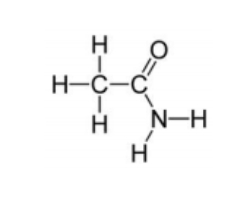
(Multiple Choice)
4.9/5 (78)
(78) Which type of chemical reaction will absorb more energy than it releases?
(Multiple Choice)
4.7/5 (89)
(89) The R group of an amino acid would need to have what characteristic to be located in a cell membrane?
(Multiple Choice)
4.8/5 (86)
(86) Which of the following can lower the amount of free radicals in the body?
(Multiple Choice)
4.9/5 (89)
(89) A molecule with an unpaired electron in the outermost shell is called a(n)
(Multiple Choice)
4.9/5 (78)
(78) Which of the following describes the major function of ATP in cells?
(Multiple Choice)
4.7/5 (84)
(84) What is the difference between atomic mass,mass number and atomic number?
(Essay)
4.9/5 (77)
(77) 
Filters
- Essay(0)
- Multiple Choice(0)
- Short Answer(0)
- True False(0)
- Matching(0)